Along the equator, about 600 miles away from landmass, lies an archipelago in the middle of the Pacific, where life evolves more rapidly than usual. A visit to the Galapagos Islands is a promise of adventure, incredible wildlife/terrain, and purely kindhearted locals. It is a bucket list destination that should be experienced with environmental preservation in mind.
After some extensive research with my trusty travel partner, Anthony, I decided to plan a mixed itinerary trip to the Galapagos Islands, combining land based exploration and a five day cruise around the uninhabited islands. This turned out to be a great choice. We got the best of both worlds: exploring the uninhabited islands with our boat’s resident naturalist David (who was a gem by the way!) and also spending time with the locals and getting a feel for the beat of life in the Galapagos. We spent about two weeks there and we decided to go to the Galapagos in March because there were warmer waters and less sharks during this time.
For your convenience, use this Table of Contents to jump to each section of our adventure:
- Getting There
- San Cristobal
- Our Voyage to the Uninhabited Islands
- Santa Cruz
- Isabela
- Traveling from Isabela to Guayaquil
- Where to Eat
- Packing List
This was one of the most complicated trips I’ve ever planned, but well worth the effort. Join me as I guide you through my journey and throw you some tips and tricks along the way.
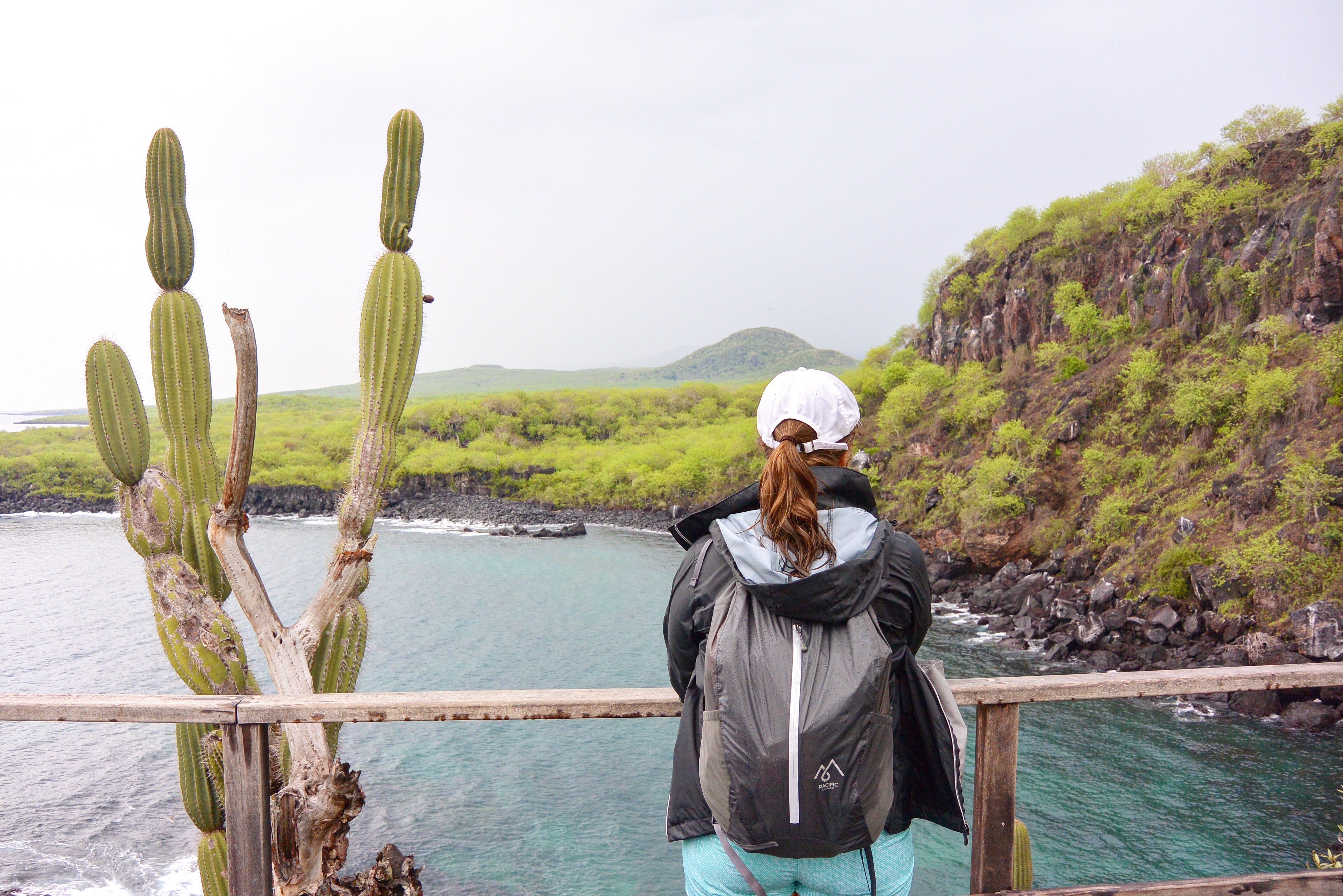
Getting There
The first step to getting to the Galapagos is flying into either Guayaquil or Quito. We chose to fly into Guayaquil because there was a direct flight there from New York and Guayaquil is also closer to the Galapagos, which means a shorter flight.
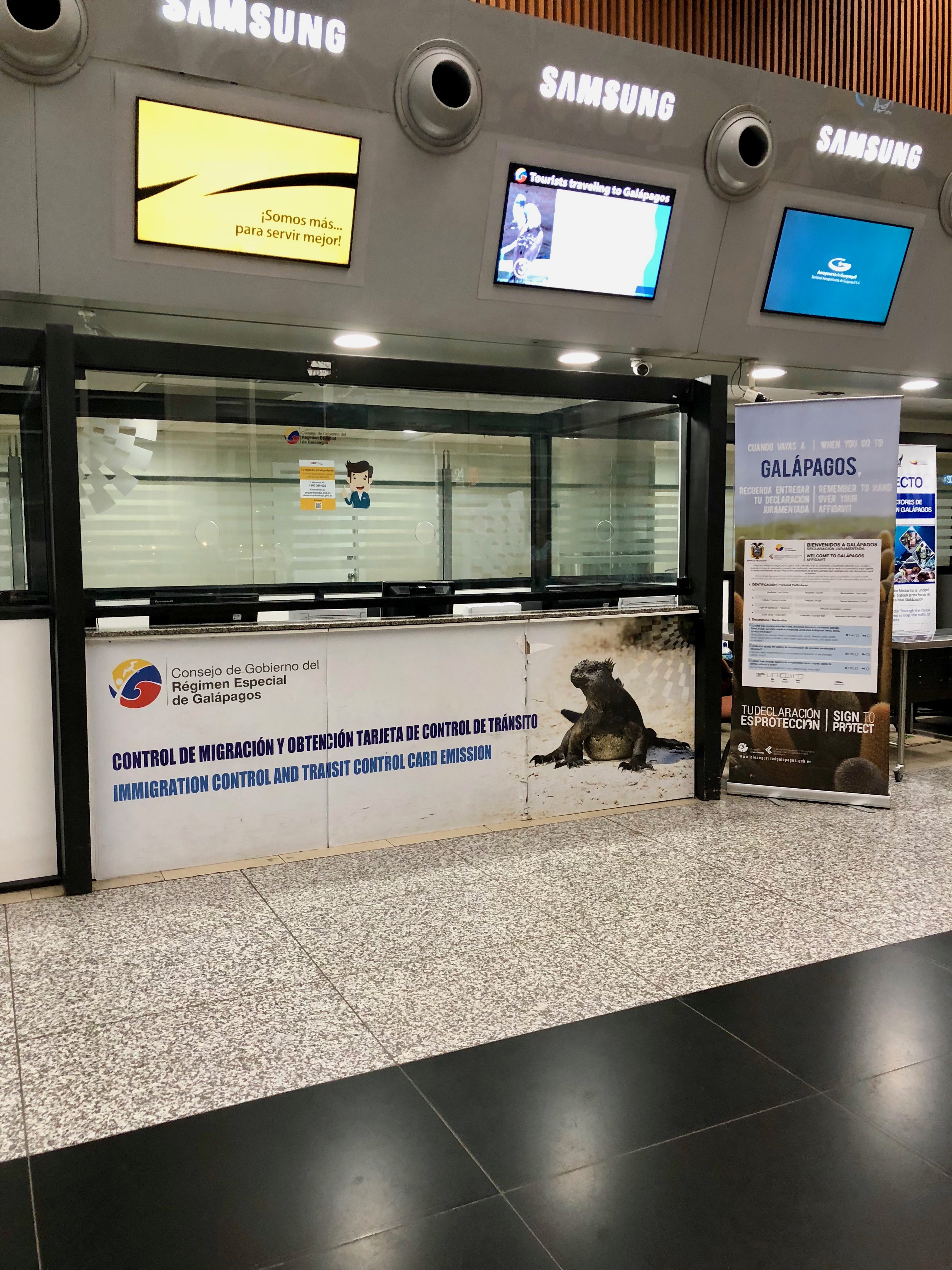
Upon arrival in Guayaquil, after you go through customs you need to go to the Galapagos Immigration Control window. When you walk out of customs, walk towards “Domestic Departures” and halfway down the terminal you will see the Galapagos Immigration Control sign picturing an iguana, an animal you’ll become very acquainted with in the coming days. At the desk you will need to show your passport, boarding pass for your Galapagos flight, and pay a $20 tax per person.
After you do so, you will receive a voucher. Hold onto this! You will need it when you arrive in the Galapagos. If you did not print out your boarding pass for your flight to the Galapagos Islands before hand, you will need to check in to your flight before going to the Galapagos Immigration Control window. I recommend printing out this boarding pass at home before you fly to Guayaquil.
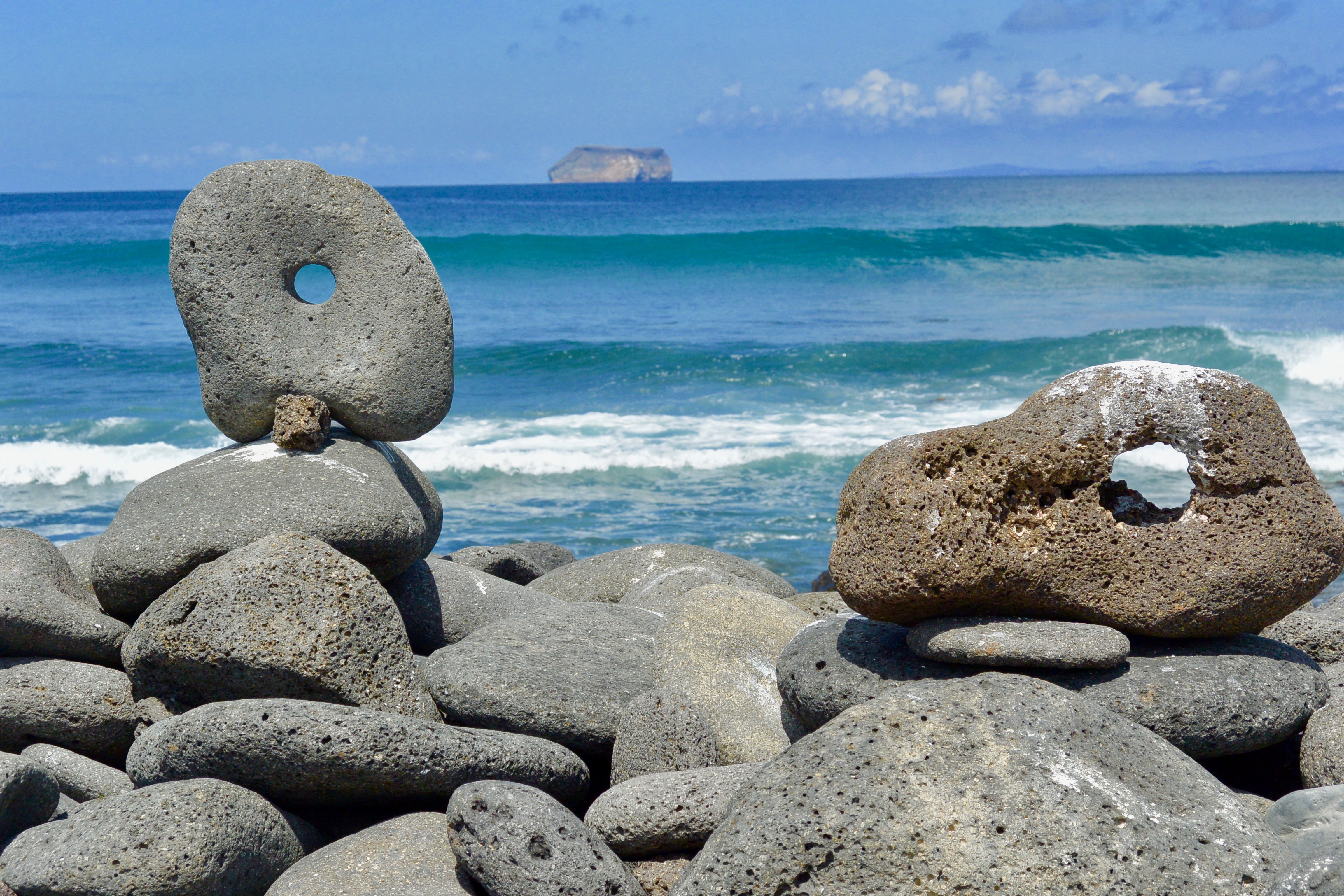
After you check in with Galapagos Immigration Control, you will then need to get your bags inspected for products that would harm the ecosystem in the Galapagos. This inspection is right next to the window. They seemed to be looking for things like food and seeds, so don’t worry, you can bring your toiletries. Your bags will go through a scanner and after Galapagos Immigration Control ensures that your bag is okay, they put a zip tie on the zipper of the bag you are checking so you can’t open it. After your bag is inspected, you can go check your bag. This is another reason why I recommend printing out your boarding pass beforehand so you don’t have to go to the check in counter for your flight twice.
I’d recommend traveling light to the Galapagos. Although you’ll need some gear, you will not need to dress up at all since it is an extremely casual atmosphere of either locals who don’t care what you’re wearing, or active travelers who also don’t care what you’re wearing.
Bring a 3-ounce bottle filled with laundry detergent and hand wash your clothes in your hotel sink. I did this the entire trip with Anthony’s clothes and mine and I didn’t even finish the bottle. You will also not want a heavy suitcase when you’re getting on and off, planes, boats, and cars on many days of this trip.
We got through Galapagos Immigration Control, flight bag check in, and airport security within about 40 minutes, and we had zero hiccups. I would recommend leaving some wiggle room time between your arrival in Guayaquil and your flight to the Galapagos just in case.
Arriving in the Galapagos
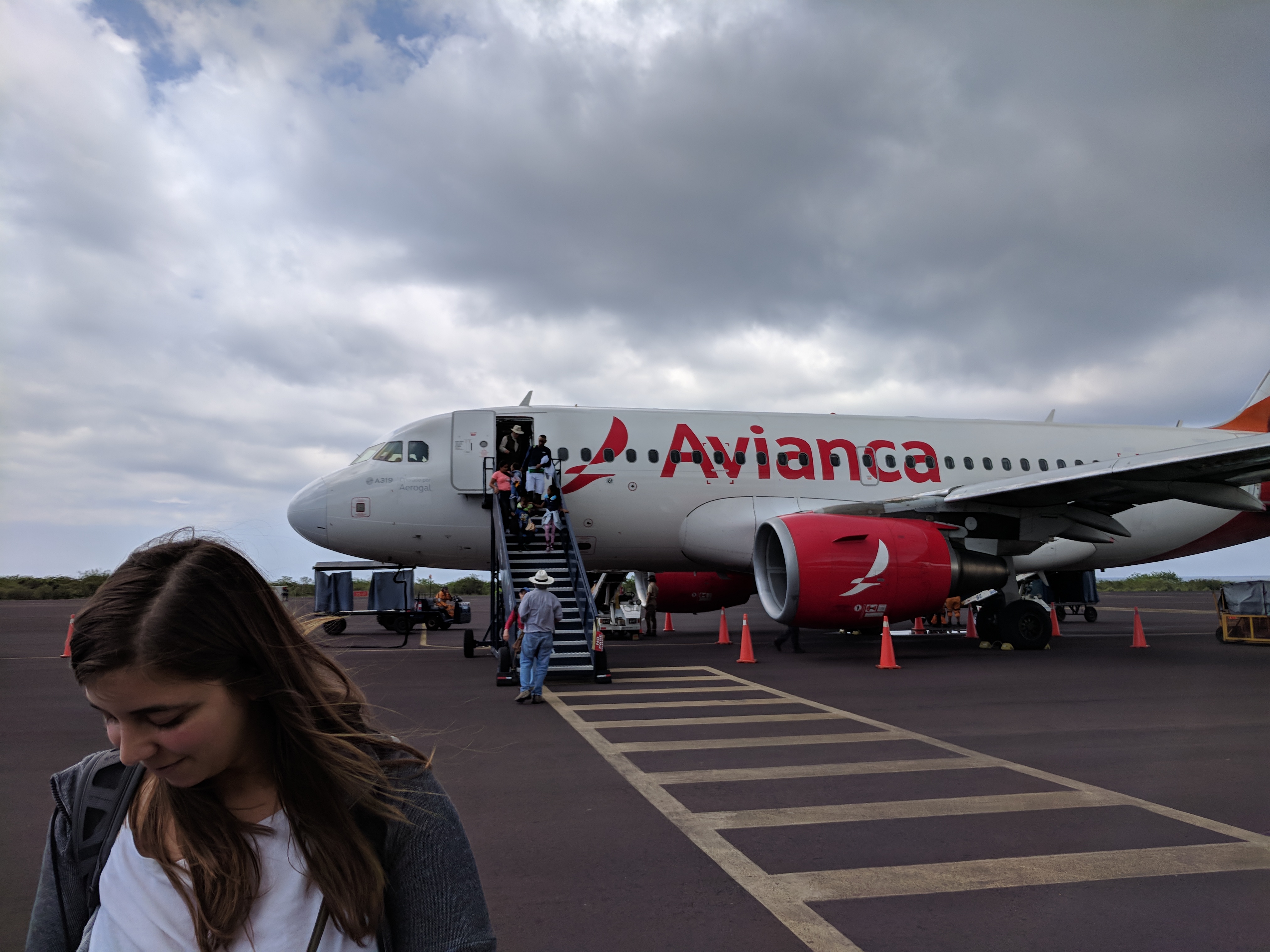
When you arrive to your island of choice, ours being San Cristobal, you will go to passport control where you will need to present your passport, the $100 fee to enter the Galapagos Islands, and your voucher that you received from the Galapagos Immigration Control window in Guayaquil. You will receive another form when you enter, which you will need to keep for exiting the Galapagos so keep that in a safe place.
In San Cristobal, when you exit the airport you won’t see a taxi line, so wait and see if one shows up. The taxis are typically white pick-up trucks. Usually it will say taxi on it but sometimes it doesn’t. I know it sounds sketchy to just get into a white pick up truck with a stranger in Ecuador, but don’t worry, they are very safe and I never ever felt like I was in danger entering one of these taxis.
San Cristobal
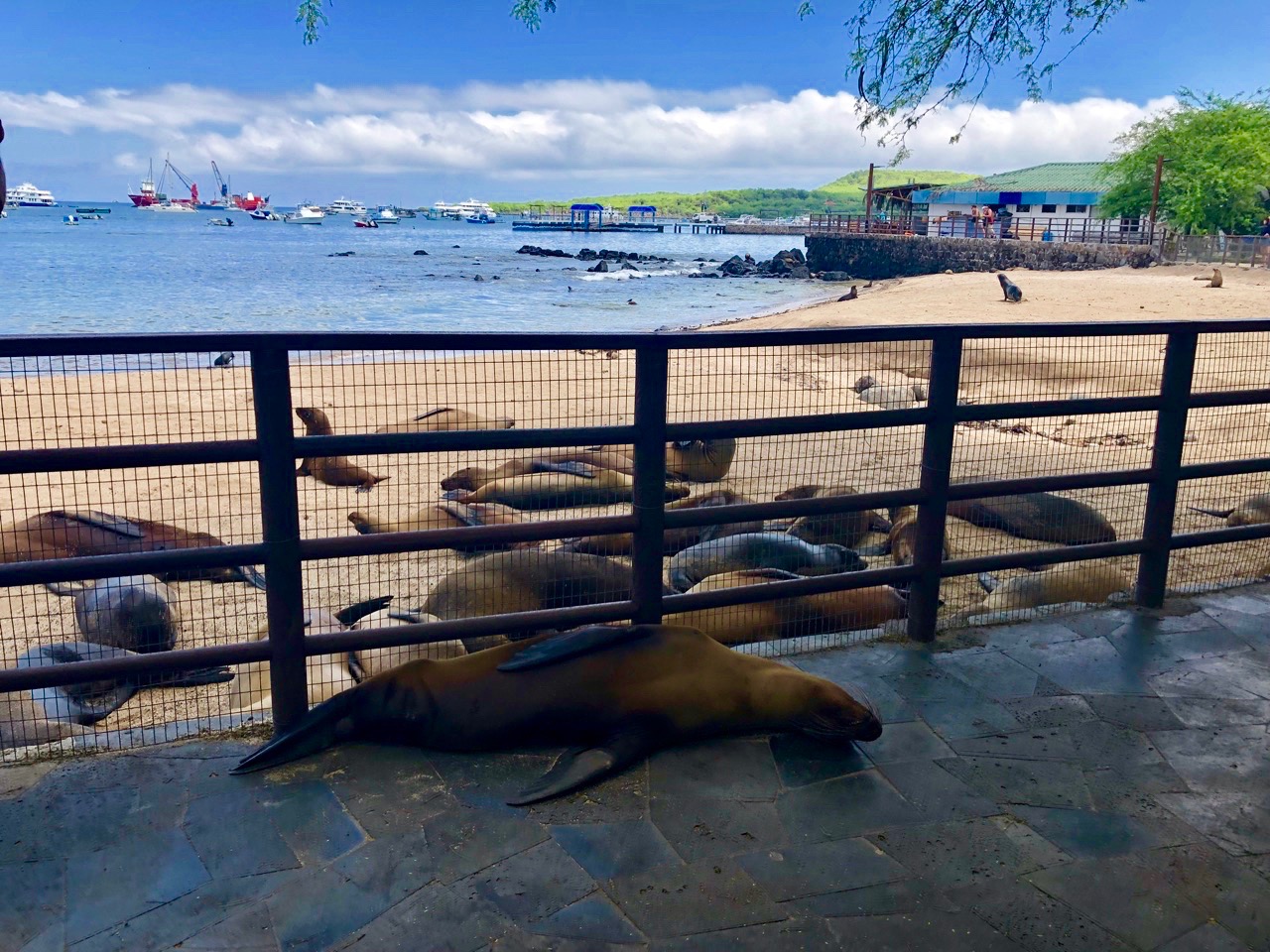
Charles Darwin began his evolutionary journey to the Galapagos on San Cristobal, so it was only fitting to start there. San Cristobal is a very special island that offers opportunities to learn about the human history of the islands, swim with sea lions (or even hammer head sharks if you dare), and witness some unforgettable natural beauty.
Stay at the Galapagos Sunset Hotel
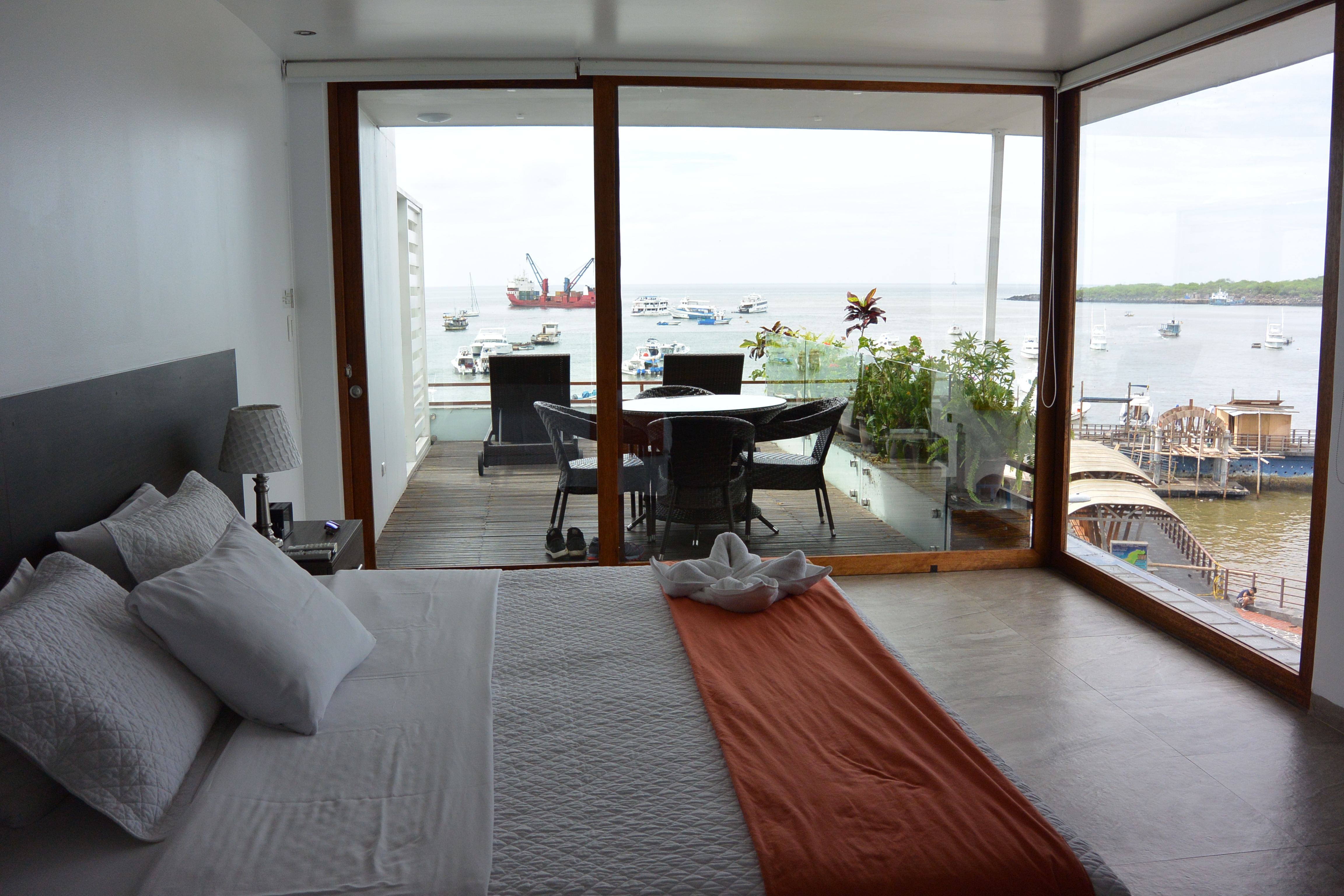
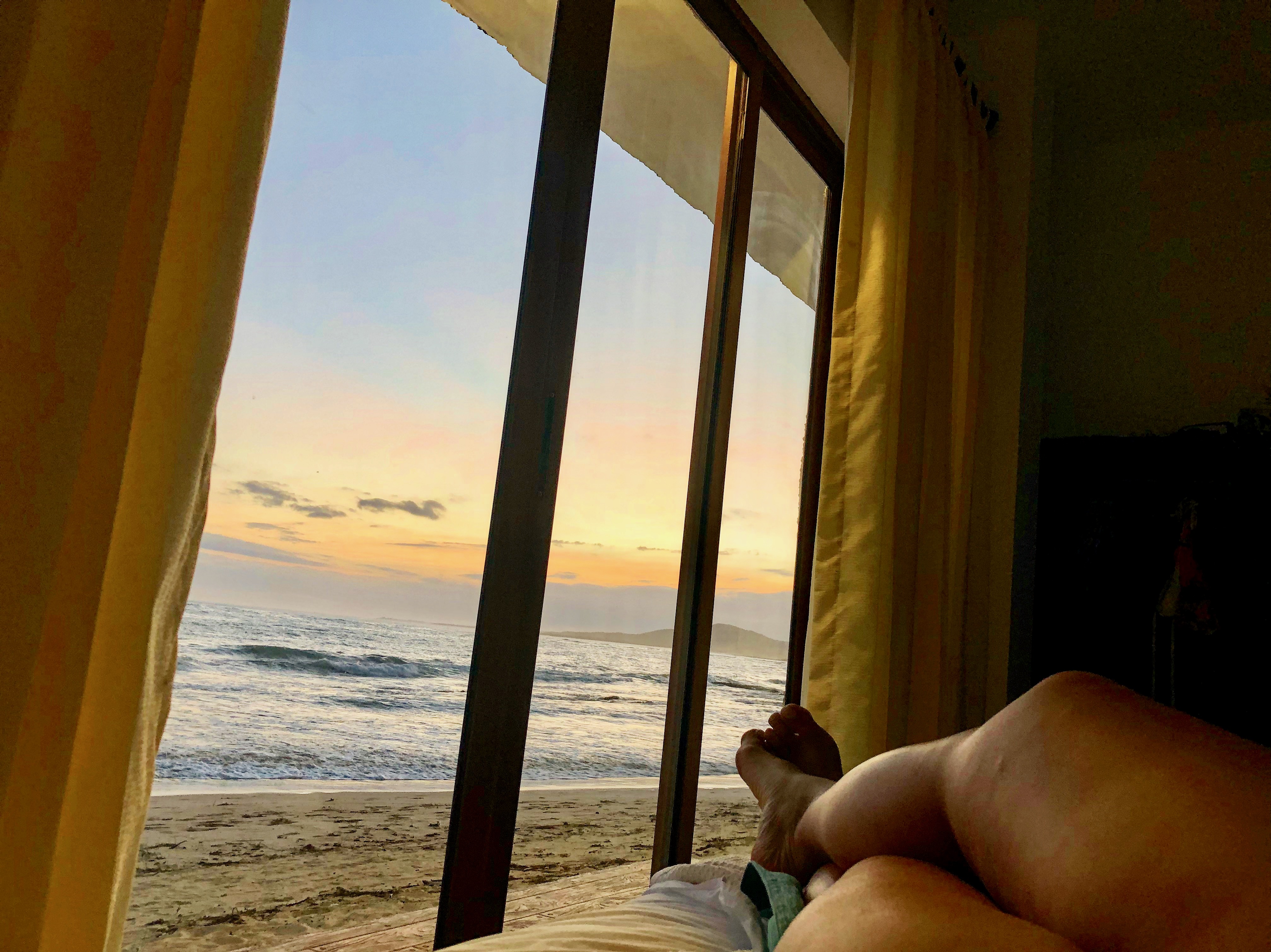
We spent about 3 days on San Cristobal. We stayed at the Galapagos Sunset Hotel, an excellent hotel with a warm, welcoming staff and rooms right on the harbor of Puerto Baquerizo Moreno. You can go out on your balcony and hear the sea lions barking and also walk right across the street and pay them a visit. Our first days in the Galapagos were very rainy, and our room actually had a small leak, but this was expected since it was monsooning outside that day. The staff fixed the leak right away, but they were so accommodating, they upgraded us to their rooftop suite right away. As you can see from the pictures, it was an incredible room, with breakfast served on your private balcony in the mornings.
First, Go to the Interpretation Center, Las Tijeretas, and Punta Carola
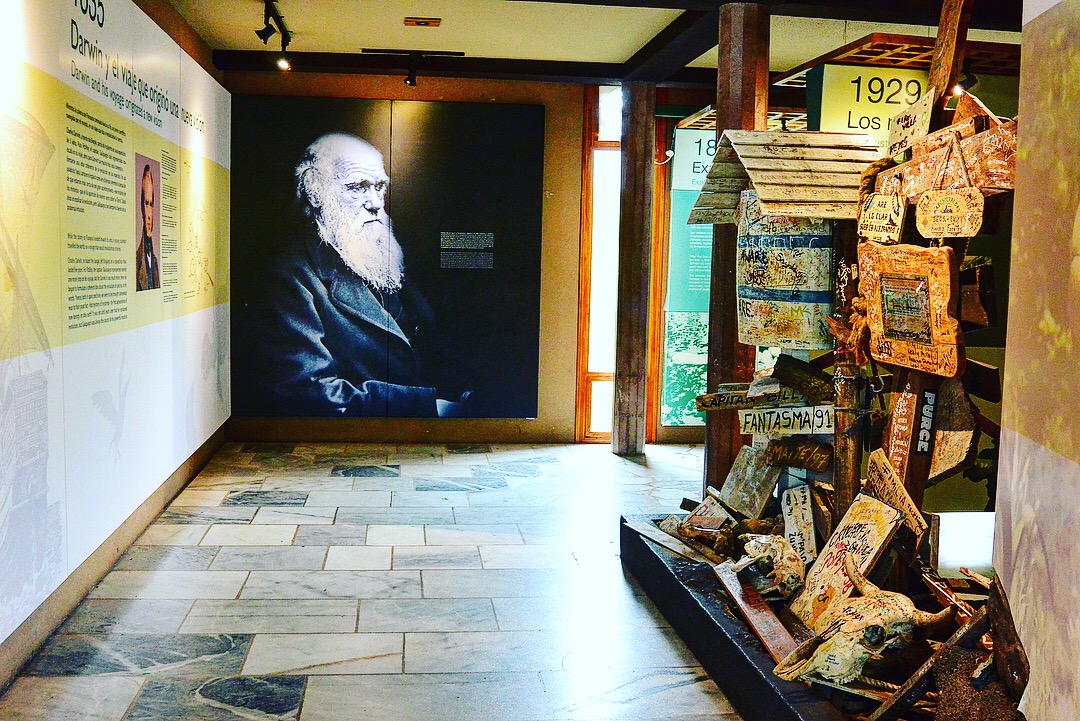
We didn’t let the rain spoil our fun. We grabbed our rain jackets and waterproof backpacks and went to the Interpretation Center to start our journey with a little historical background. The Interpretation Center provides you an overview of the ecological and human history of the Galapagos Islands. I recommend doing this at the beginning of your trip. Learning about the history of a region allows you to see a place from a different and more informed lens. When you arrive, chances are no one will be at the front desk. Just write your name and date and you’ll be set to take a self guided tour of the place. We walked around for about an hour and that was plenty of time.
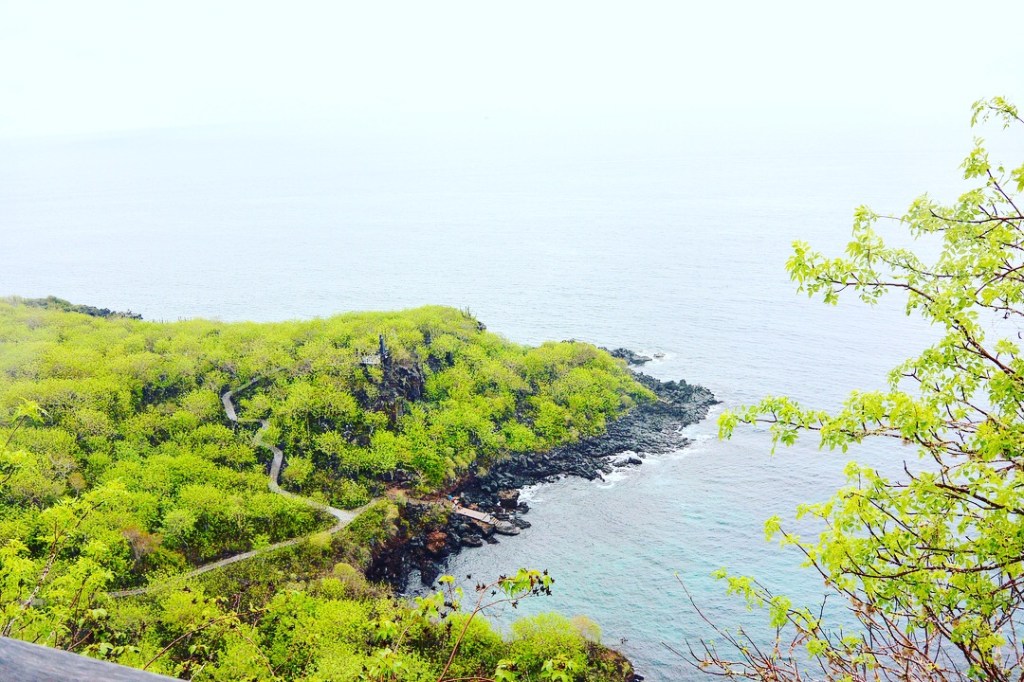
After your tour, make your way to Las Tijeretas. There is a path right outside of the Interpretation Center. Follow the signs to Tijeretas. Take the upward paths to some amazing viewpoints. Take the downward paths to Tijeretas Cove, where you can snorkel. Unfortunately, we never got a chance to snorkel there because a sea lion was laying across the entry.
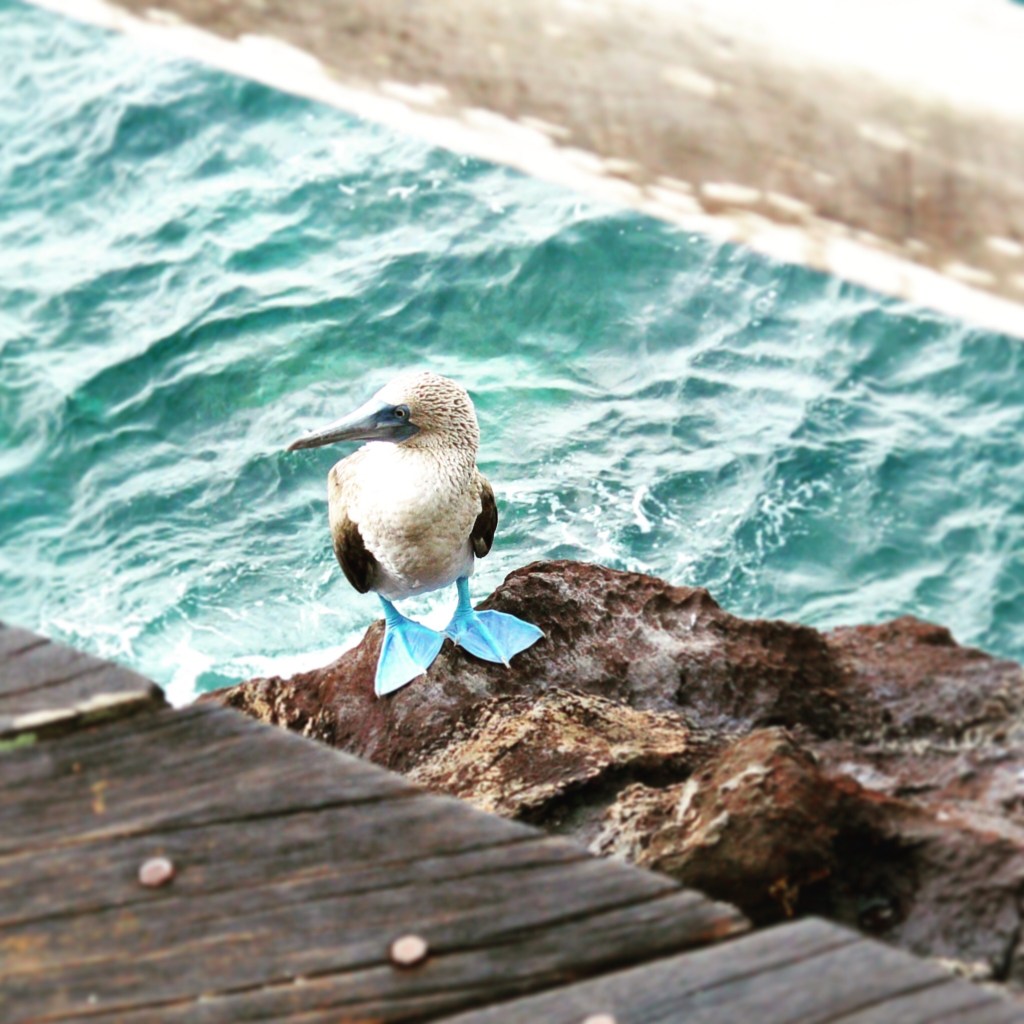
You need to stay at least 2 meters away from animals and it is illegal to touch them in the Galapagos. Make sure to keep your distance, even if the animals try to come to you. Sea lions are especially friendly and will swim up to you, but do your best not to touch them. The government makes these rules to preserve life on the island and make sure these animals remain in the wild and do not become reliant on humans.
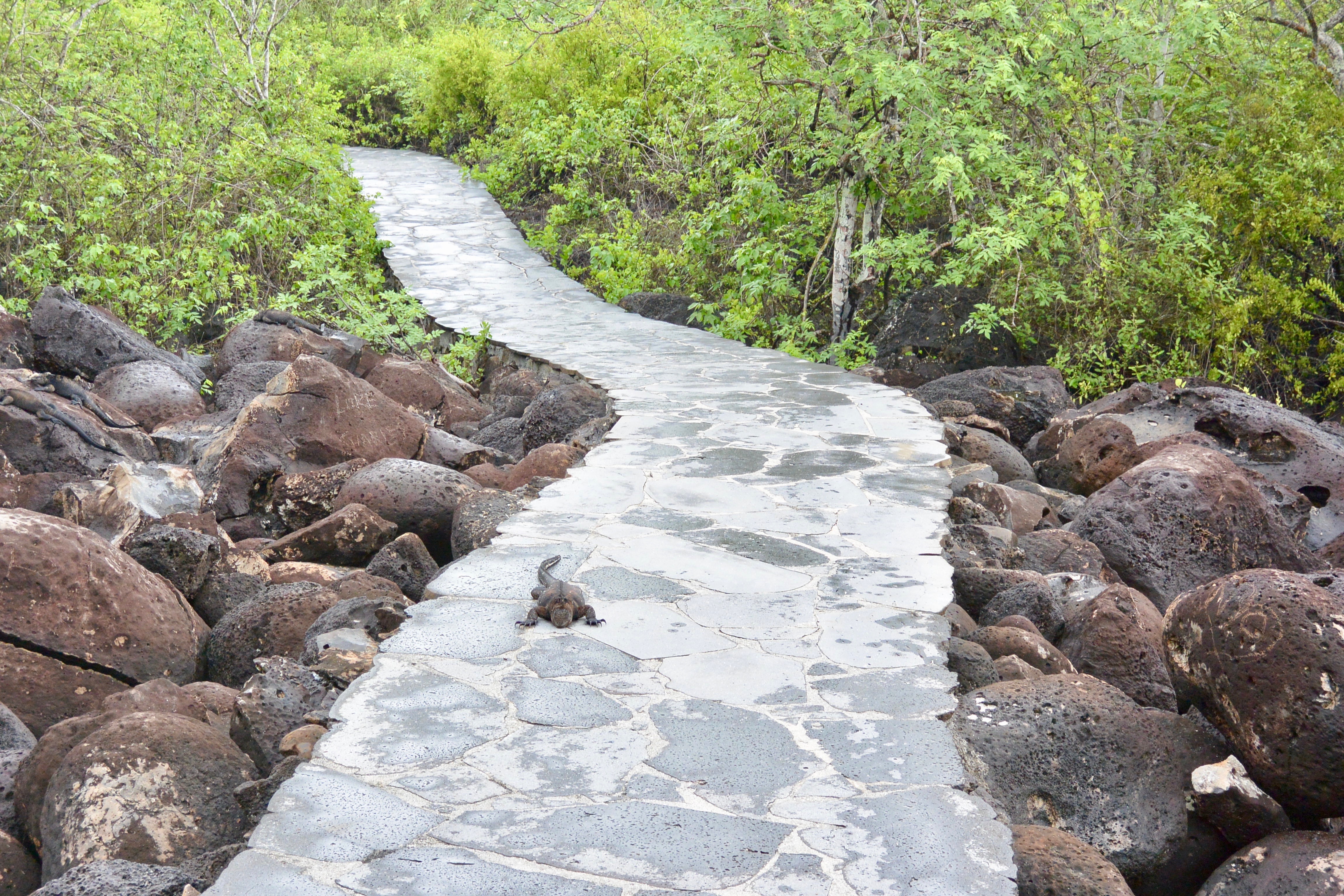
After our hike to Las Tijeretas, we took the path down to Punta Carola and swam around with a mask and snorkel. There were a lot of sea lions there and a few actually swam right up to me. It was an amazing experience, but it was a challenge to keep my distance from them as they are the dogs of the sea.
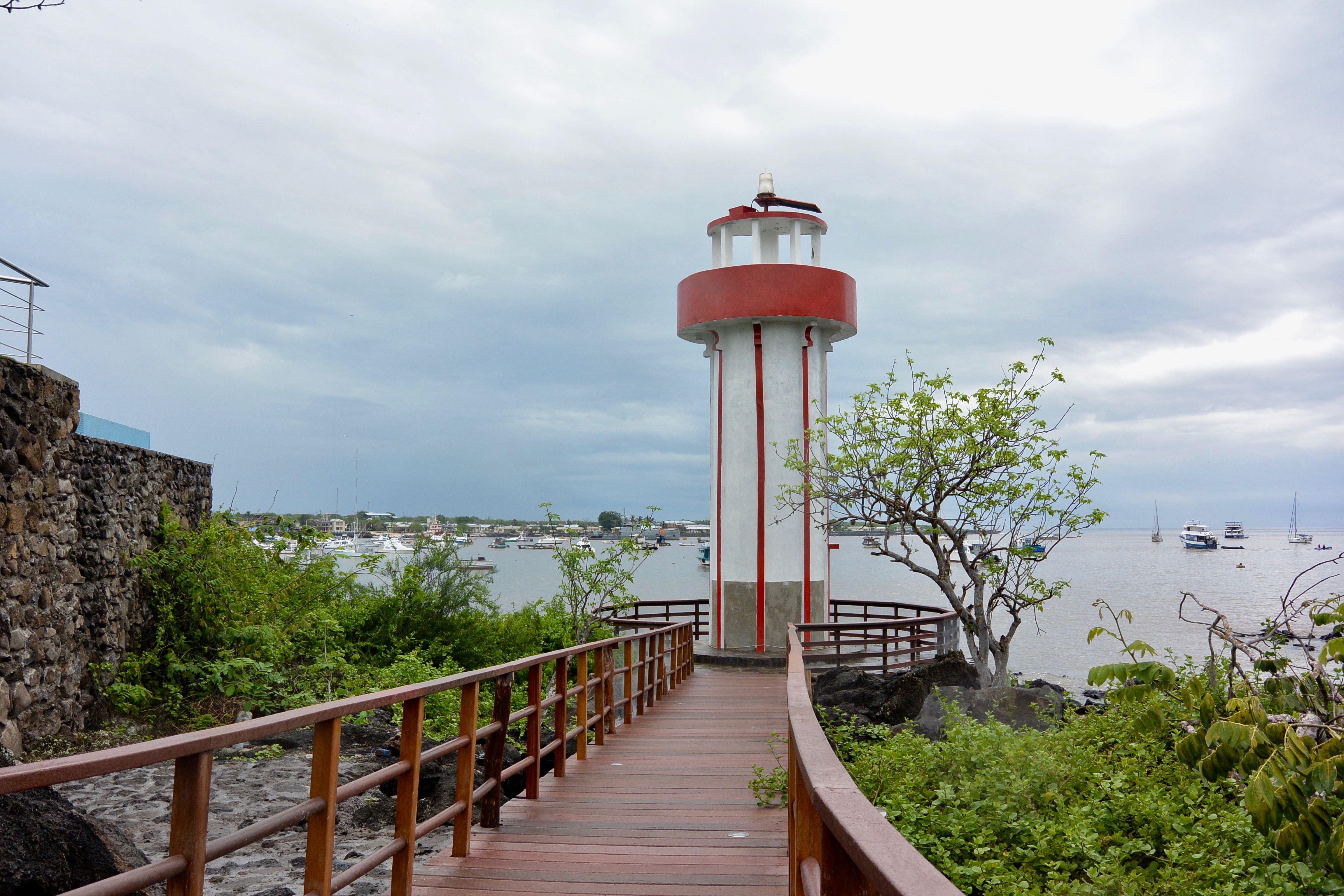
Explore El Junco, Galapaguera, Puerto Chino, Otoy, and La Loberia
The Galapagos Sunset Hotel provided us with a private driver and tour guide, Susana, and for approximately $60 total she took Anthony and I to El Junco, Galapaguera, Puerto Chino and Otoy Restaurant & Organic Farm. After all of these activities we still were able to visit the beach at La Loberia afterward. On the way to El Junco, Susana filled us in on immigration policy in the Galapagos and I was all ears of course. Apparently, there are only two ways one can live in the Galapagos: (1) be a native to the Galapagos, meaning you or your parent were born on one of the islands; or (2) you need to marry someone who is a Galapagan native. However, even if you do find your dream Galapagan and marry them, you will still need to wait 10 years to get your permanent residence on the islands, even if you are from the Ecuadoran mainland. But they’ll let you stay in the meantime as a temporary resident. Susana herself is married to a Galapagan naturalist and was able to emigrate from mainland Ecuador to the Galapagos after they got married.
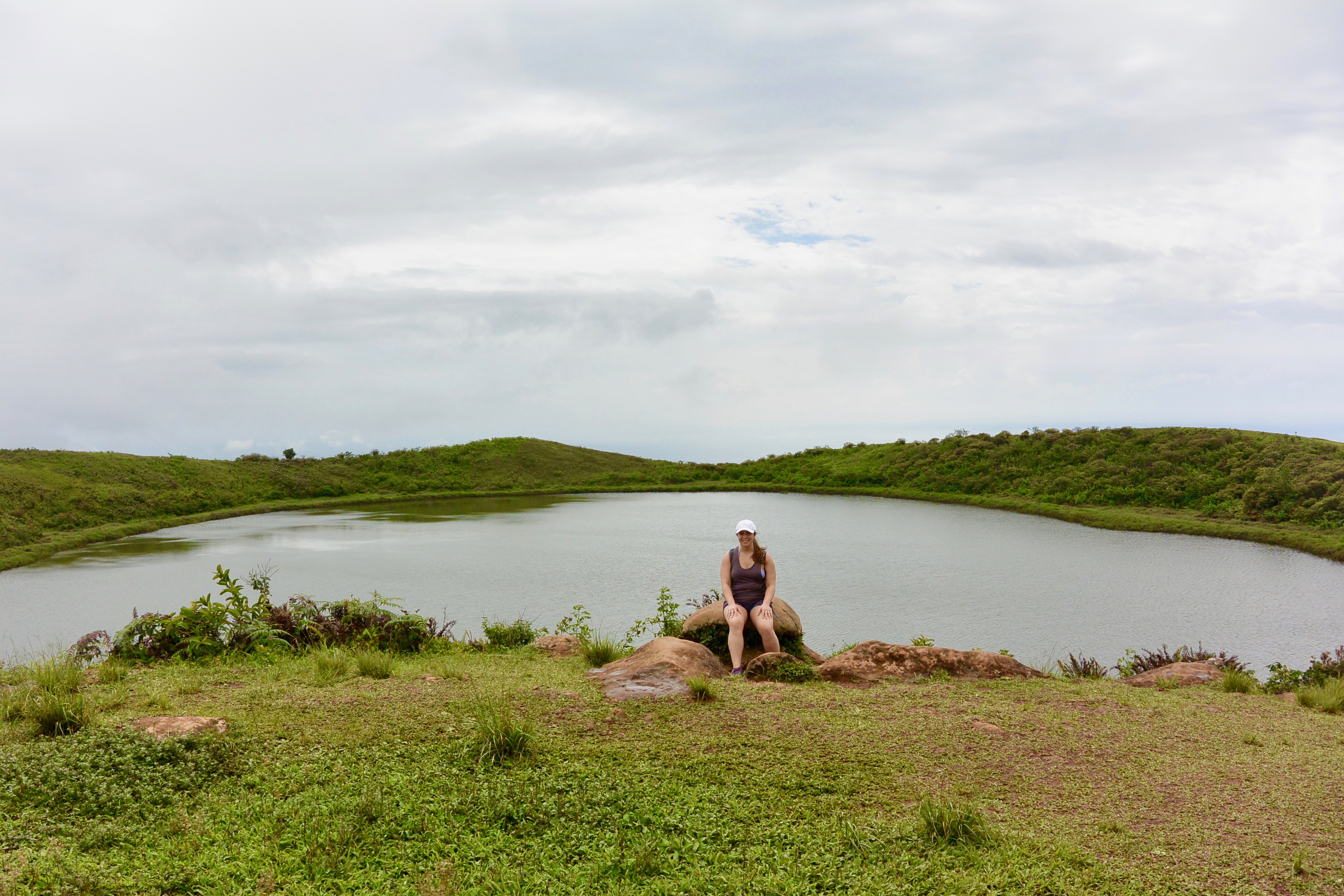
Once we arrived at El Junco, we climbed an easy uphill trail to the top. El Junco is a crater lake located in the highlands of San Cristobal. Once you make it to the top you arrive to the beautiful sight of the lake and sweeping views of the highlands. There are some short hiking trails you can take around the lake to explore the different vantage points El Junco has to offer. Susana told us that her father in law used to have to go to El Junco with buckets to gather drinking water from the lake as it is one of the only sources of fresh water on San Cristobal.
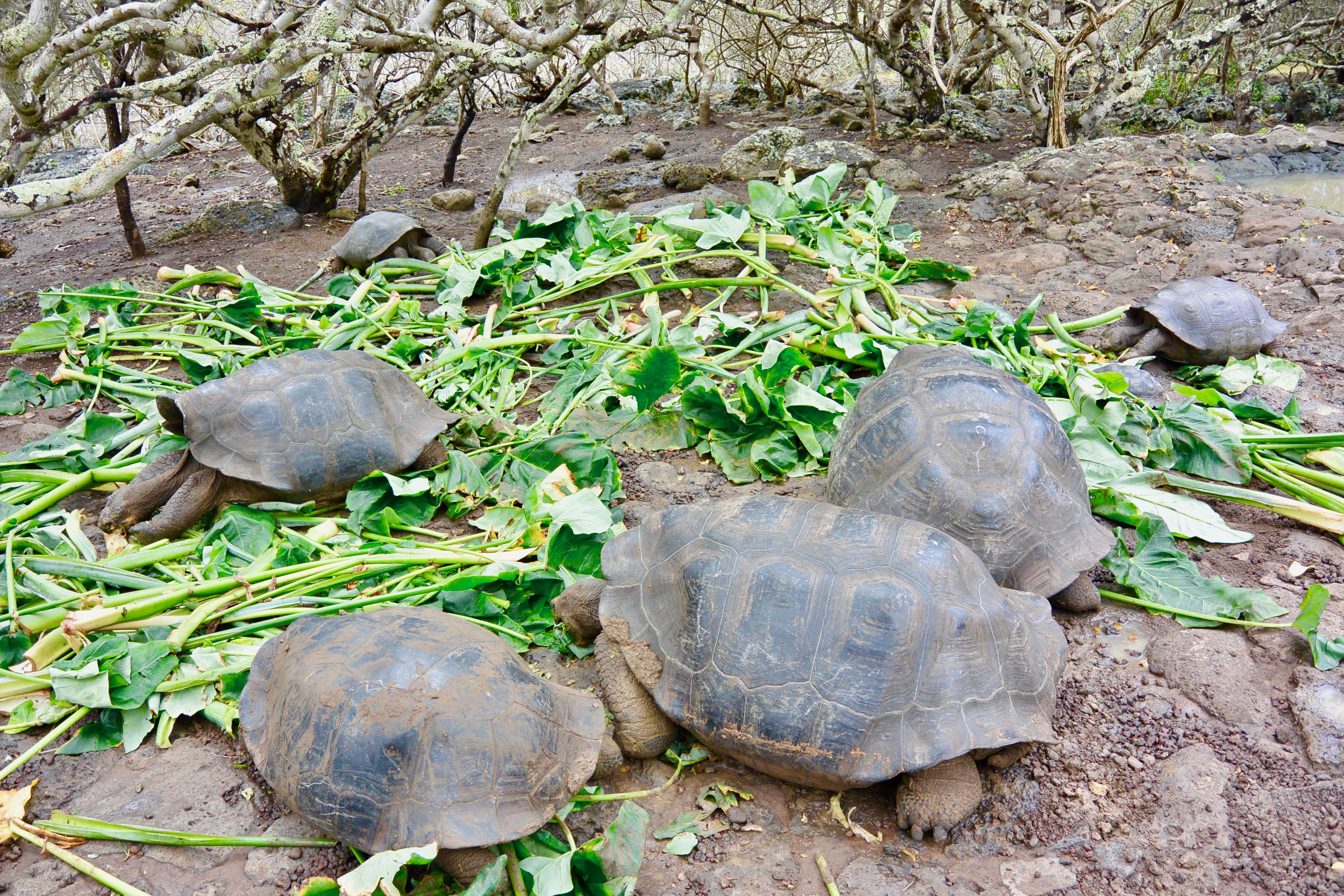
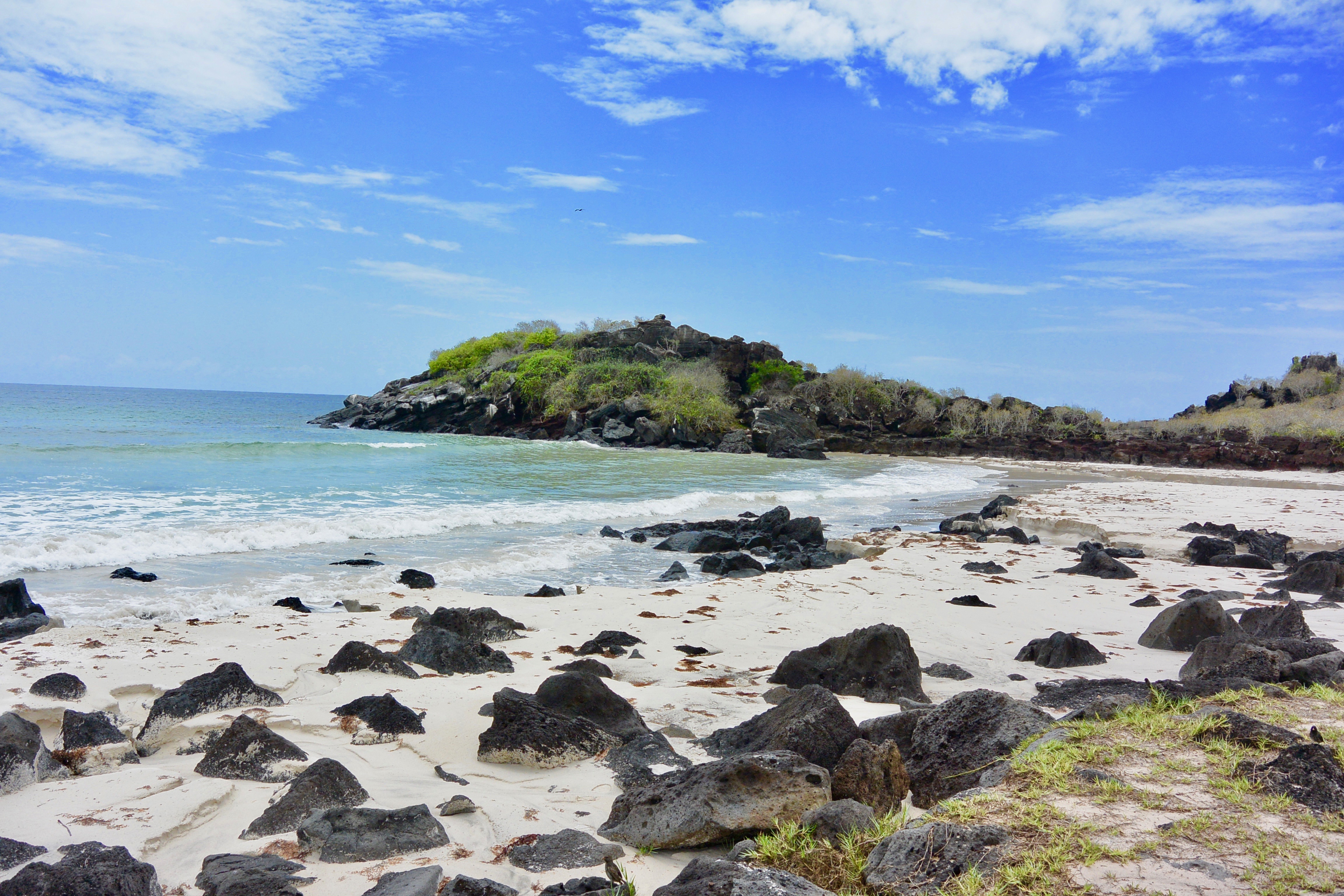
After we took full advantage of the views in El Junco, we headed to Galapaguera to see the famous giant tortoises. Galapaguera is a refuge where giant tortoises live in semi-natural conditions. There are several trails through the grounds where you can observe the giant tortoises. They are pretty protective so be careful. We observed a family of the tortoises and one of the males felt threatened and began starting towards us. But don’t worry, we were able to escape with time to spare. Afterward, we went to Puerto Chino, a popular beach on the island. Unfortunately, because there was so much rain that week, the beach seemed to be washed away and we walked along the boardwalk to something reminiscent of a lagoon with lots of large rocks. We had a nice time walking around the area and climbing the rocks. There were a lot of finches in the area and when I put out my hands they wanted to perch on my fingers, which made me feel like a Galapagan Disney princess.
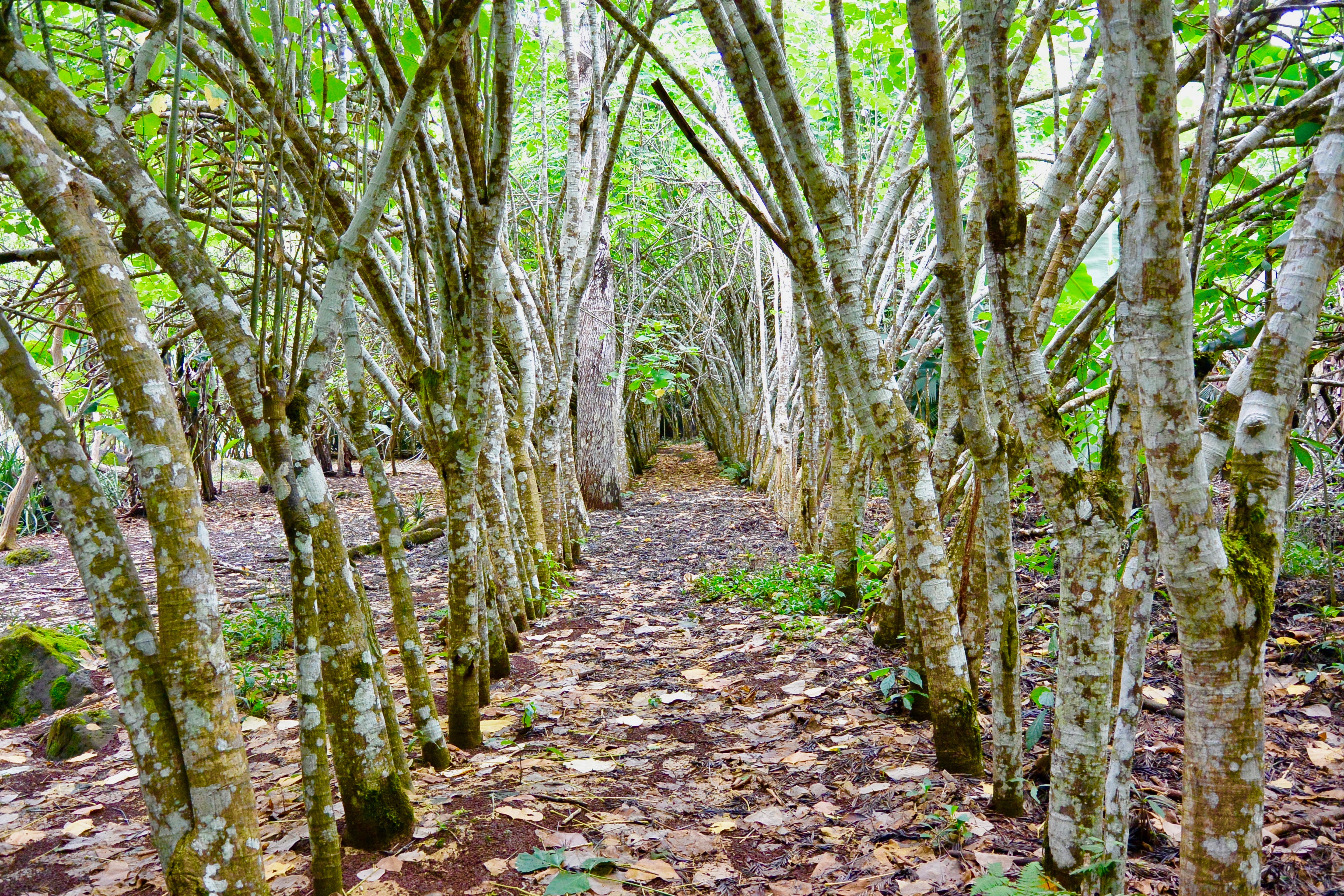
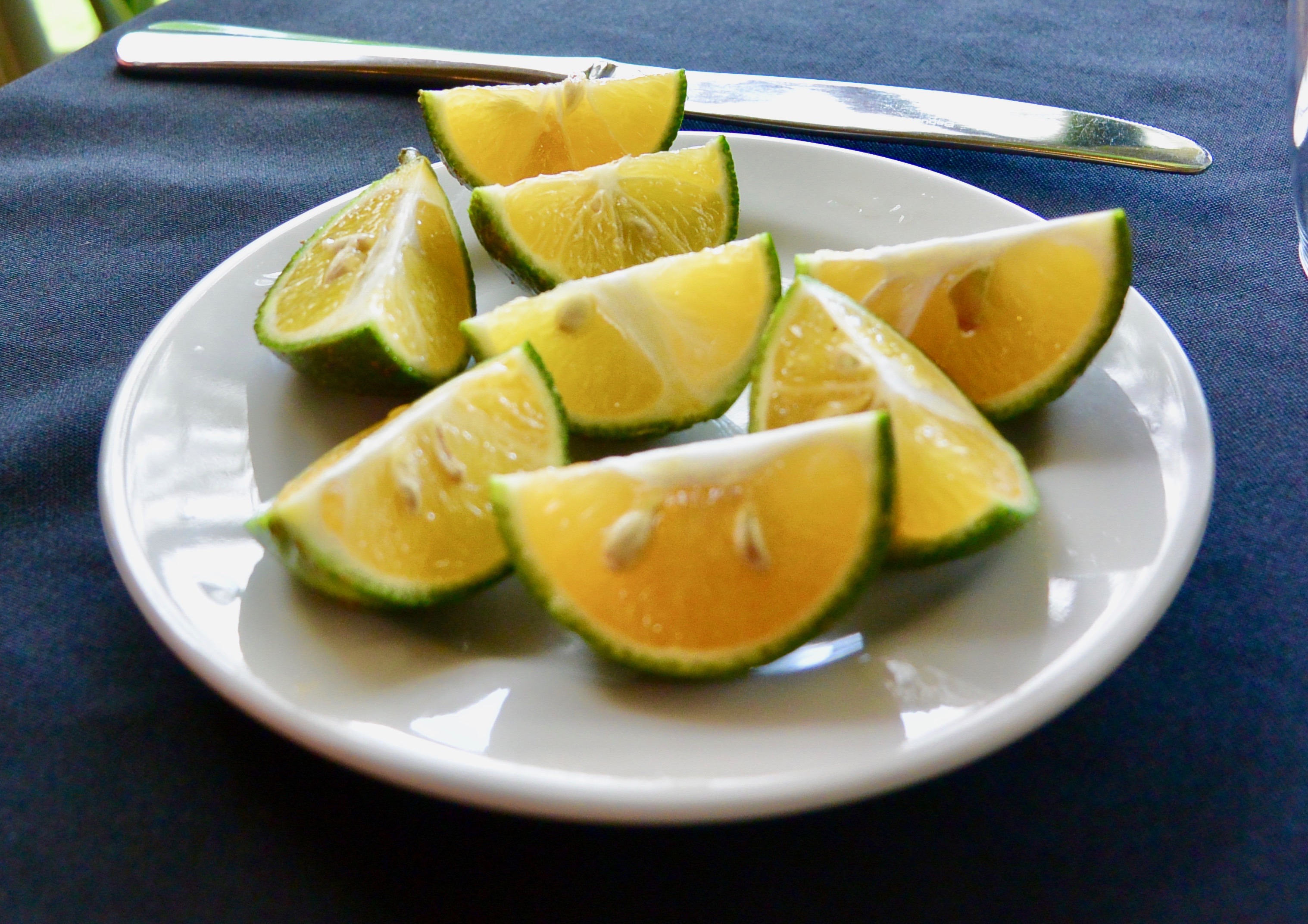
All of this activity left us with quite the appetite. We headed over to Otoy, an organic restaurant and farm in the highlands about a 20-minute drive from town. From the amazing farm-to-table fresh food and natural scenery, this place was an exemplary San Cristobal experience. When one of the farmers, who lives in a cute little house on the 6-acre farm, offered us a tour of the property we couldn’t resist. He showed us many of the delectable vegetables the Galapagos has to offer, including the Galapagos lemon, our favorite.
To enjoy this fruit to the fullest, cut it into quarters, put a little salt on it and suck on the wedges. This lemon has a sweet taste, as if it were a hybrid between a lemon and orange, that didn’t leave you with a sourpuss.
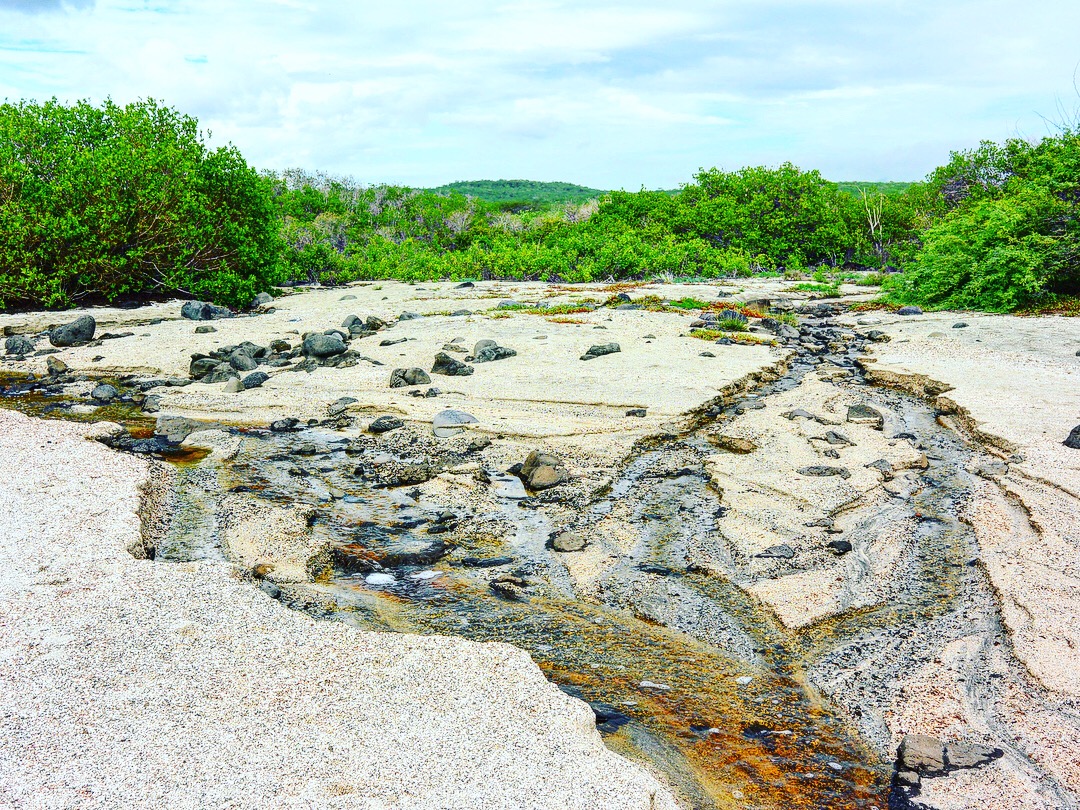
On the same day as our lovely tour with Susana, we had enough time to sneak in a visit to La Loberia, another popular beach on San Cristobal. La Loberia is about a 5-minute drive from town. Once you arrive there, you will come upon a short trail to the beach with small streams along the way flowing into the ocean. Each of the streams has a red tinge presumably from the minerals on the rocks they were flowing from. You’ll have to walk through these streams to get to the beach but they were shallow and not very difficult to get through. Once you reach your final destination you can swim with the sea lions and snorkel. There is always something to see underwater in the Galapagos.
Our Voyage to the Uninhabited Islands
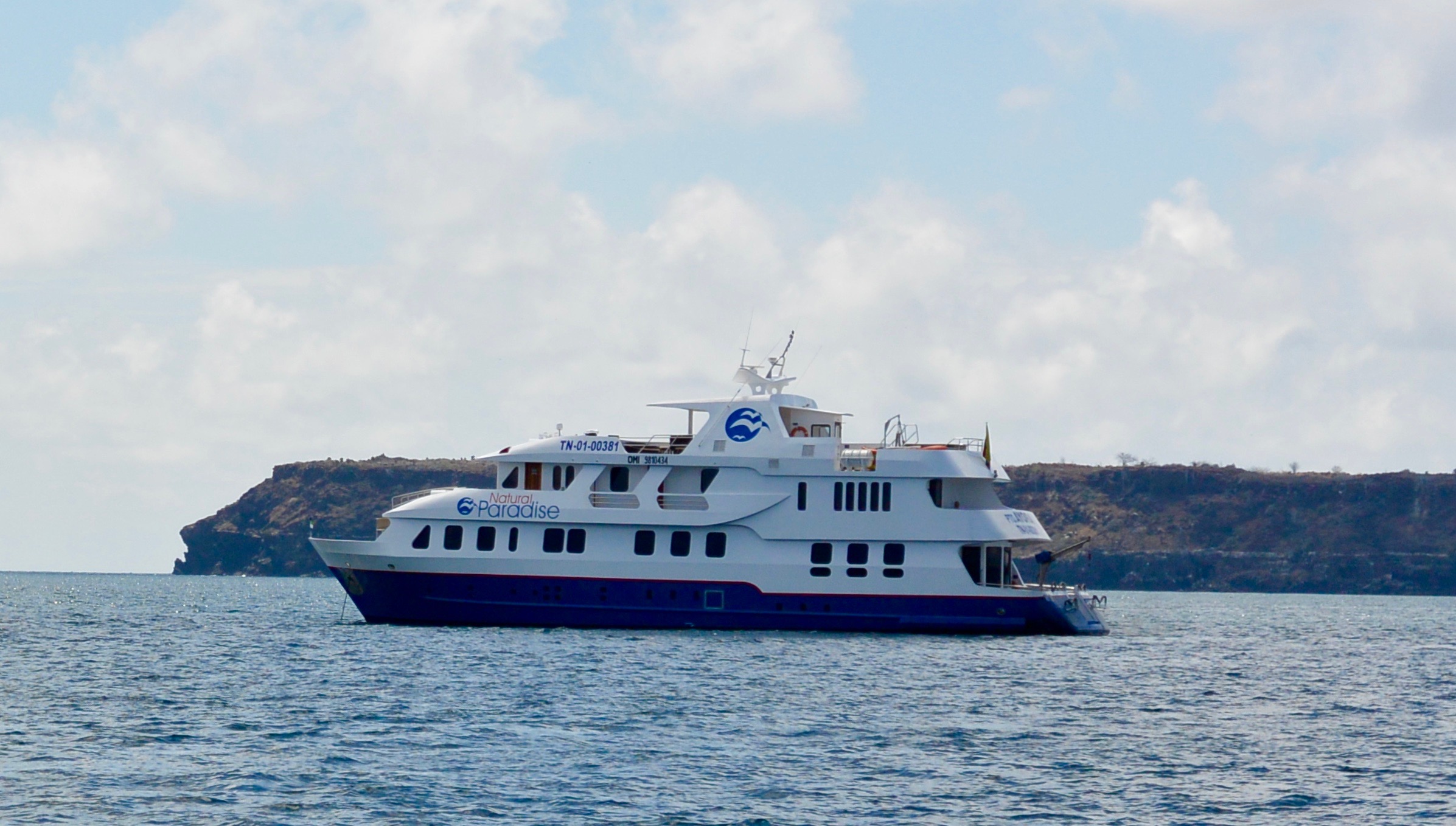
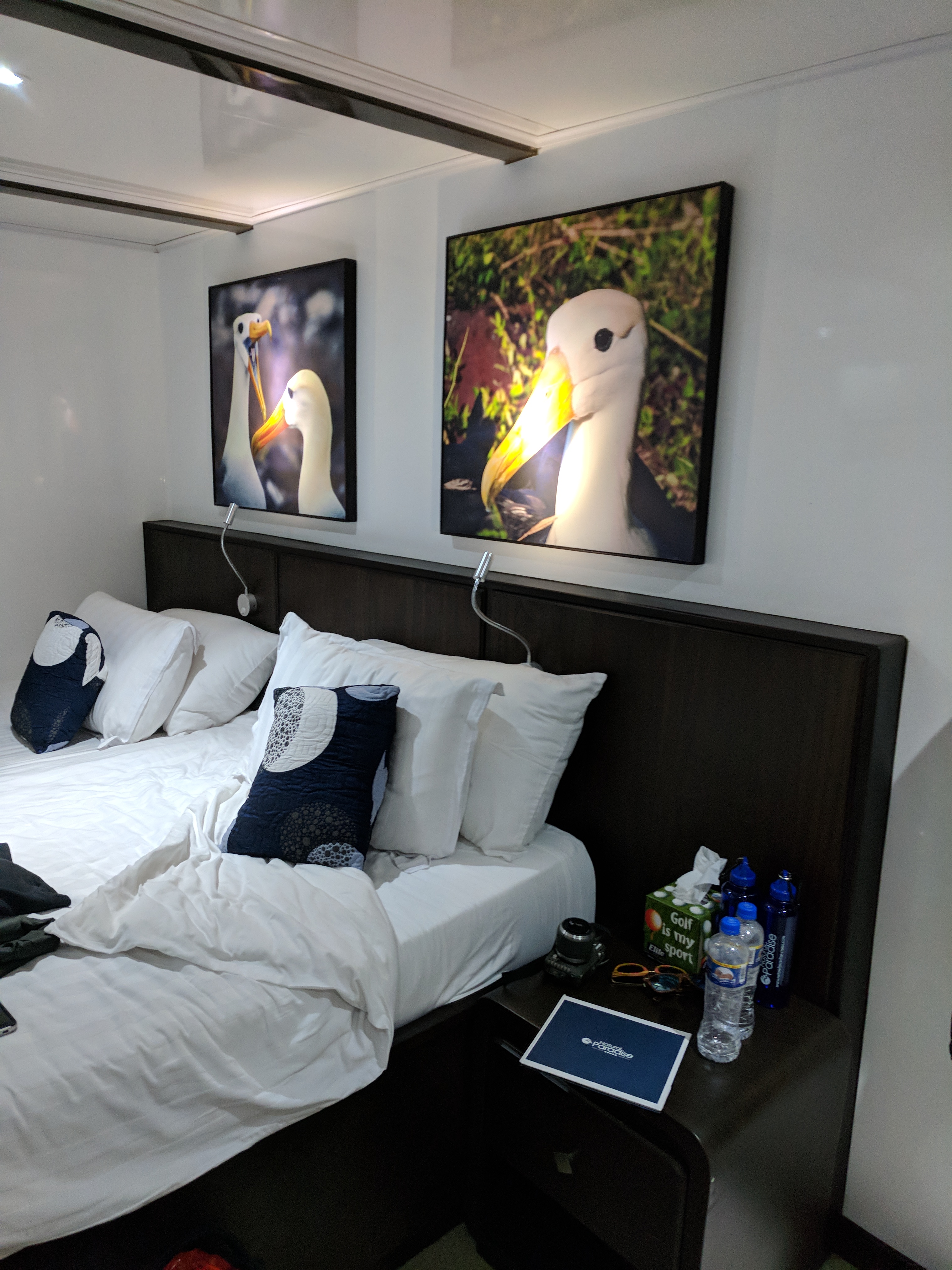
If you’re debating which boat to choose for your cruise through the Galapagos, look no further than the Natural Paradise. This boat offers a full-time naturalist on board, up to three excursions every day, a hot tub on the top deck, and delectable meals for breakfast, lunch, and dinner. However, be prepared for a packed schedule and a lot of activity. Anthony and I were exhausted after 5 days on this boat, but we more than satisfied with our experience.
Spring for the junior suite with a balcony on the upper deck. This boat is not very large and carries a limited number of guests. Although this offered a private experience, because the boat is not a cruise ship you can hear the engine and anchor on the lower deck and that can wake you up at night.
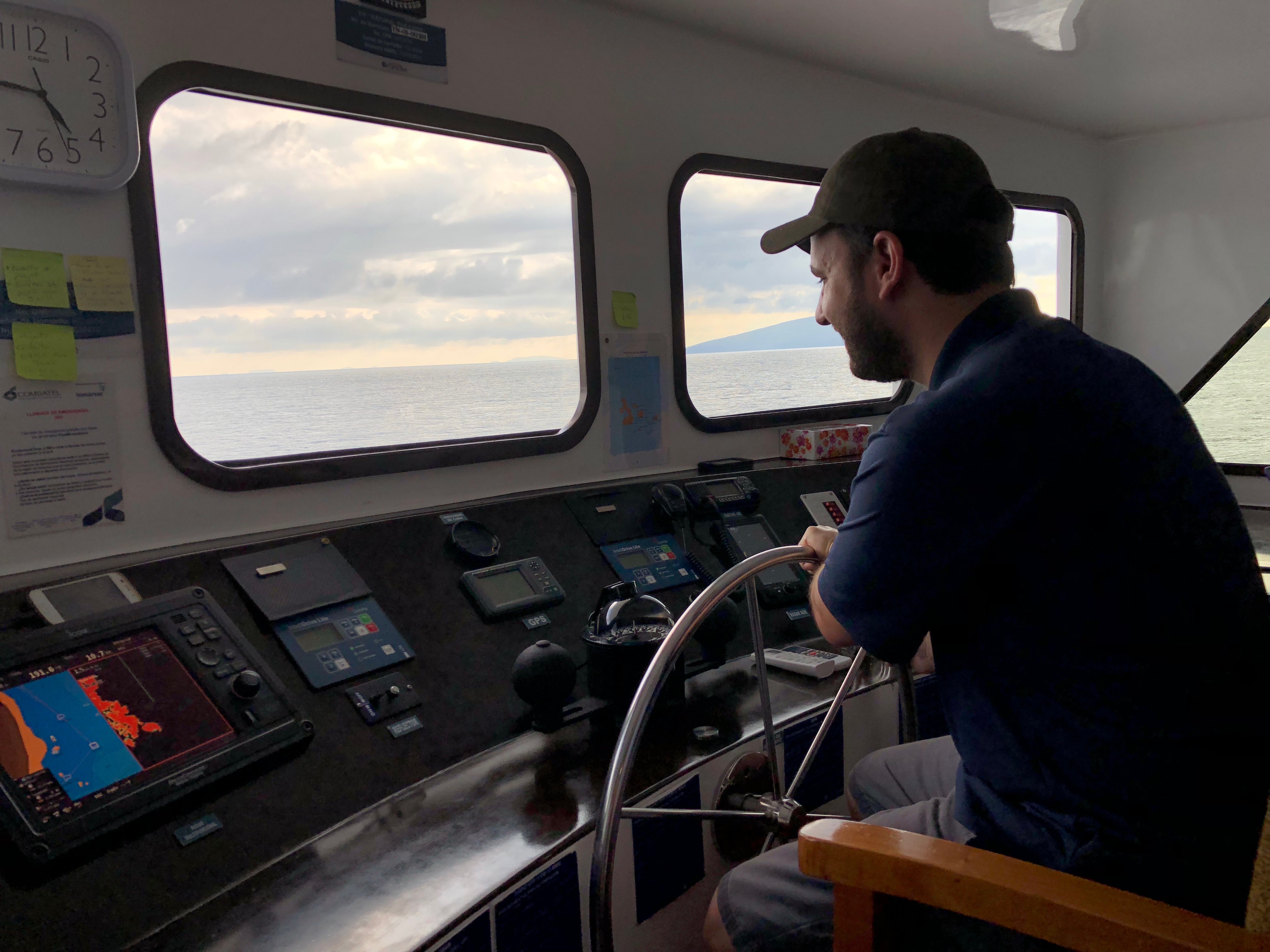
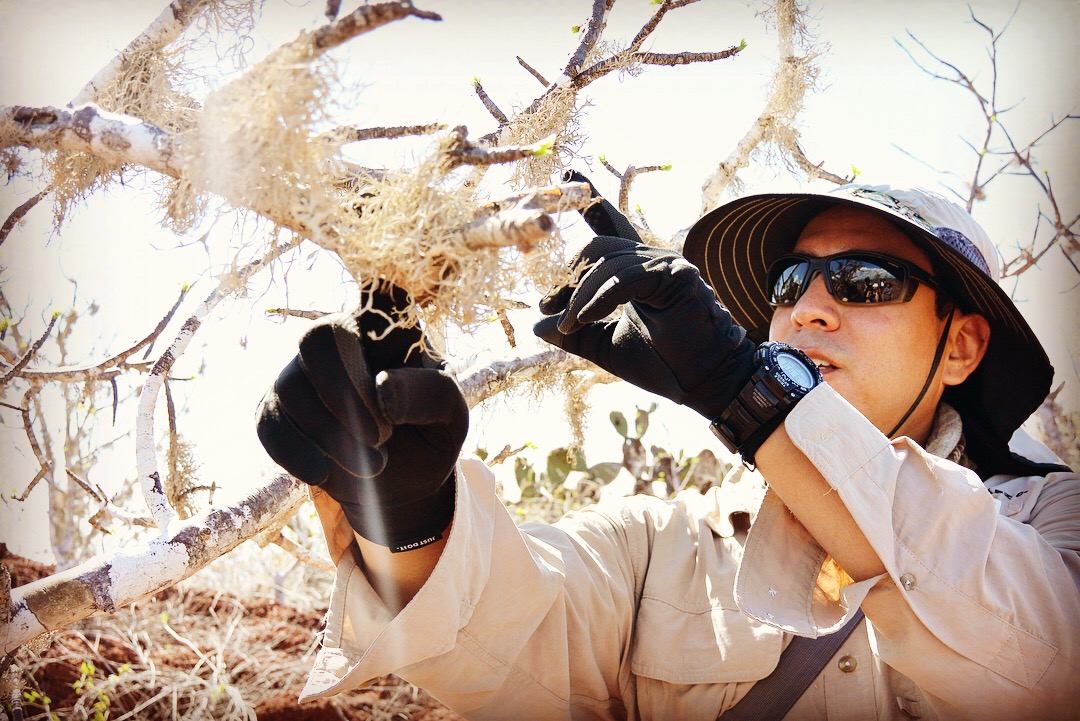
We chose the 5-day – 4-night option, which ferried us to six of the Galapagos Islands in style: North Seymour Island, South Plaza Island, Rabida, Bartholomew, Santiago Island, and Santa Cruz. David Paez, the on-board naturalist, was extremely informative and had an answer to every outlandish question we asked. He is a freelance naturalist so he is not always on-board the Natural Paradise, but I think he is worth seeking out when you book your cruise.
DAY 1: Boarding on San Cristobal and Kicker Rock
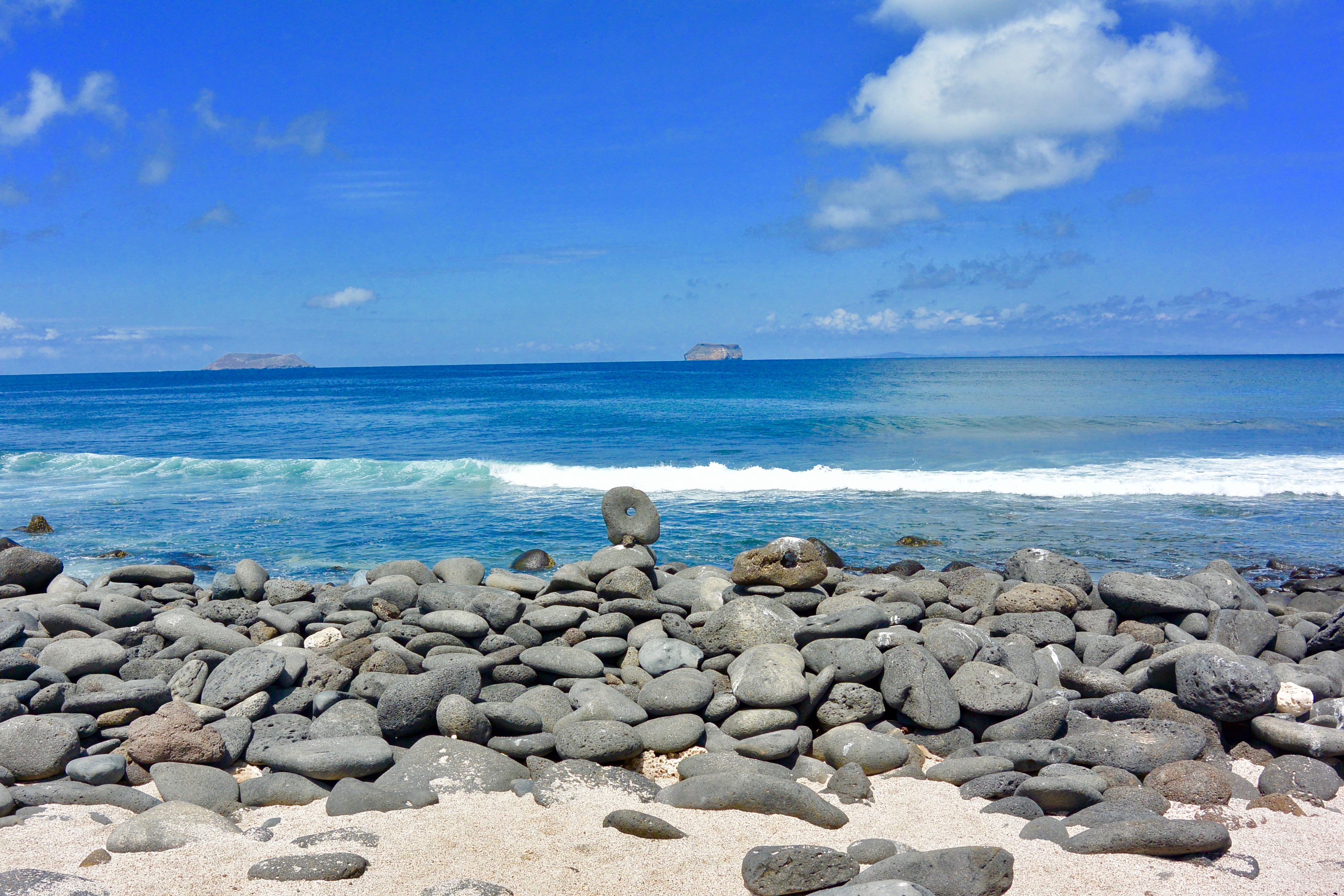
We boarded on San Cristobal and we were scheduled to go to Kicker Rock to swim with hammerhead sharks. Unfortunately, because the rest of the passengers on the boat had a flight delay, this excursion was canceled.
DAY 2: North Seymour and South Plaza Islands
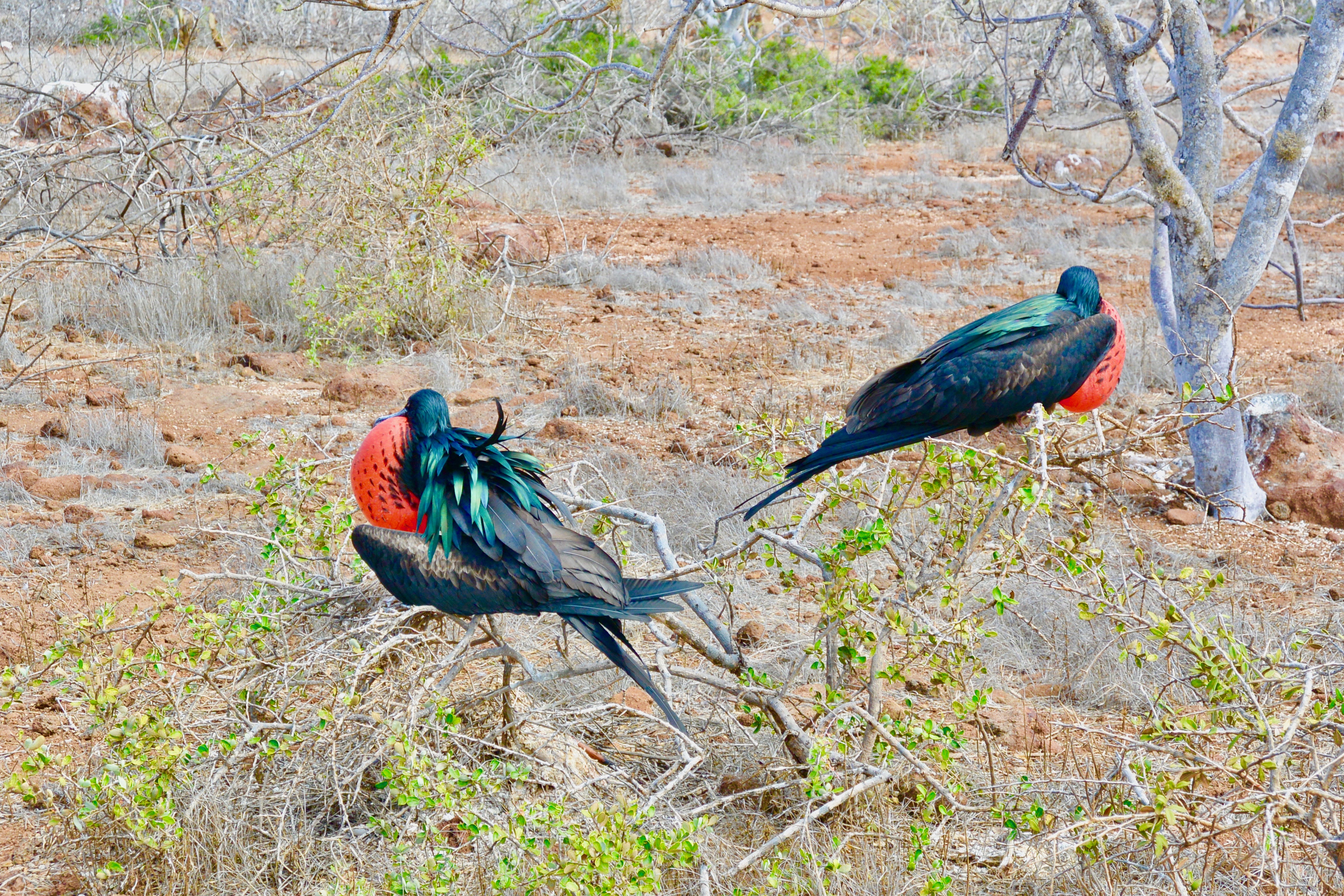
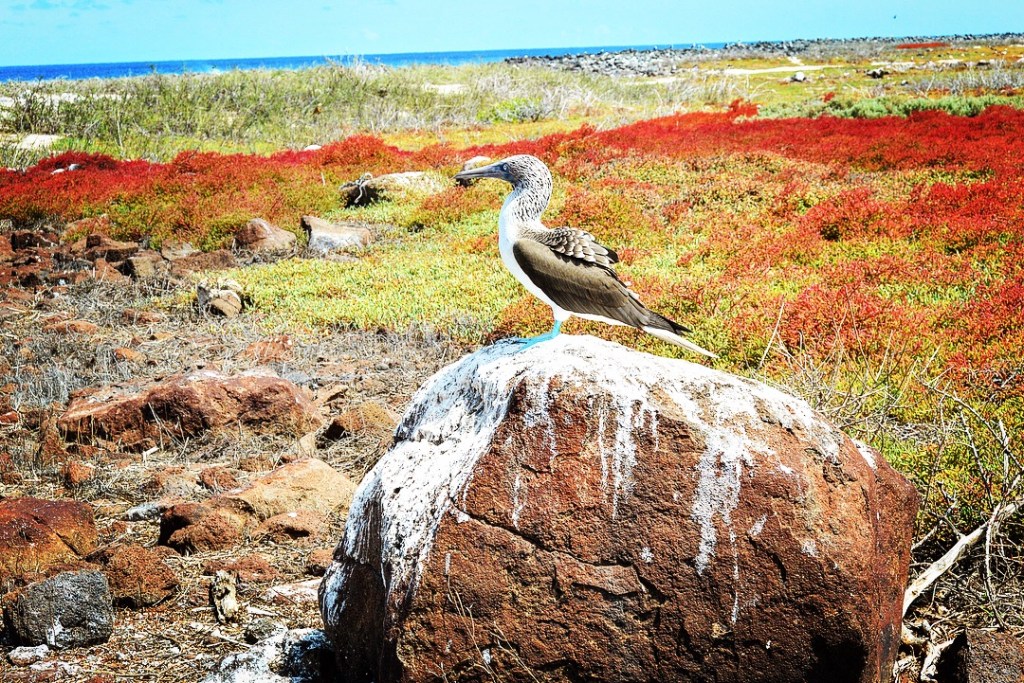
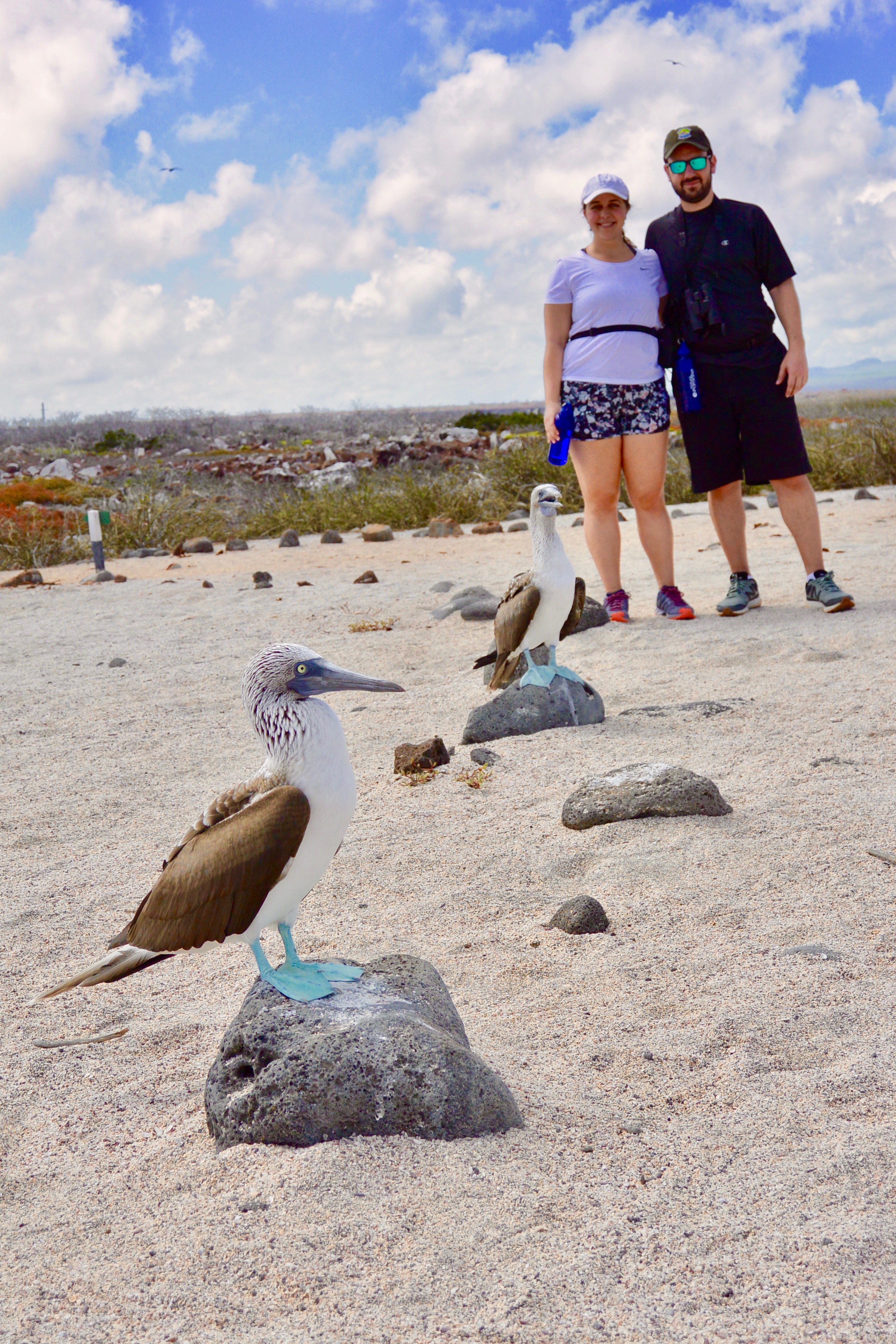
Our first stop was North Seymour Island, bird island. This island is full of unusual birds. Two birds of note: the great frigate bird and blue-footed booby. With big red throats that blow up like a balloon, the great frigate bird is immediately striking. We had the opportunity to watch this magnificent bird’s mating-call: a blown out red balloon throat, dancing, and flashing wings. The blue-footed booby draws your attention to their feet, which are bright blue. This bird also resembles the prehistoric dodo bird, with a small round head and pronounced long beak. David said that they are called boobies because explorers, who arrived in the Galapagos centuries ago, thought they were stupid because they were easy to catch. While we pondered whether the blue-footed booby was a descendent of the dodo bird, we were able to watch one lay an egg.
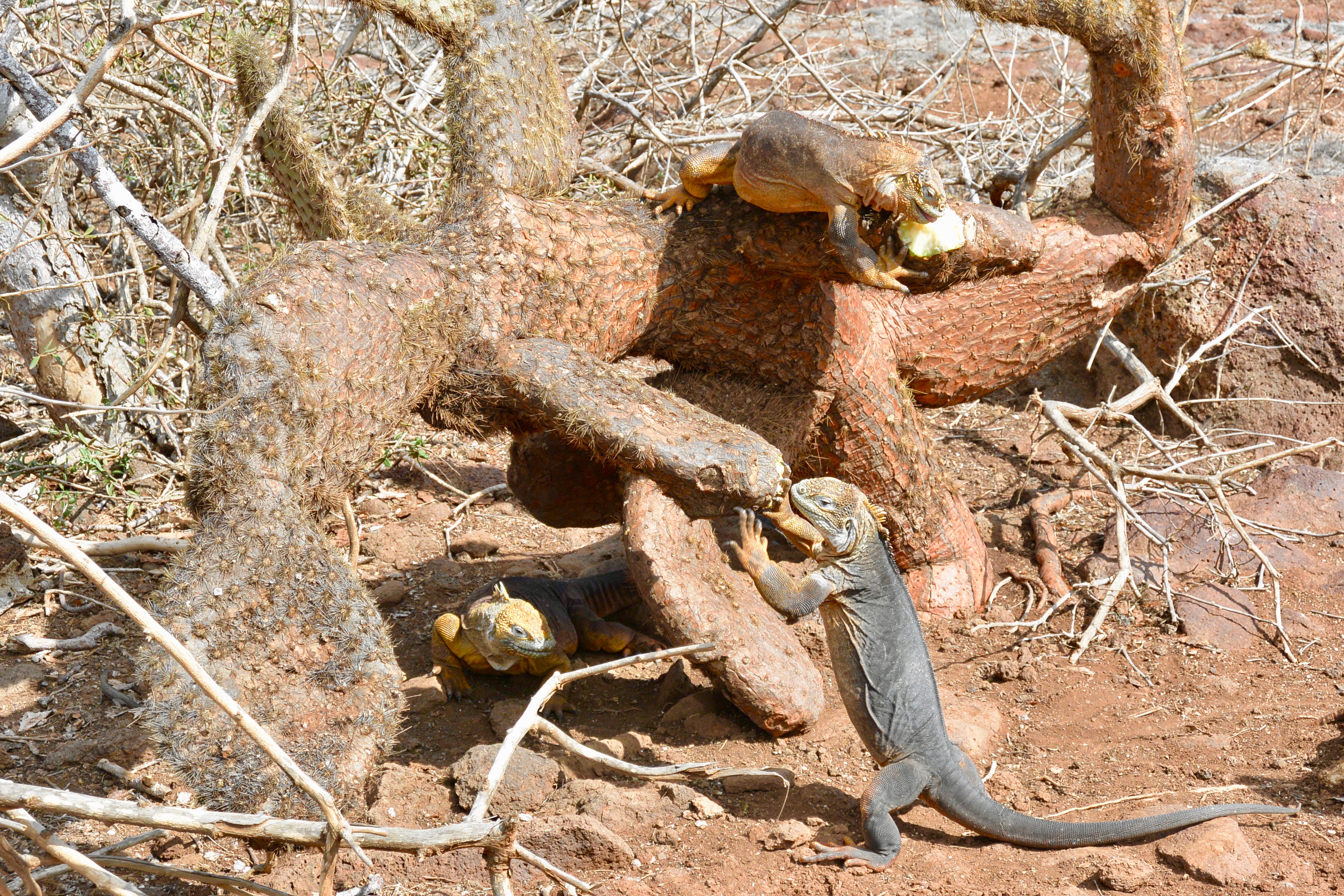
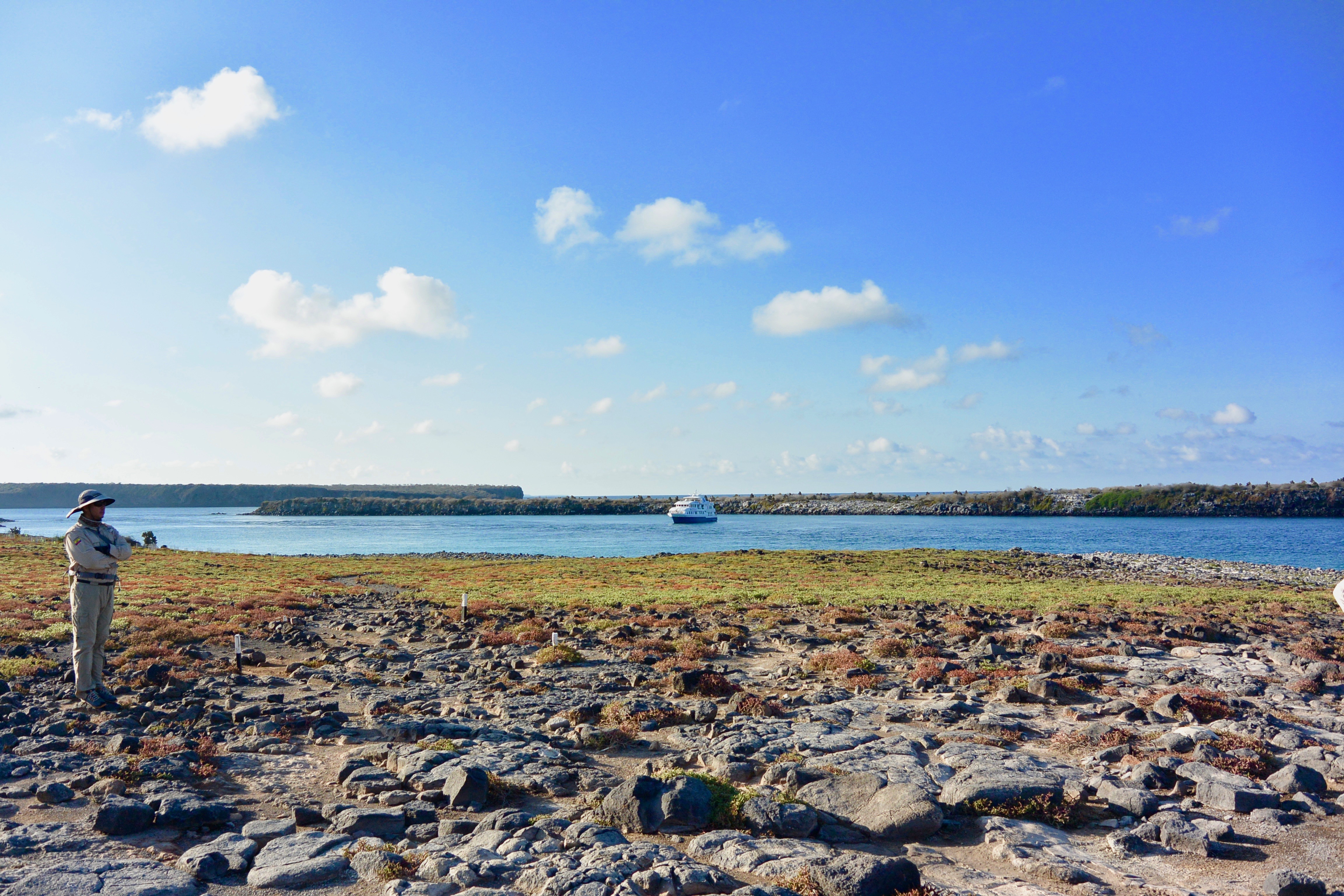
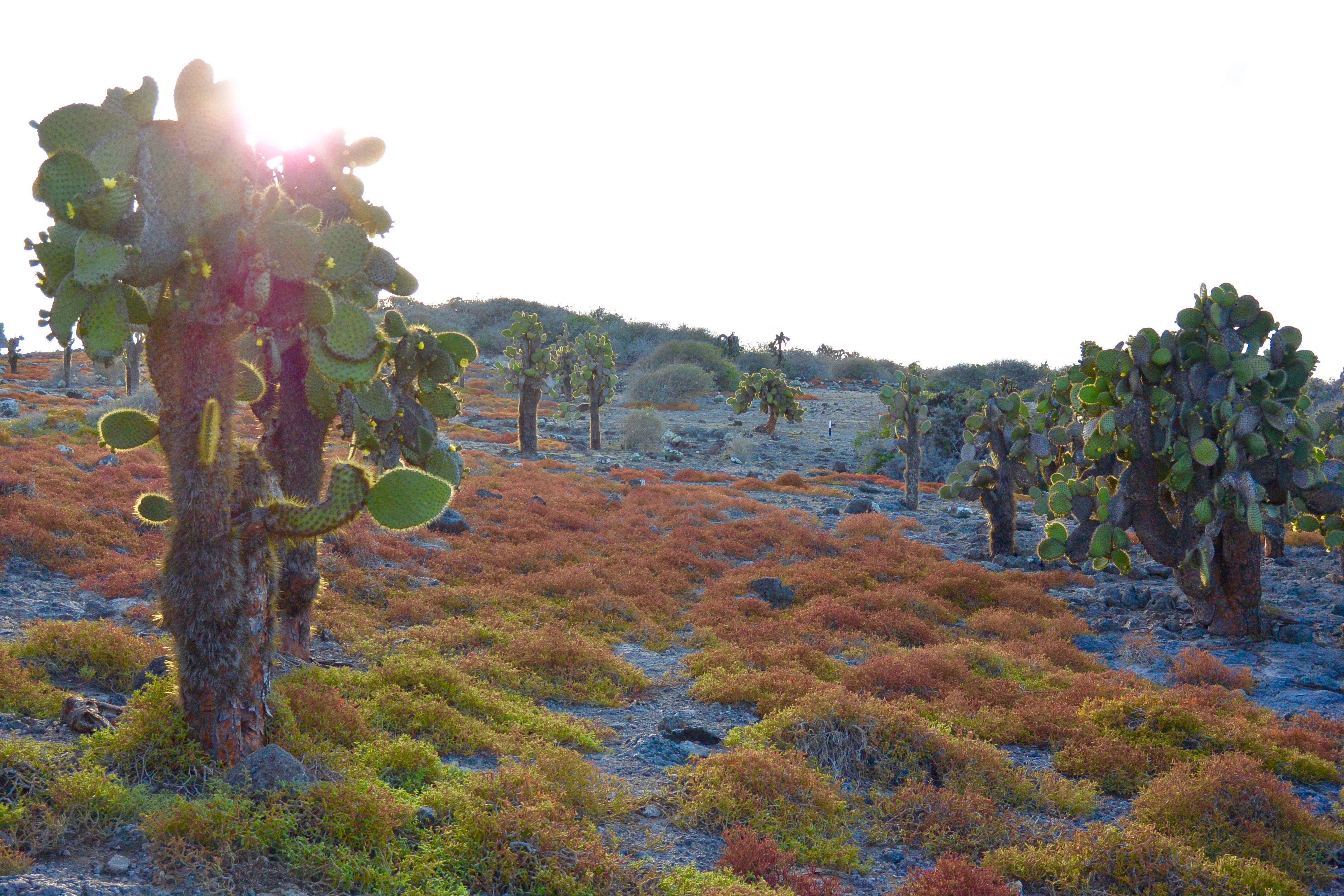
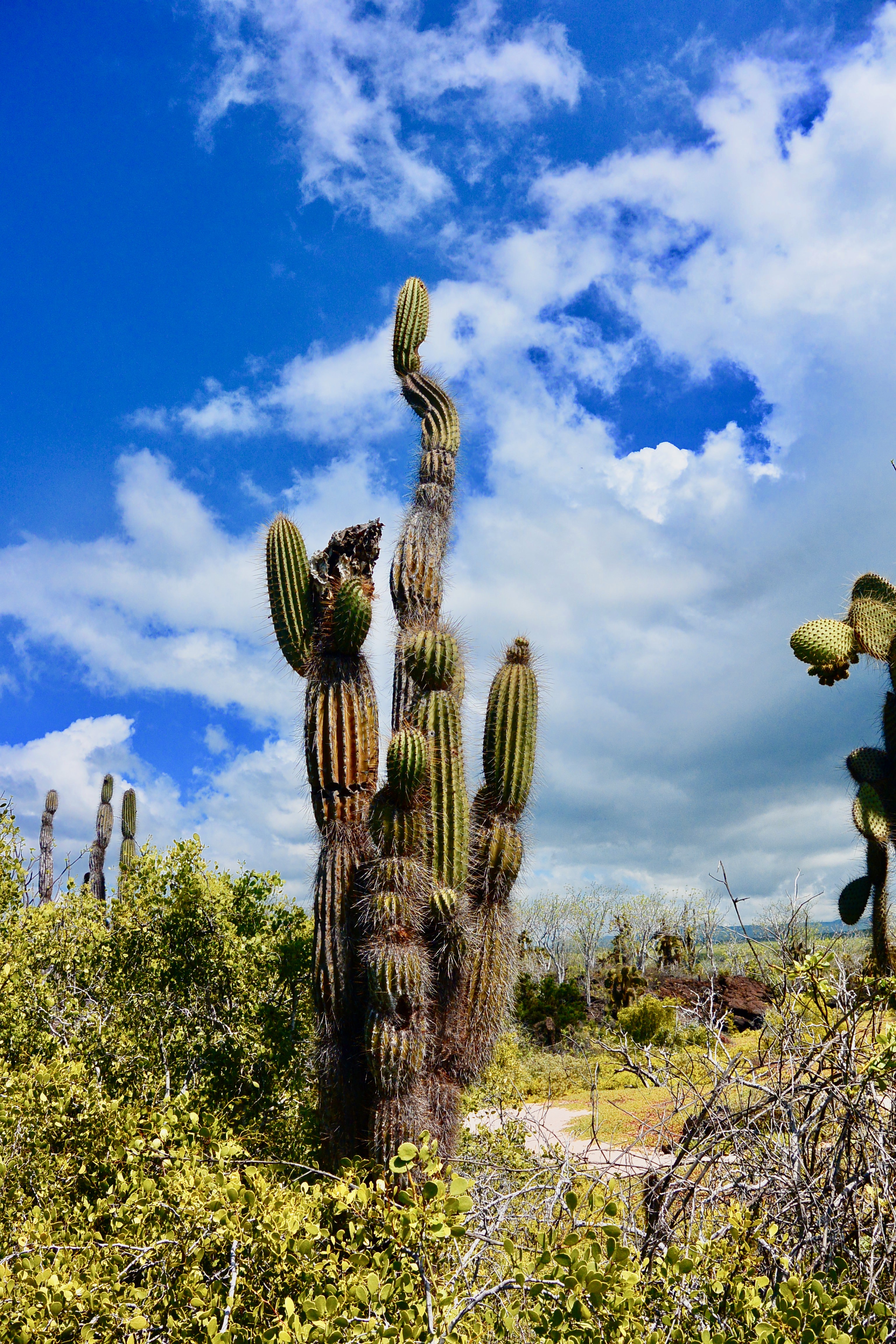
After our hike among the birds, we got on the boat, changed into our wetsuits, and went snorkeling around the island. We got the opportunity to see some great wildlife in the water as well. I even had a run in with a sea lion. After fueling up with an onboard lunch and a short break, we headed for our late-afternoon hike on South Plaza Island. This island boasted unfamiliar landscapes with several species of cacti, sea lions taking siestas, and iguanas.
DAY 3: Rabida and Bartholomew
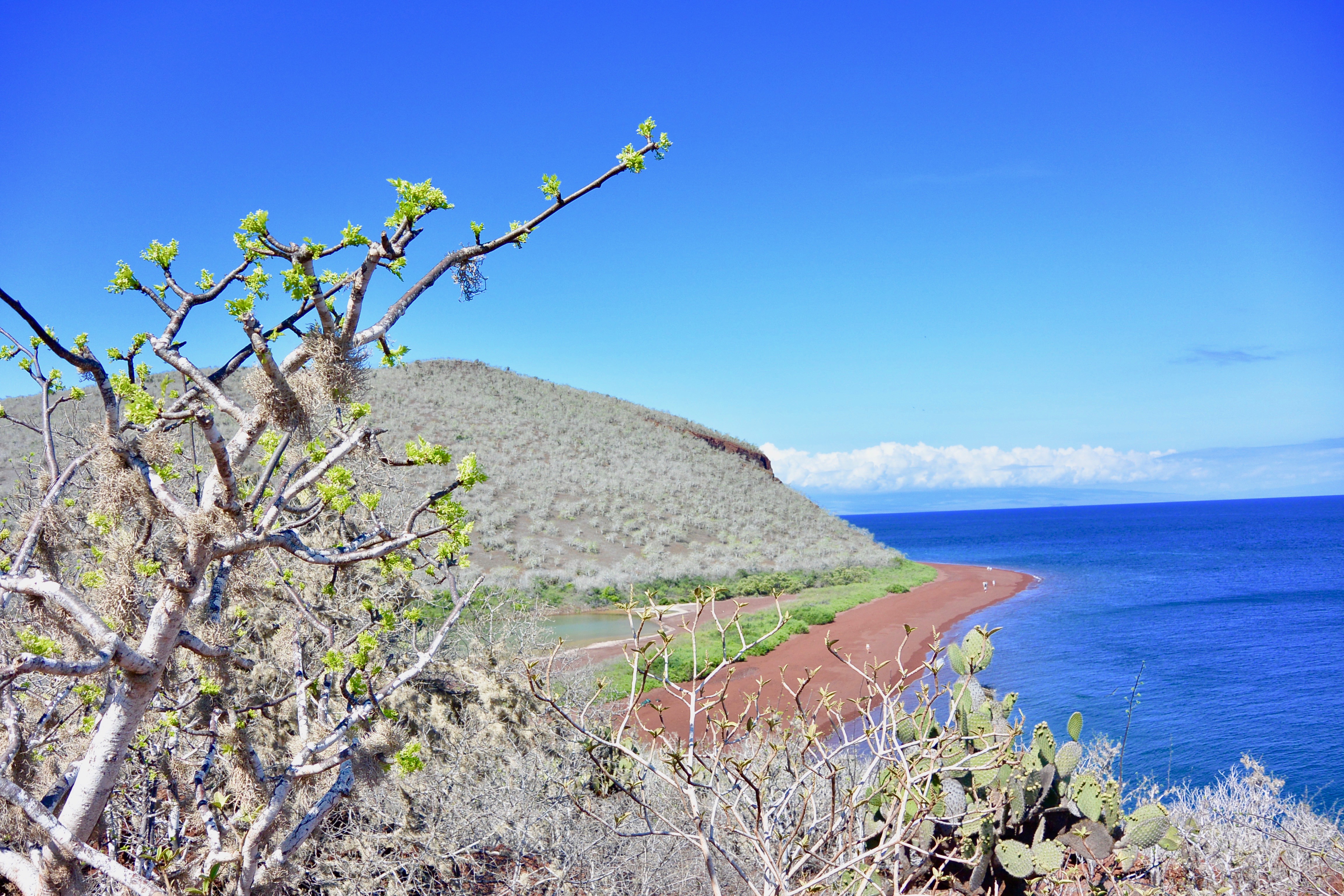
The following morning, we cruised over to Rabida, an island with striking red sands and conspicuous wildlife above and below sea level. We started off the day taking a “panga”, the Ecuadoran nickname for dingy boat, around the coasts of the island to view the frigates, pelicans, and blue-footed boobies. Afterward, we beached the panga on the shore and had a wet landing on the island. We went on a picturesque hike onto the high points of the island where we were able to catch some beautiful views and photography.
Make sure you either take off your sneakers and dry your feet with towels provided on the panga when you get to shore, or get yourself a pair of sneakers that you can also wear in the water comfortably. Shoes like that will definitely come in handy for this trip.
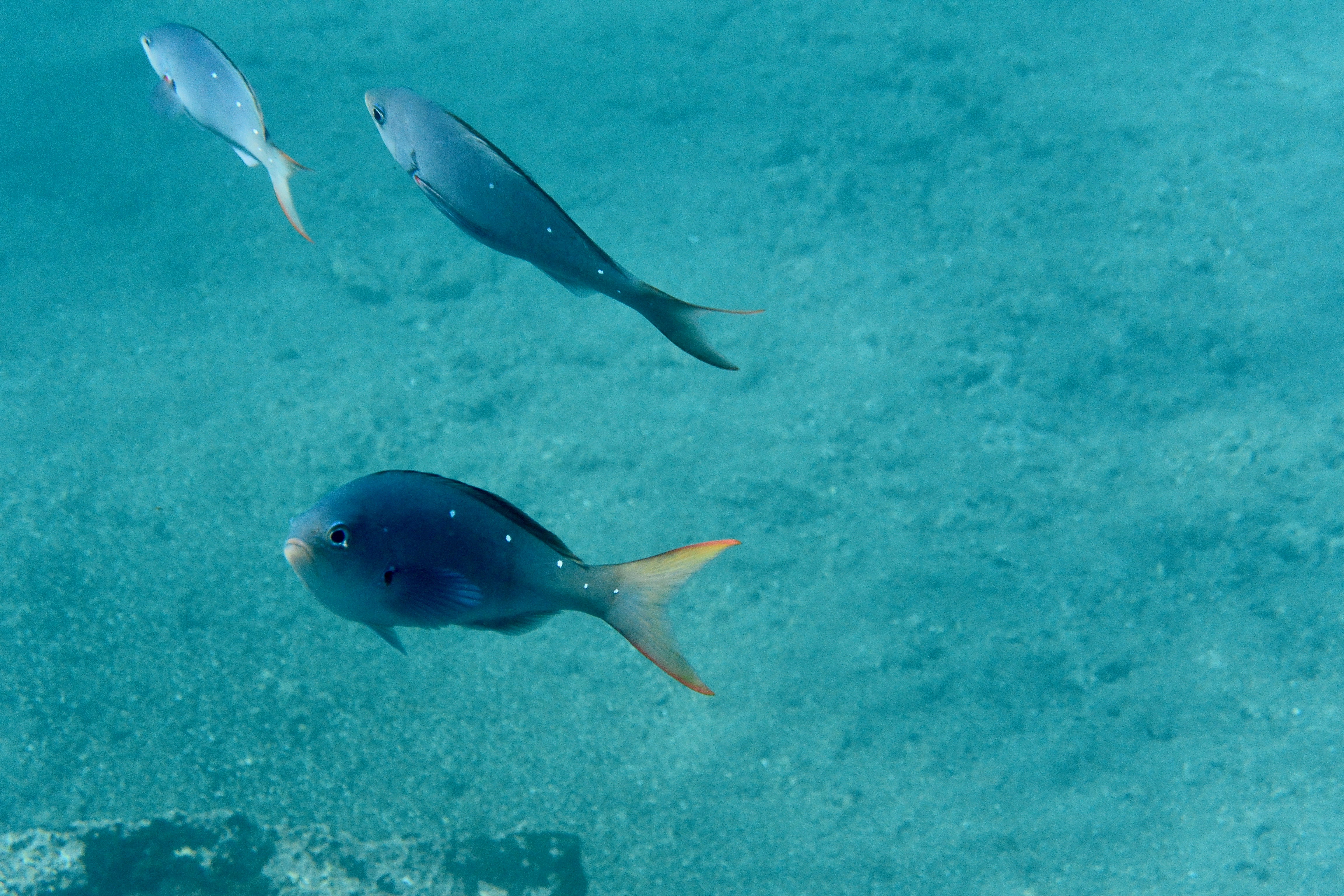
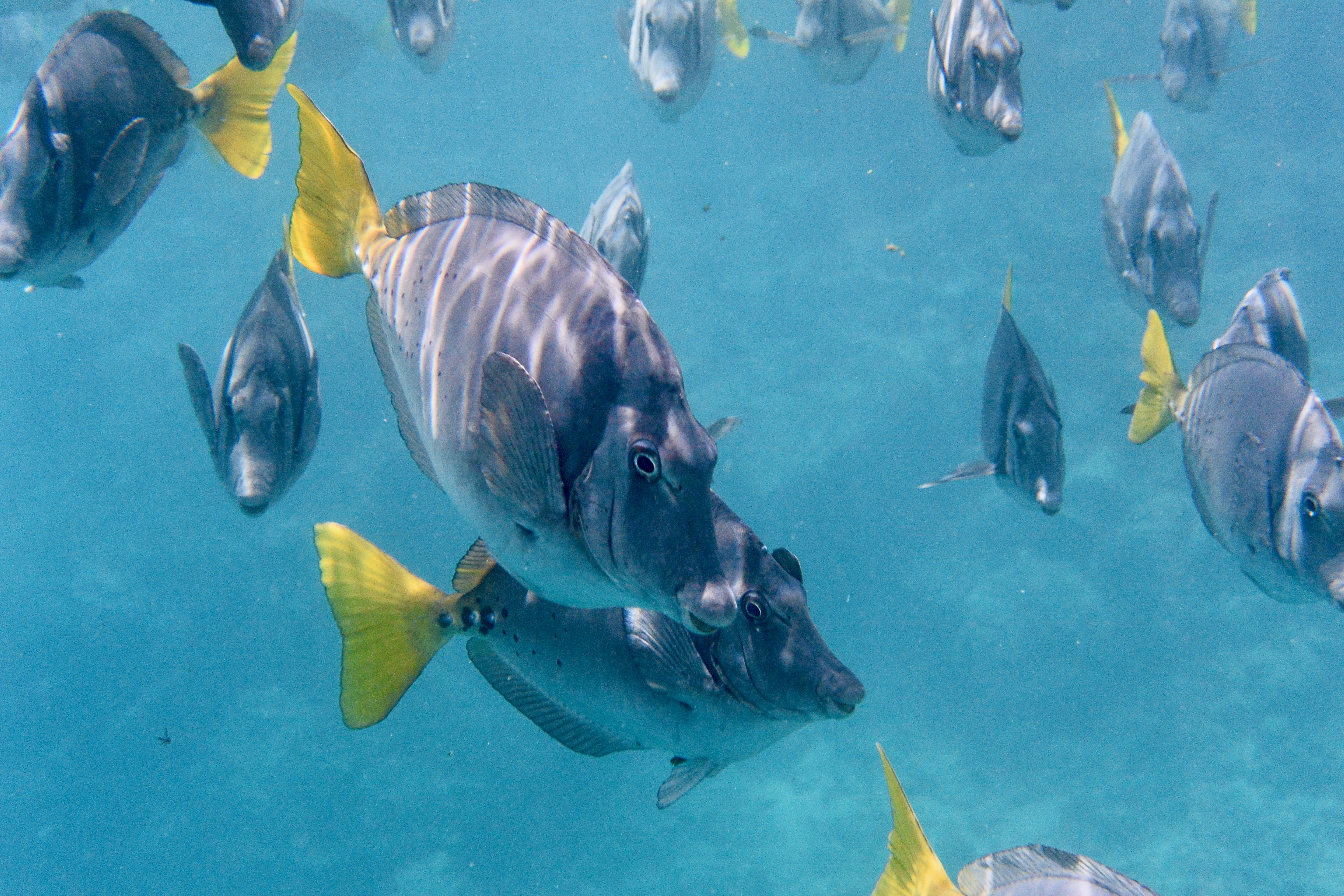
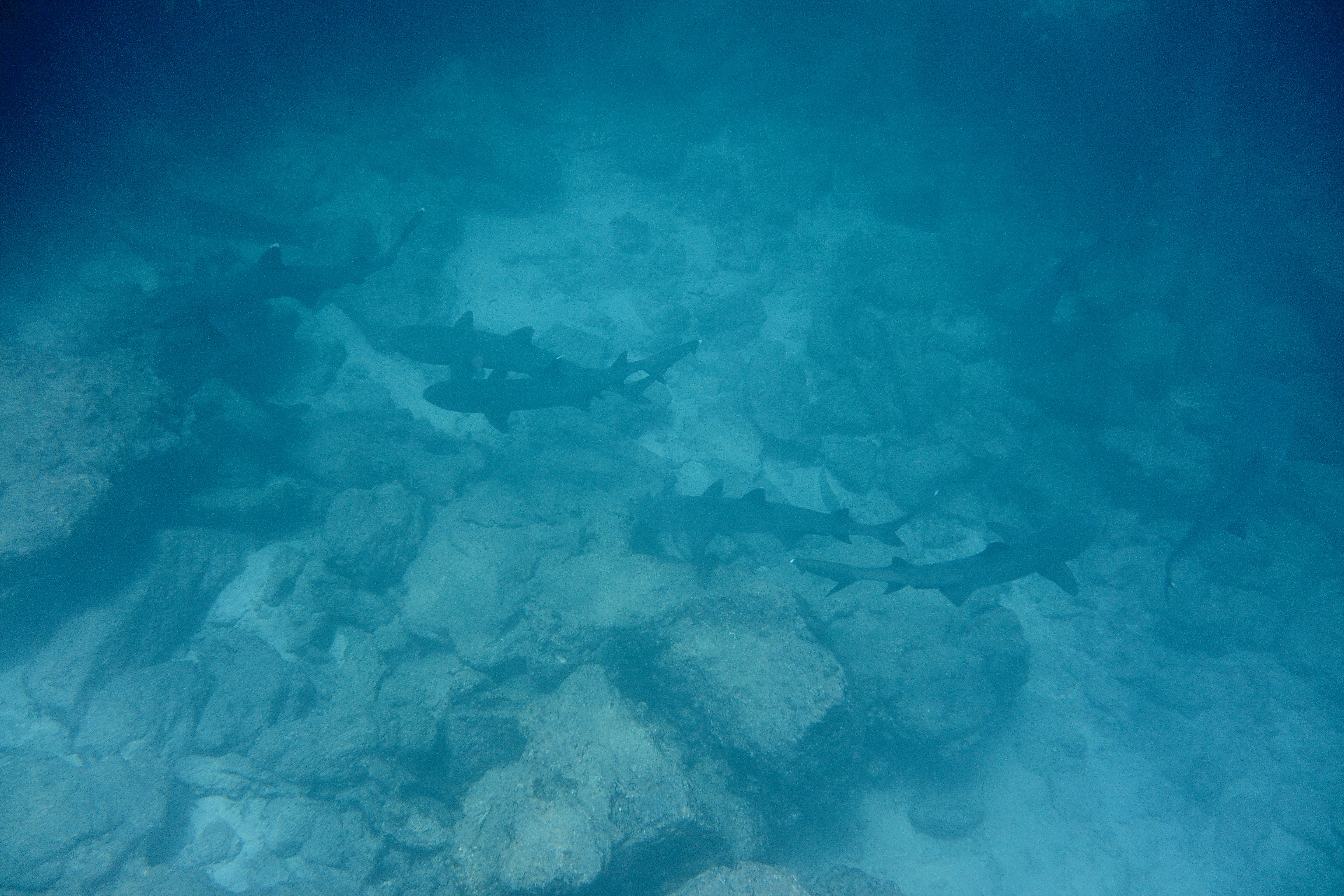
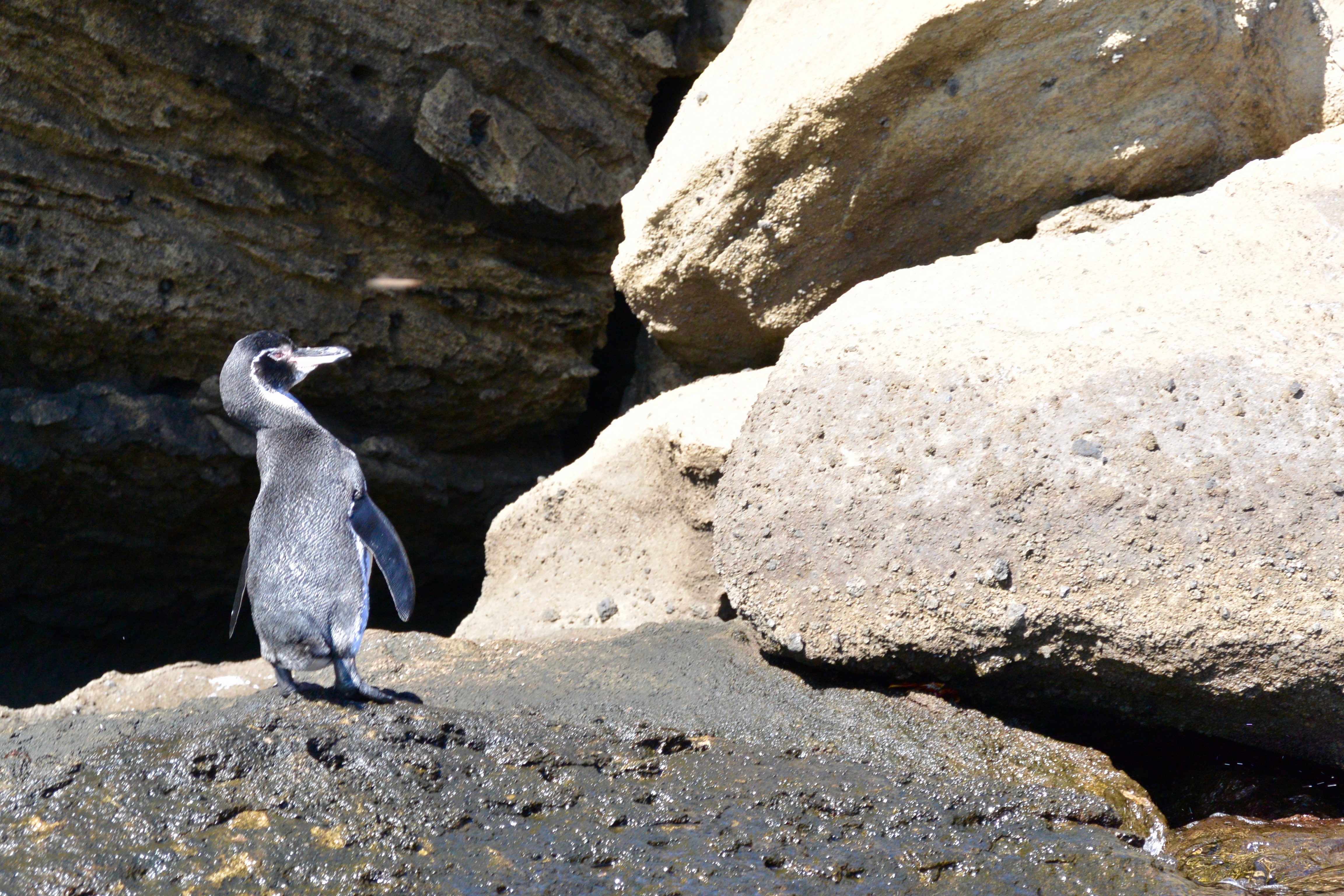
After our hiking we had two amazing snorkeling trips: one off the coast of Rabida and the other on the edge of Bartholomew. We had our first shark sighting near Rabida. I was distracted after sea lions began their synchronized swimming routine in front of me when Anthony grabbed my arm. About 10 feet below us lied a den of white tip sharks that seemed to be sleeping at the sea floor. Contrary to how we typically portray sharks, they did nothing to make us feel unsafe, and this was our continued experience with shark encounters in the Galapagos. Our miraculous sea life sightings continued off the shores of Bartholomew. We got the opportunity to see an octopus slap a fish and then change colors from black to tan as it seemingly disappeared into the sand. Then, David was pointing out some fish to us below the surface when he popped his head above water and yelled, “Penguin!” I immediately raced to the rocks where a small penguin was perched. It began to dance, shaking its tail and drying its feathers. Penguins wound up in the Galapagos a long time ago from the cold tides arriving from the North Pole. They stand at about two-feet tall and are cute as a button.
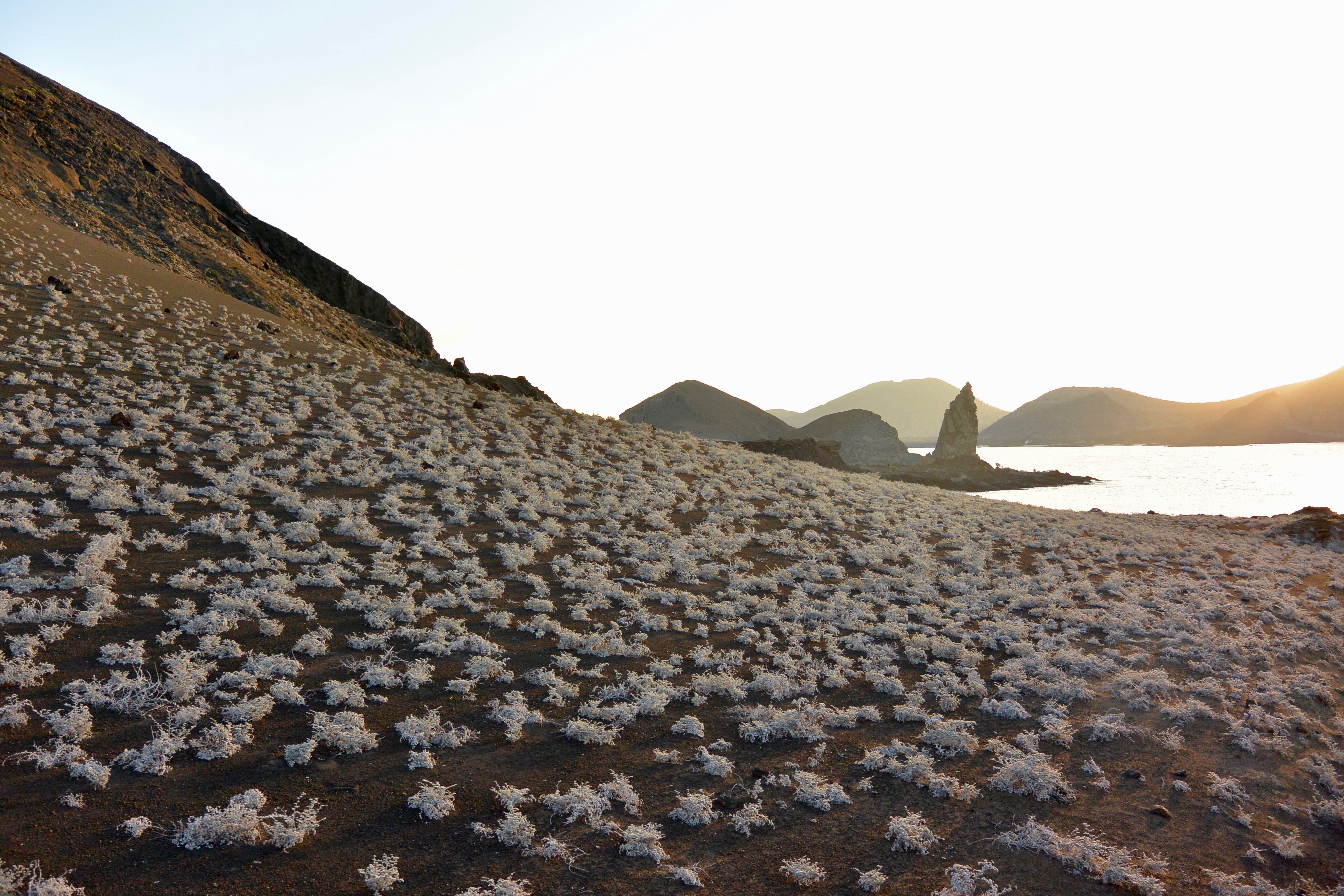
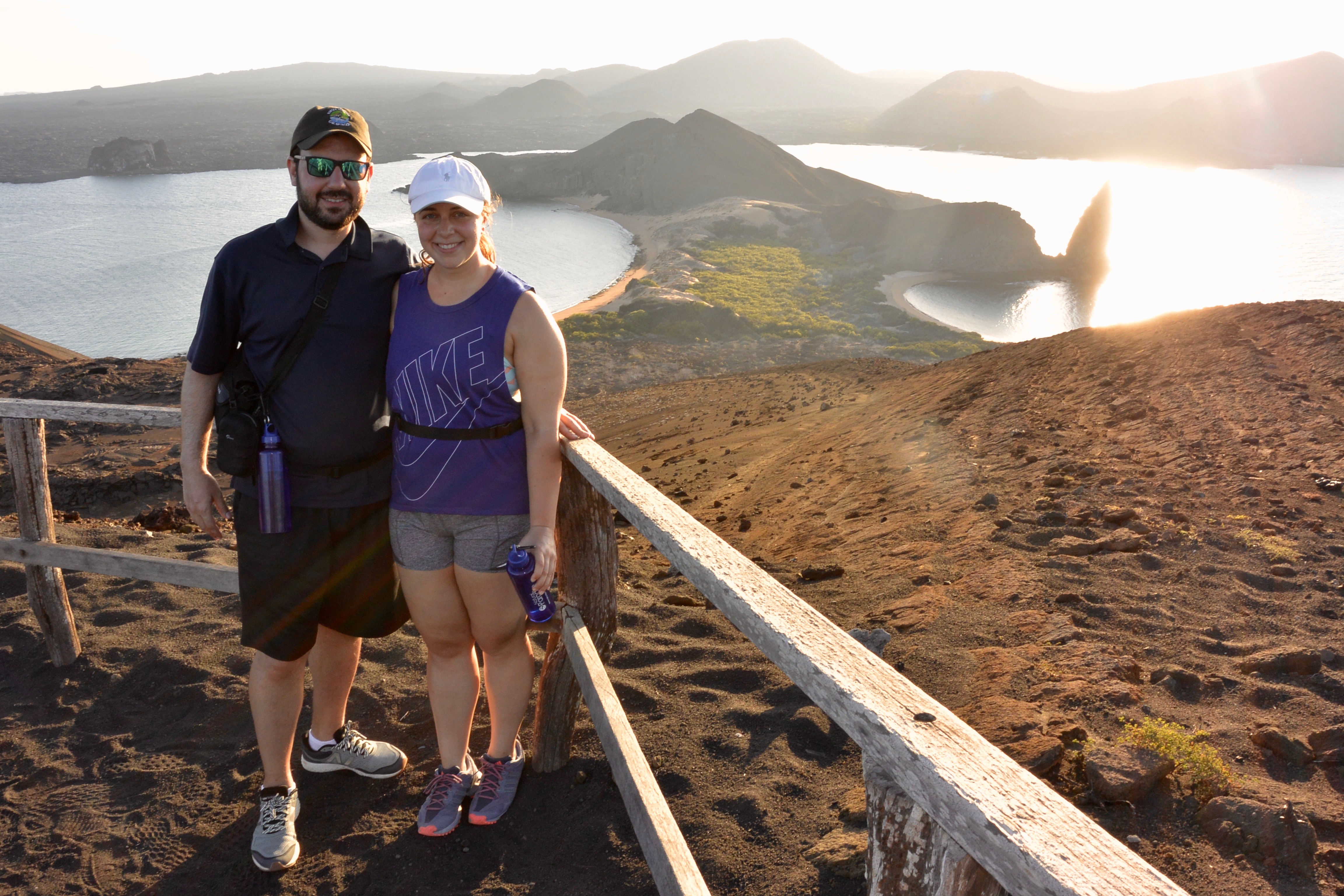
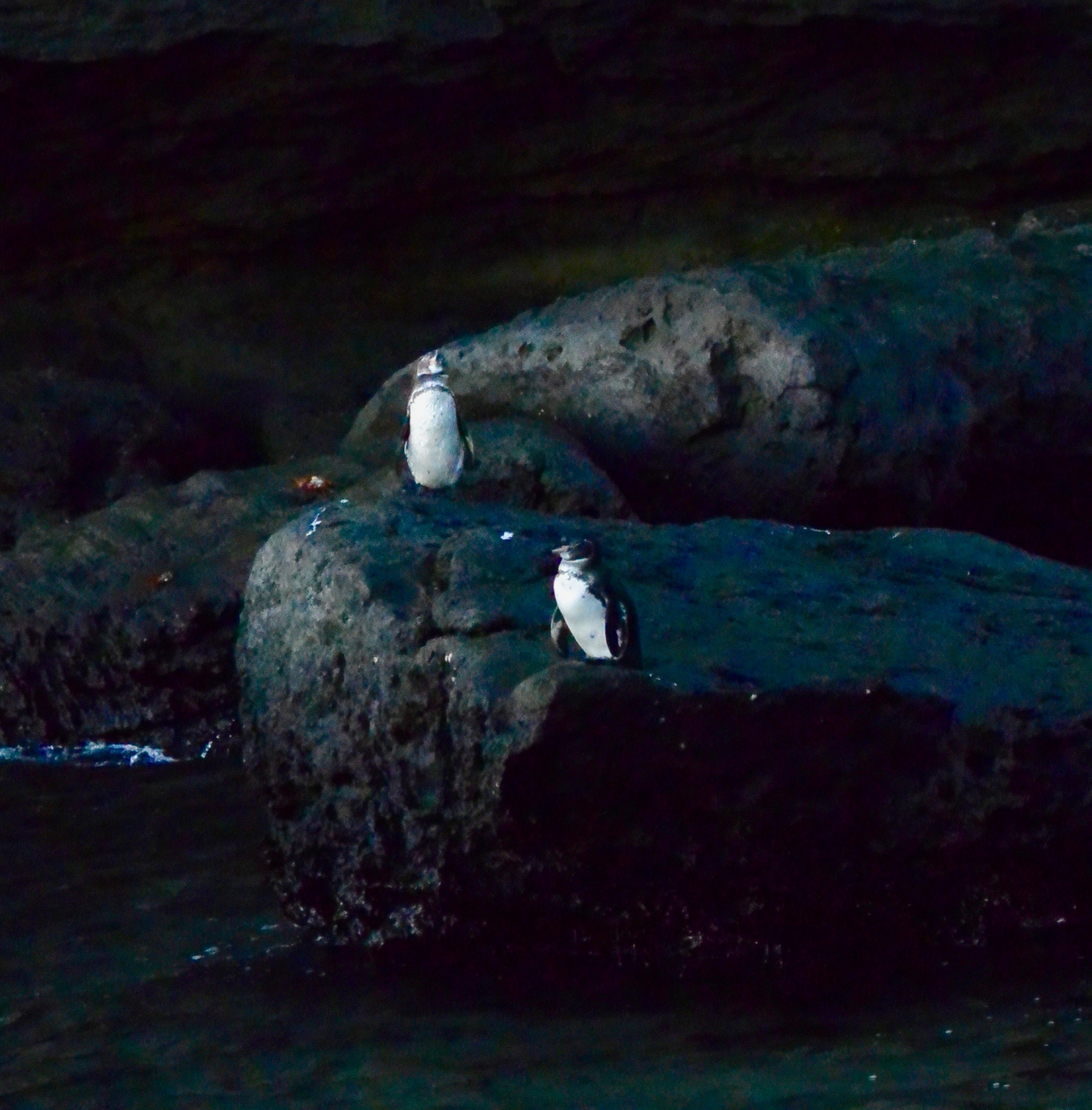
After our excitement underwater, we had some lunch on the boat, relaxed on our balcony, and then got ready for our next hike. When we docked at Bartholomew, we encountered an extraterrestrial landscape. Most of the island consisted of black volcanic soil with sprinklings of unique white plants that looked other-worldly. We began our ascending hike up steep stairs with our first stop to view the underwater caldera, the aftermath of a 19th century volcanic eruption that was said to have killed sailors on boats nearby just from emissions of sulfuric acid. We continued our hike to a highpoint on the island where we had a bird’s eye view of the iconic Pinnacle Rock. We then descended, hopped on the panga, and to our surprise, had another penguin sighting on the way home.
DAY 4: Sullivan Bay and Dragon Hill
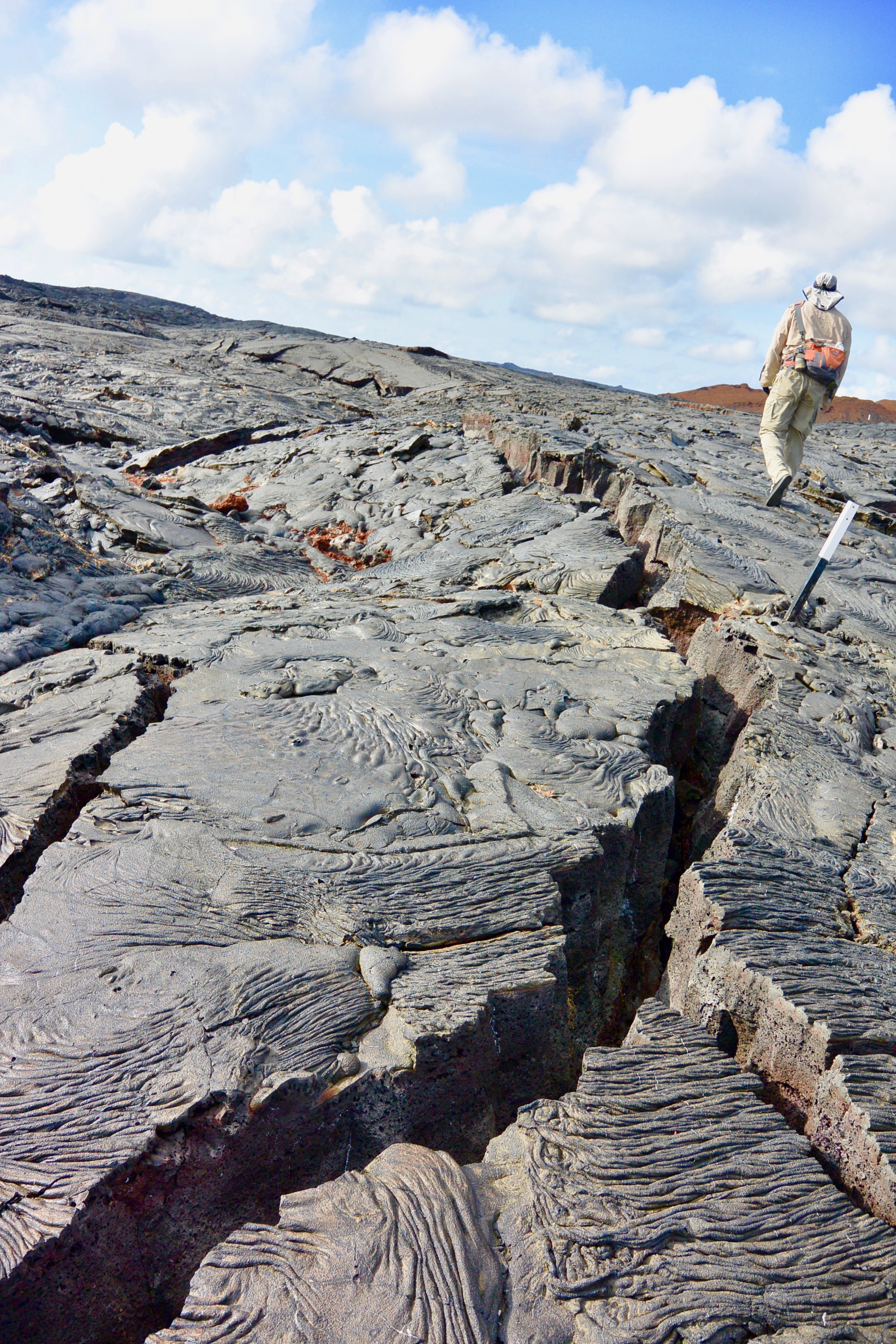
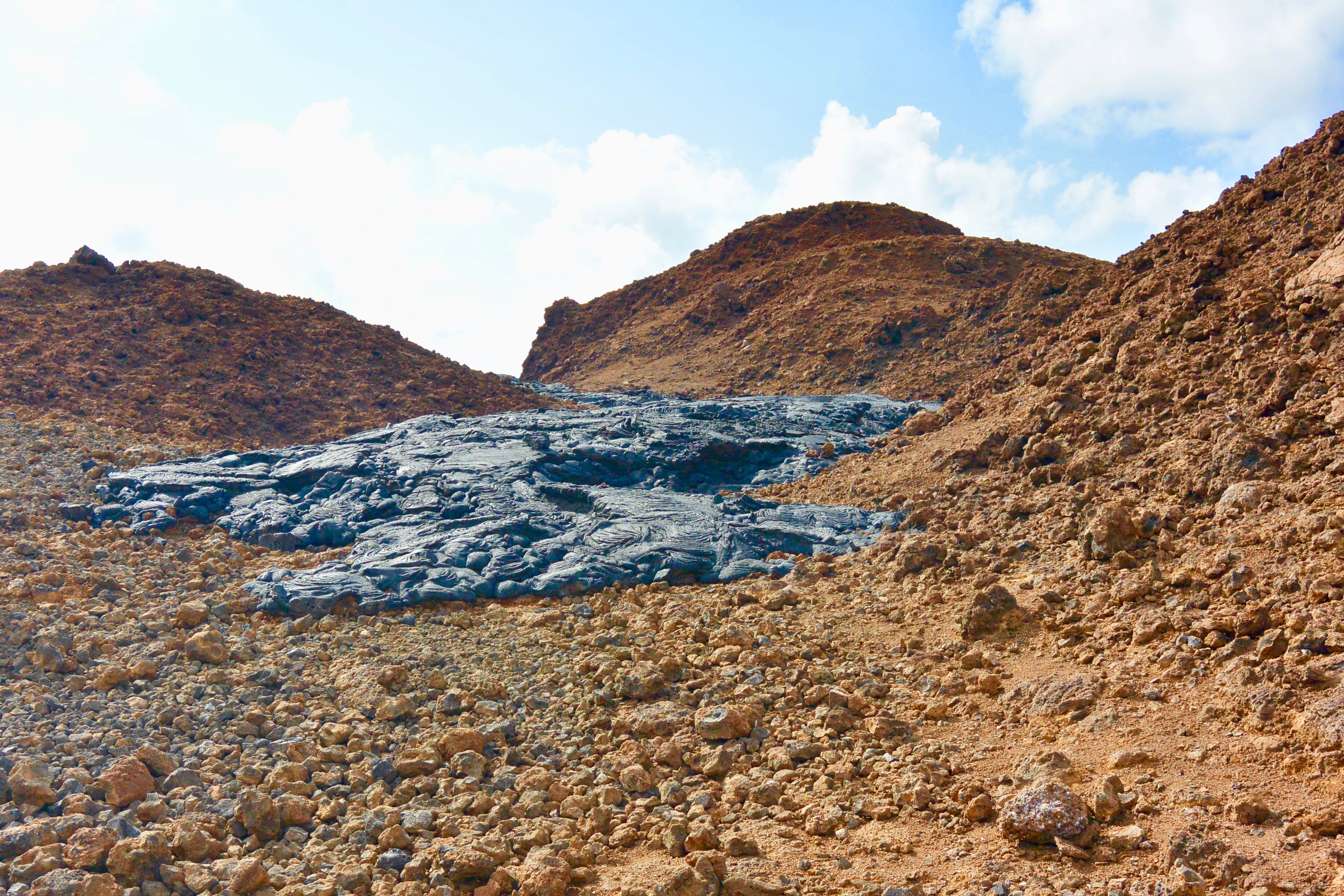
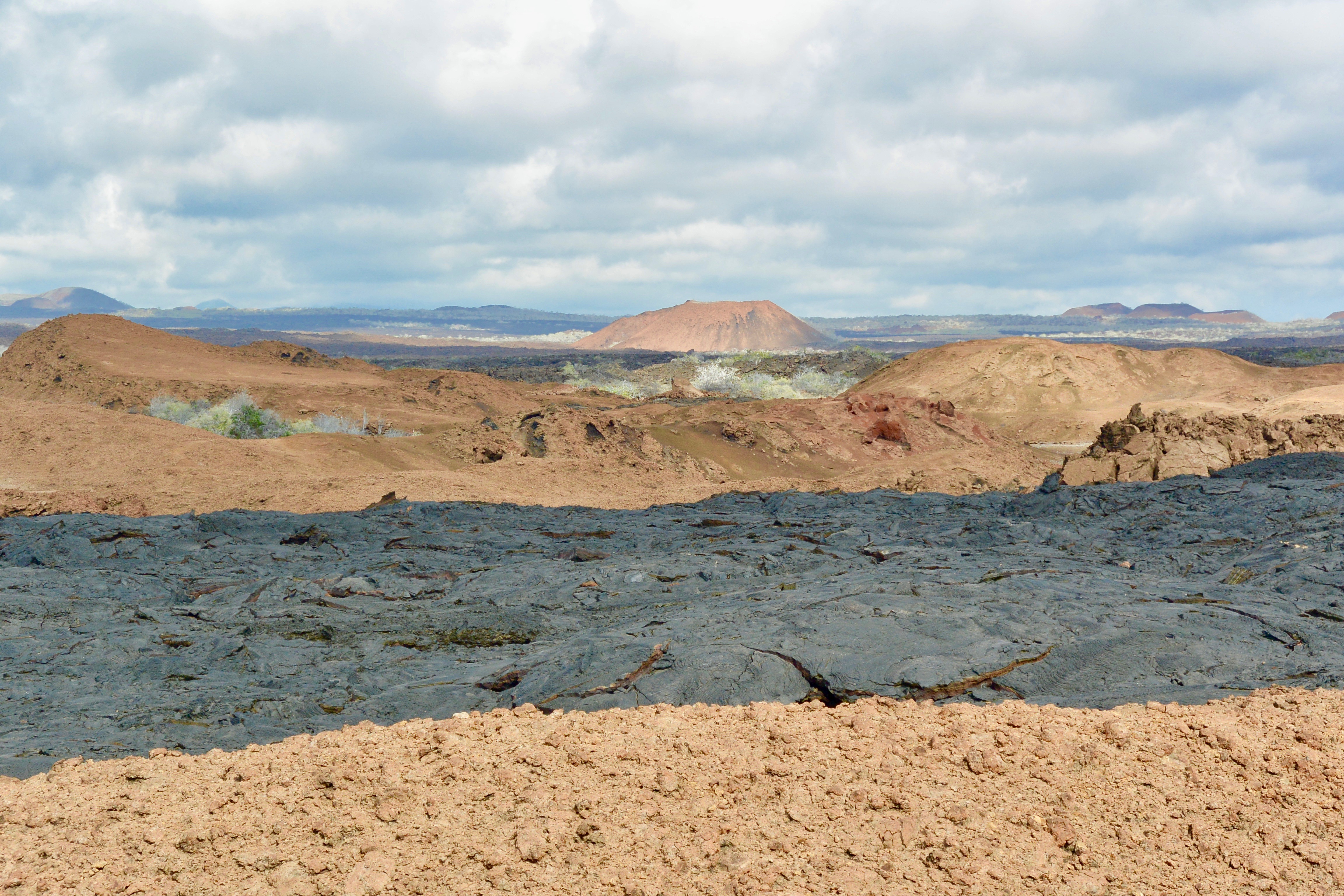
The next day, we got a chance to see the aftermath of a volcanic eruption at Sullivan Bay on Santiago Island. We hiked along a lava field of black rock with very little vegetation. I must warn you, part of this field is hollow so make sure you follow your guide. I even felt a crack while I was walking on the field and began to tread lightly. Although we were walking on some hollow ground, this was not a dangerous hike. We got the chance to see truly unique lava formations and stunning landscapes.
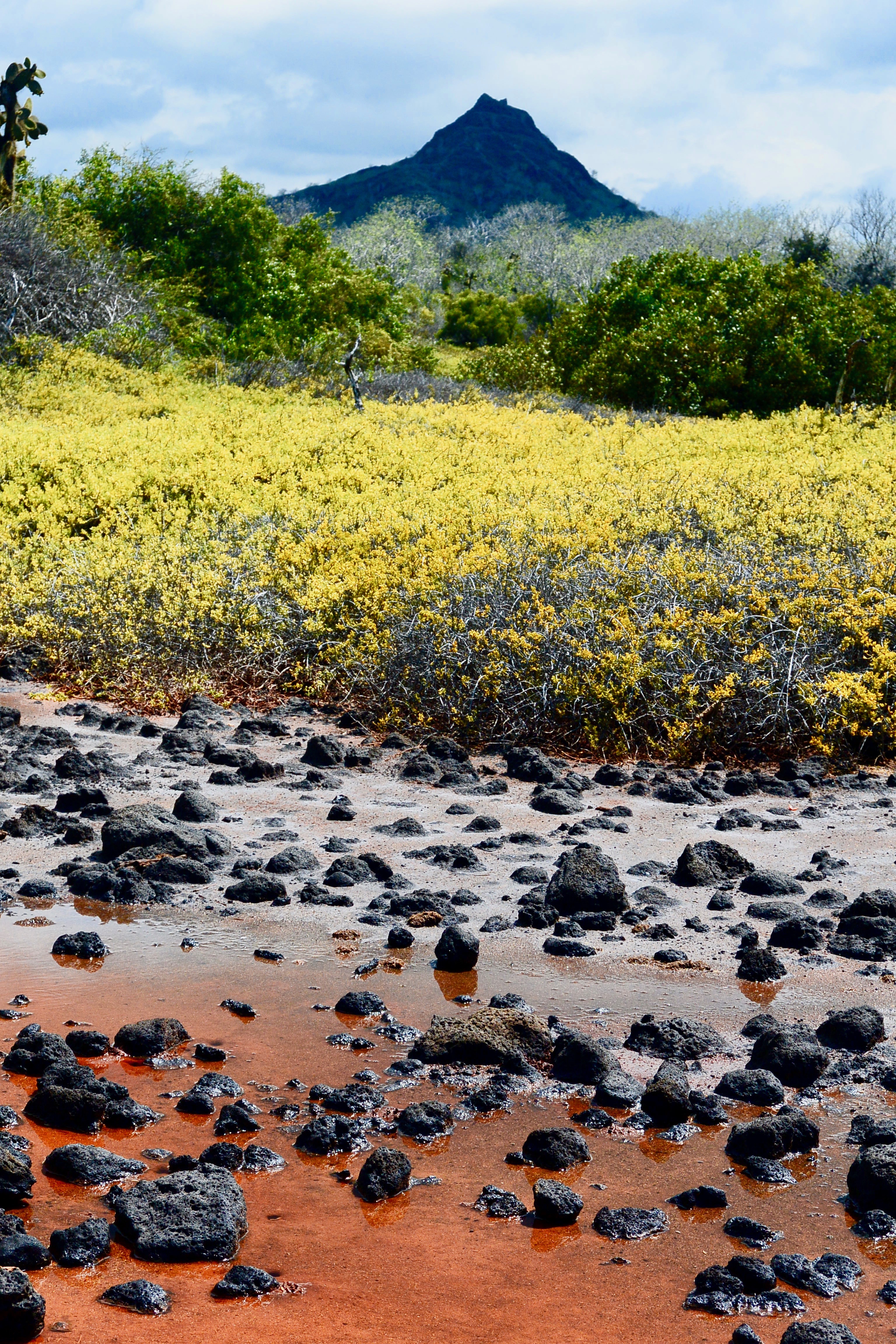
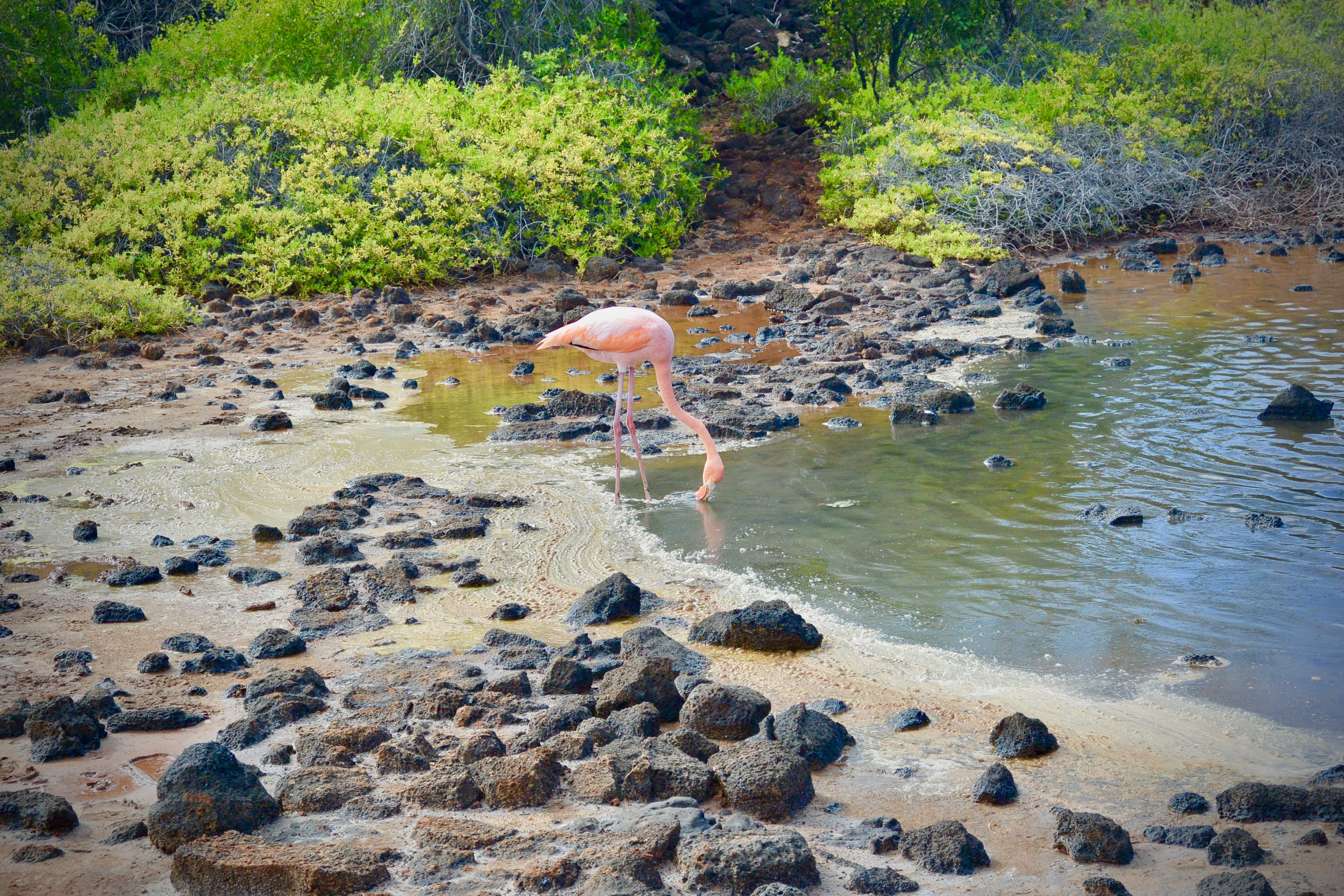
After a short snorkel, we went to Dragon Hill on Santa Cruz Island for our next stop. This was a wet landing, so be prepared for your shoes to get wet. But as you walk along the beach and observe the pink and orange tints of the landscape and the reptilian hill, you’ll forget about your feet. We followed David along the trail and stumbled upon a majestic creature at the beginning and end of our hike. Once I heard the gasps and looked to my left, I saw a pink flamingo, filtering through the water and frolicking in the lagoon. This was one of the highlights of our wildlife sightings but one must not forget the reptiles of Dragon Hill. During our hike, we saw at least 30 iguanas, some as large as a corgi. The hues of the iguanas and ever-expanding Jurassic-esque views of the Dragon Hill made this one of our favorite hikes.

Santa Cruz
DAY 5: Twin Craters, Lava Tunnels, and The Charles Darwin Research Center
Although we arrived on our next inhabited island, our cruise on the Natural Paradise wasn’t entirely over. We continued our excursions to the Twin Craters and Highlands of Santa Cruz. Santa Cruz is the most populous and developed island in the Galapagos but there are still opportunities to be one with nature here.
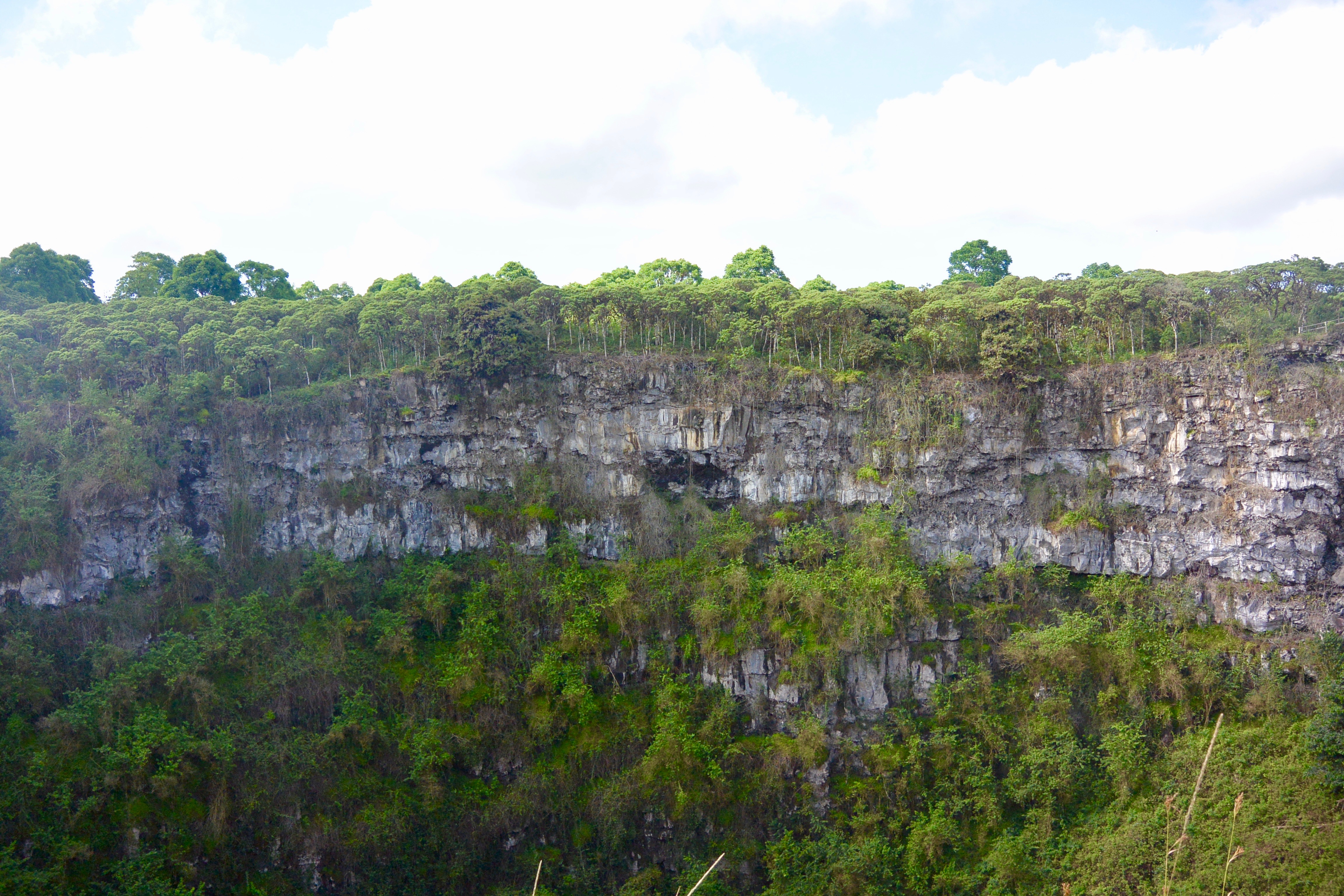
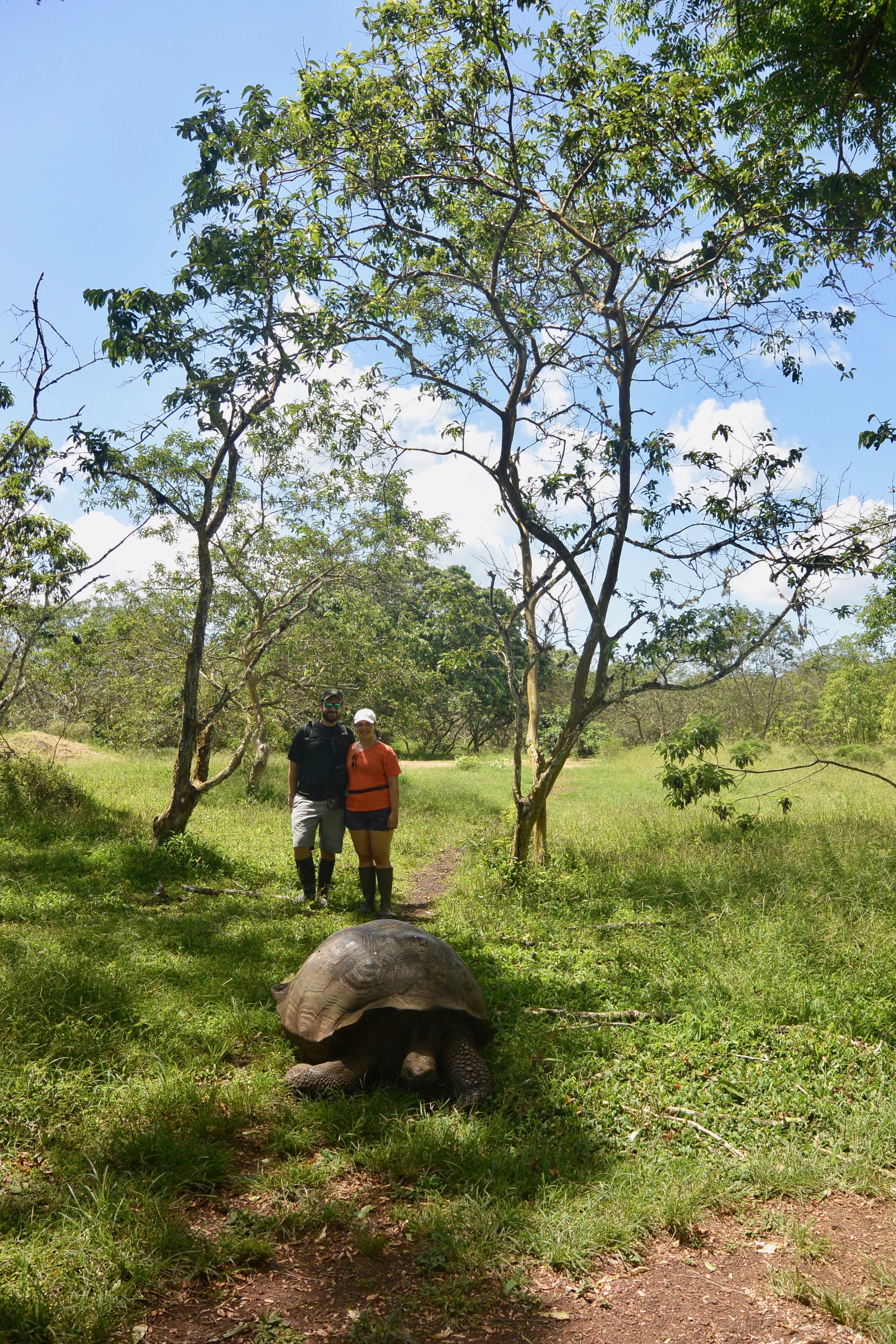
First stop, Twin Craters, two large gaps in the ground that were originally formed when lava domes hardened on the outside but still flowed on the inside, which left gaping chambers in the ground after the hardened shell collapsed over time. The greenery and inimitable landscape make for a beautiful hike. We then moved on to another volcanic formation, the Lava Tunnels at Rancho Primisias. We commuted here by 4×4 to a lovely ranch equipped with tall wellies for each hiker to avoid fire ant bites. As we walked around the lot, we observed giant tortoises in their natural habitat. We even saw them mating in slow motion, of course. As we wandered, we stumbled upon the lava tunnels, dark underground tunnels formed by volcanic eruptions. This walk was not very difficult but there is a bit of a descent down into the tunnels so be prepared for some steep trails.
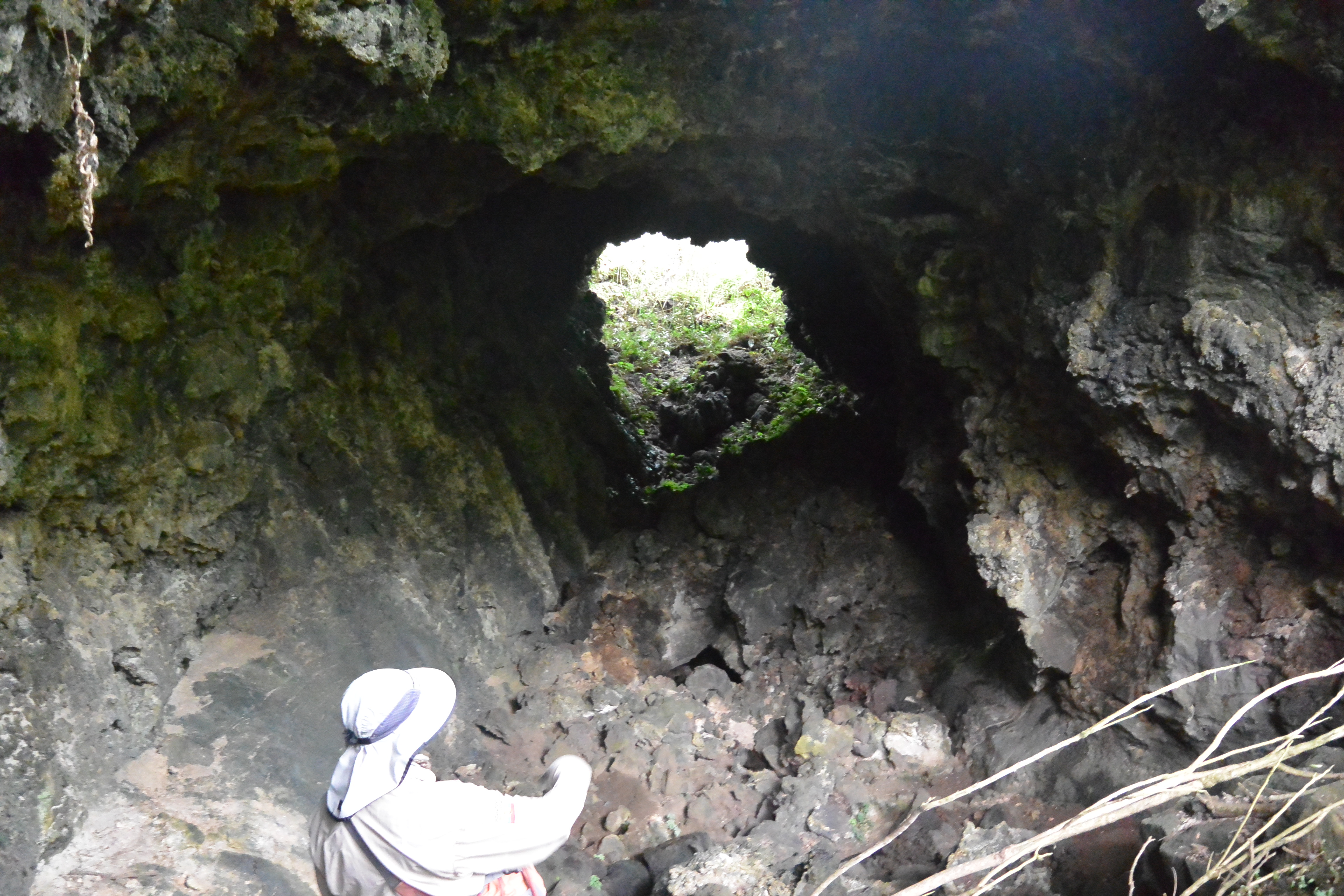
After we had lunch at Rancho El Manzanillo in the highlands, we roamed down to Puetro Ayora to the Charles Darwin Research Station. We spent about an hour and a half here. This was an outdoor museum that explains the facts of life and biology of the famous giant tortoises of the Galapagos. It’s worth a visit just to get an education about these grand creatures and it’s also conveniently located in Puetro Ayora, which is the main town on the island. After our visit, we wandered around Puetro Ayora for a bit and explored the shops. Then the Natural Paradise brought us our luggage via panga, and we headed to our next lodging, the Semilla Verde Hotel.

Stay at the Semilla Verde Hotel
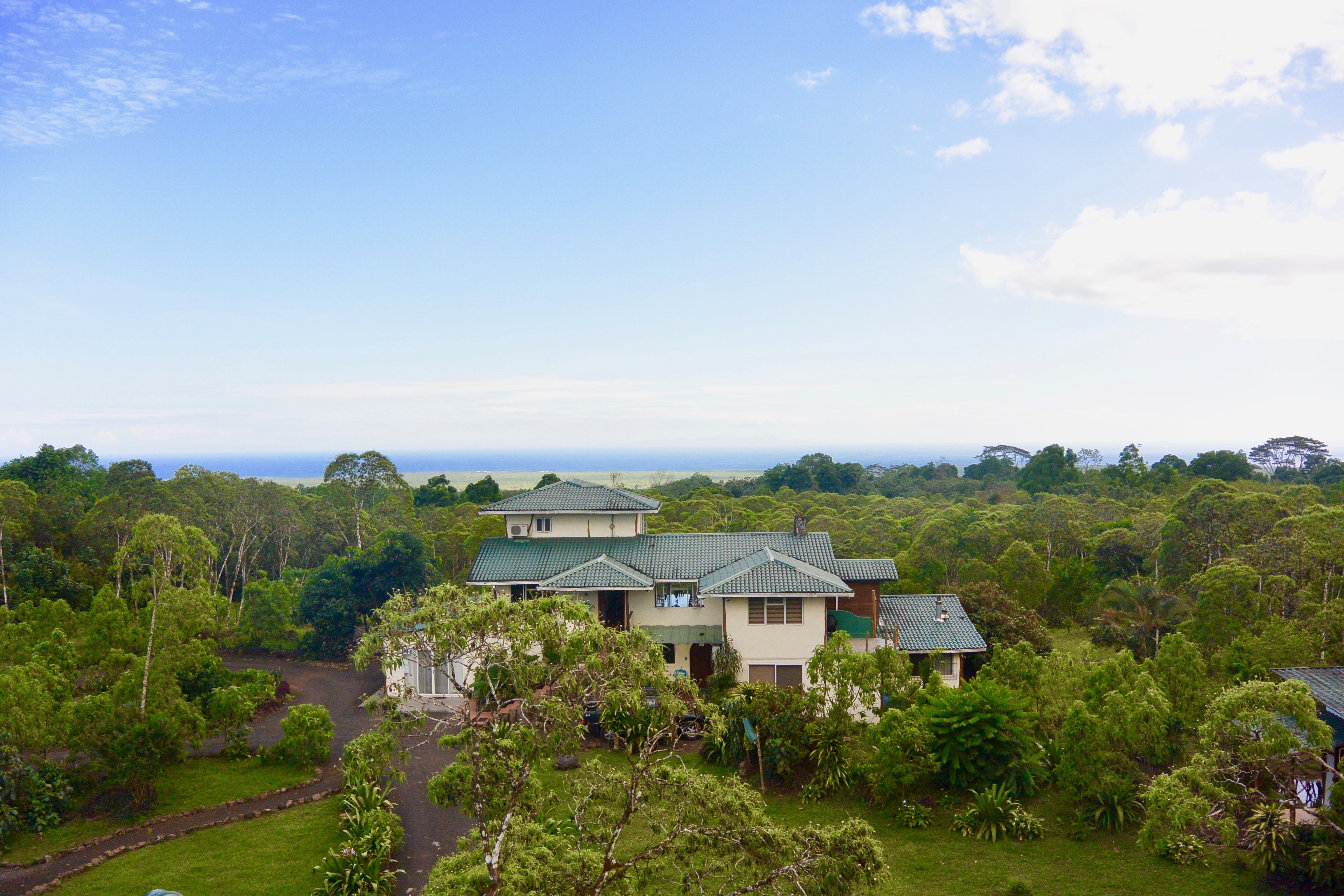
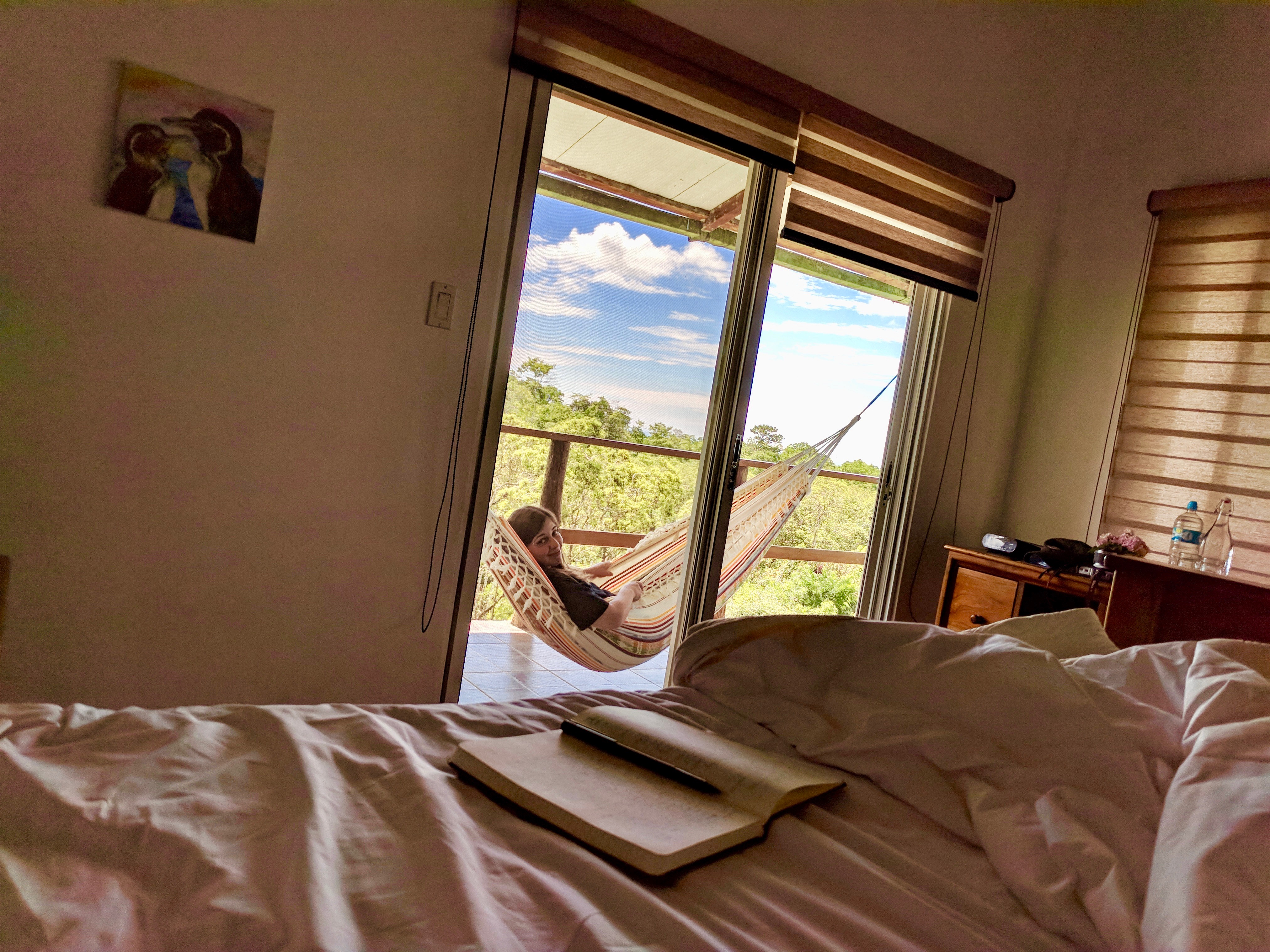
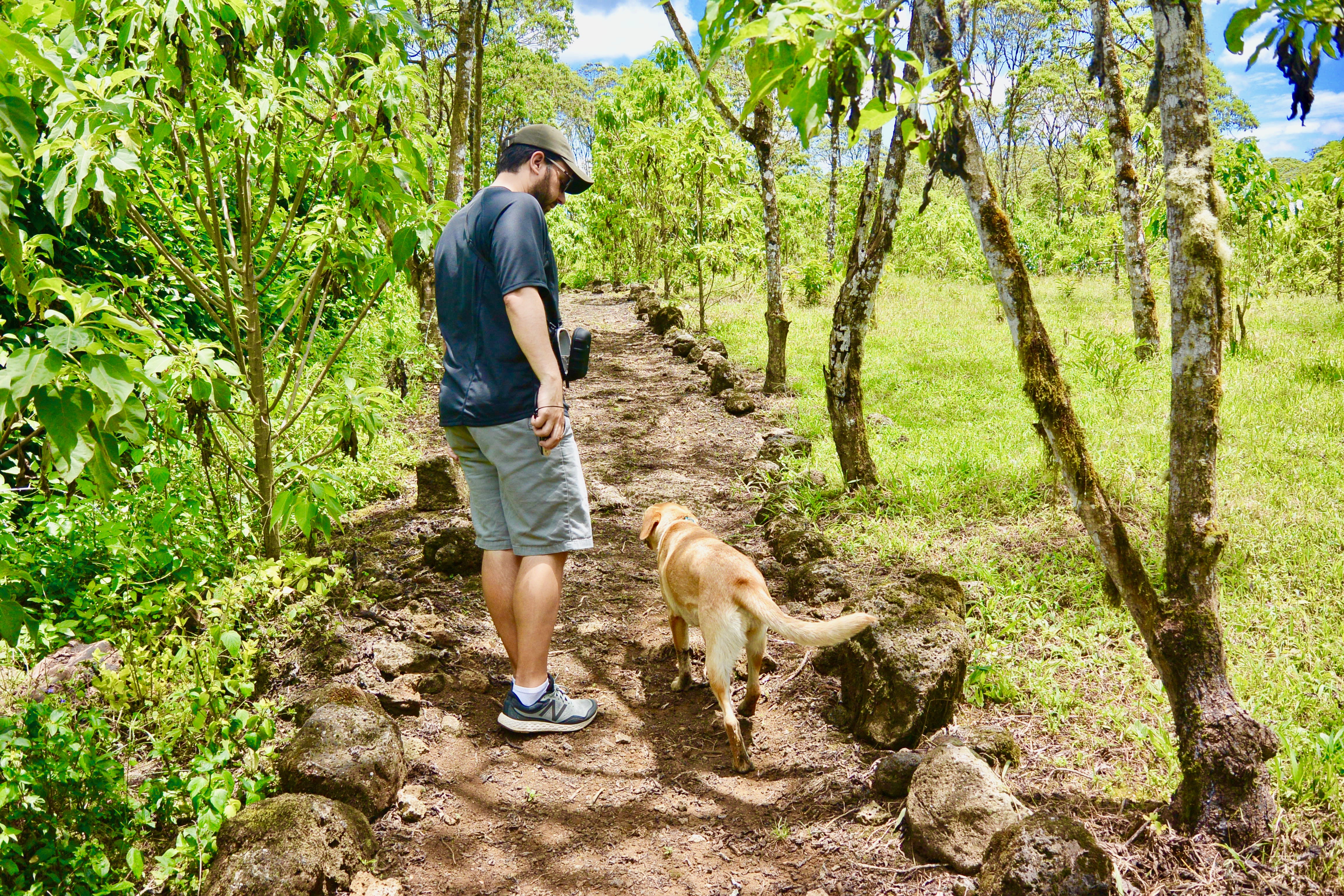
I chose the Semilla Verde Hotel because I wanted variety when it came to our hotels. We started at the harbor in San Cristobal, then boarded our ship, and then began our highlands retreat at this beautiful property. If you want to unplug and be one with nature, this is the hotel for you. There are several trails around the property, a resident dog named Saba, roaming giant tortoises, and homemade meals all on-site. This was perfect for our itinerary because we were wiped after all of our adventures on the Natural Paradise. On the last night of our stay, we indulged in a four-course dinner cooked by the hotel staff. There are only a handful of guest rooms so this hotel gives a lodge/boutique hotel feel with very grand living areas and the freedom to go in the kitchen and grab drinks right out of the fridge. We felt as if we were in a private house.
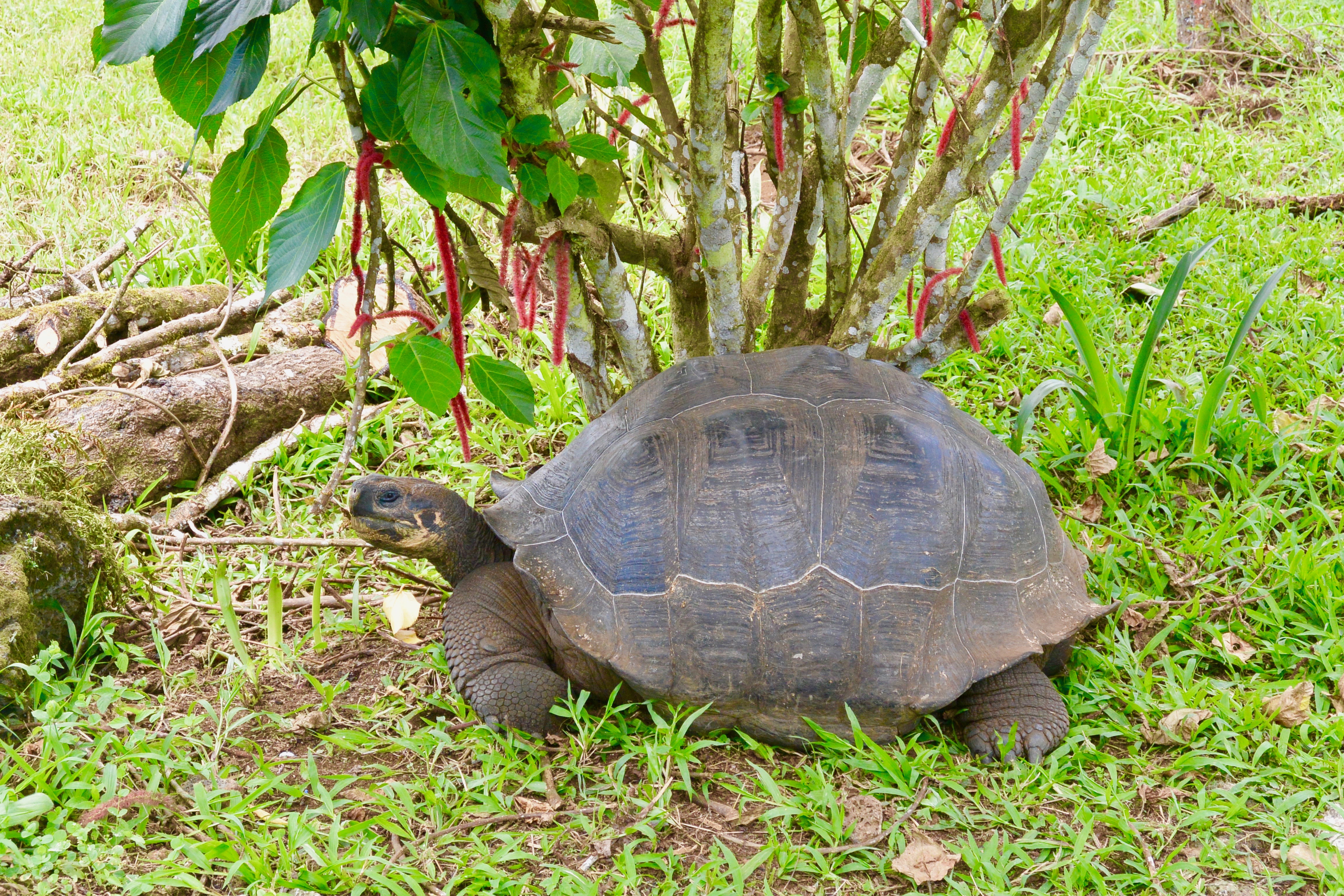
The Semilla Verde Hotel is about a 10-minute drive from Puerto Ayora, where all of the human action is on this island. It’s fairly easy to get a cab to town from the hotel. All you need to do is ask someone from the staff for a cab and one will arrive within 15 minutes. We ventured to Puerto Ayora to go to the German Beach, grab lunch, and arrange our ferry tickets to Isabela. We took a water taxi over the Angermeyer Waterfront Inn where we had a nice lunch on the harbor. Afterward, we followed the paths to the German beach. This was a pretty, local beach with calm waters. After spending some time along the paths and sands of this area of Puerto Ayora, we headed back to town and prepared ourselves for our journey to Isabela.
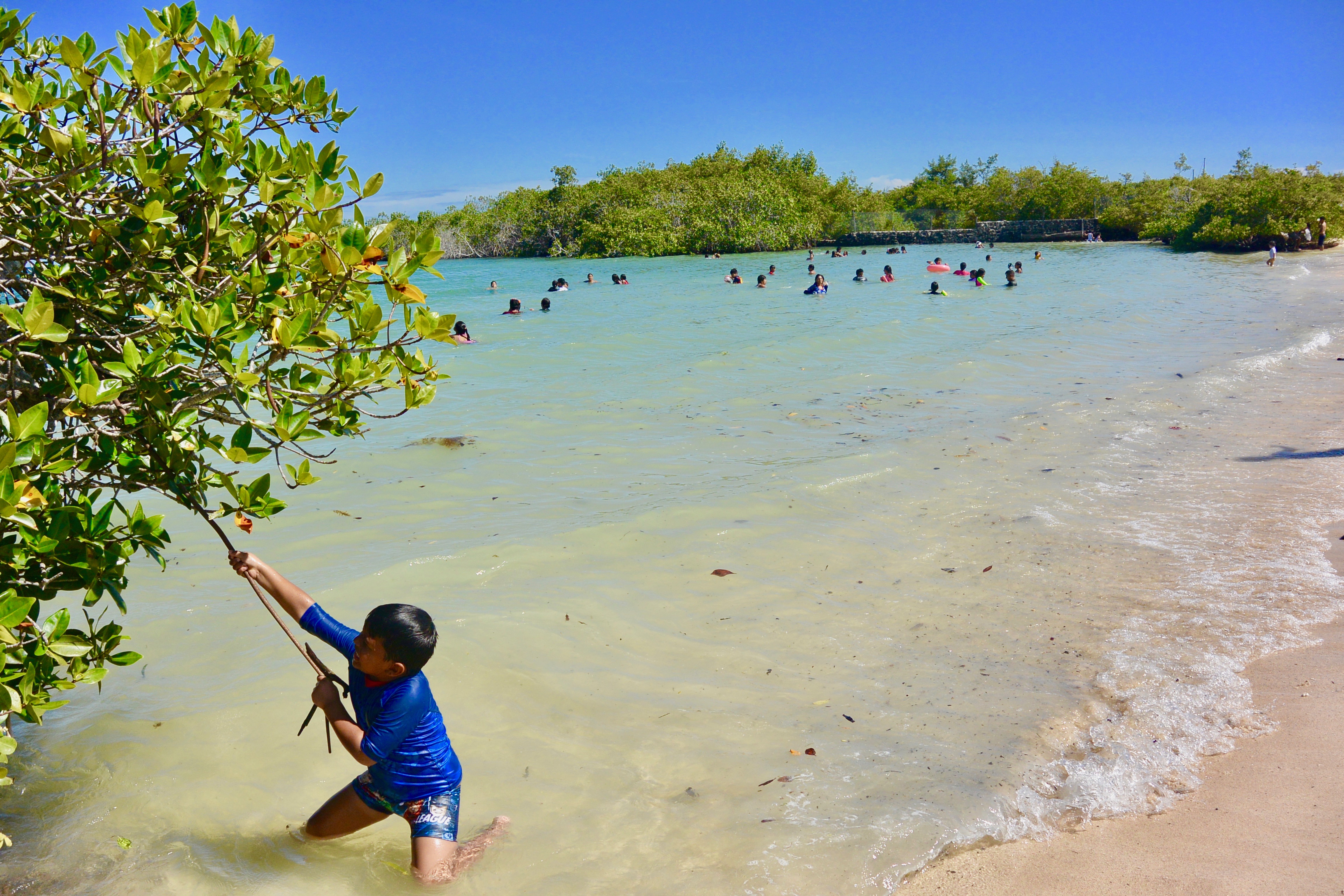
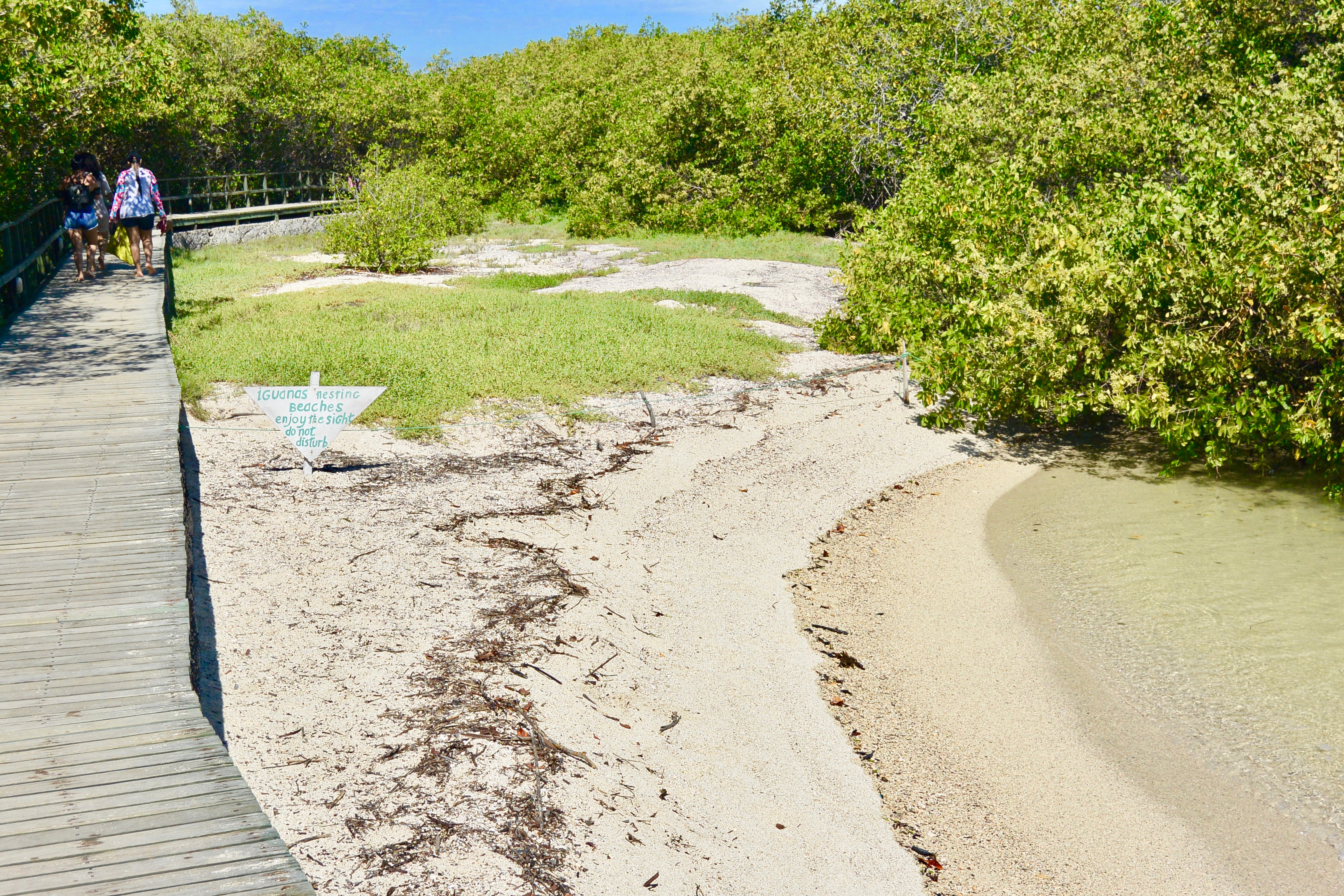
Make sure you withdraw enough cash in Santa Cruz to sustain your stay in Isabela. There is only one ATM on the island and if it’s on the fritz you will be penniless. They mainly accept cash only on Isabela so believe me, having cash is important.
Isabela
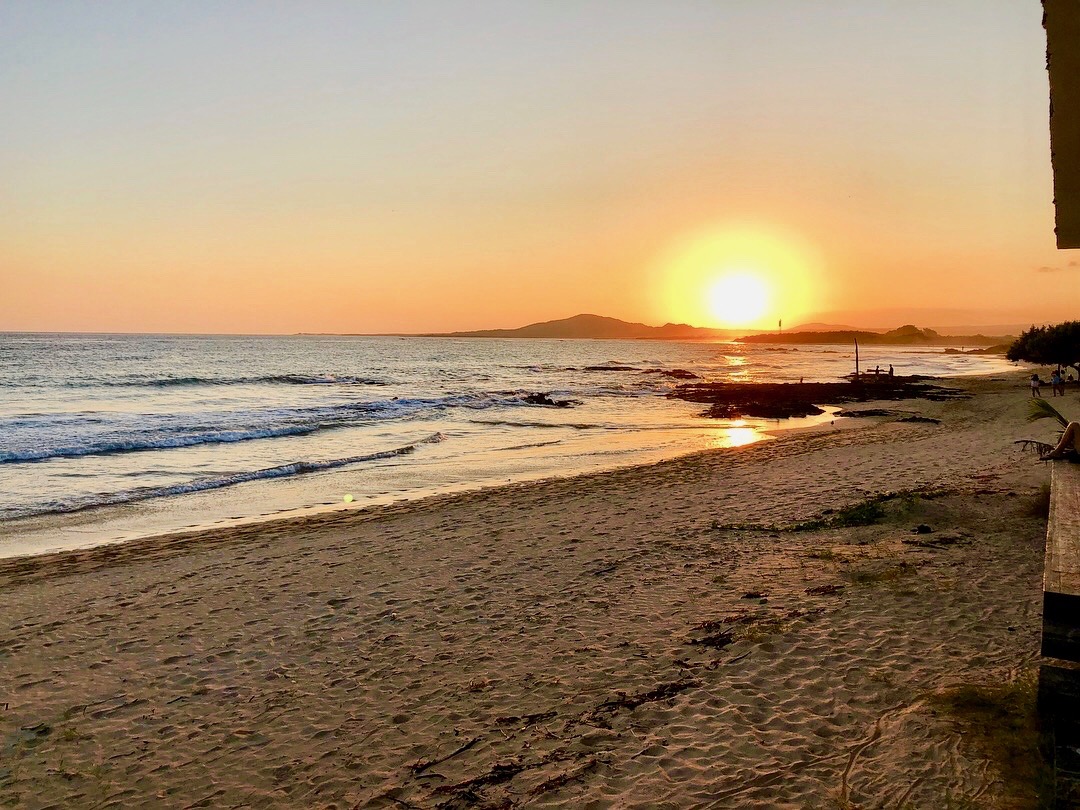
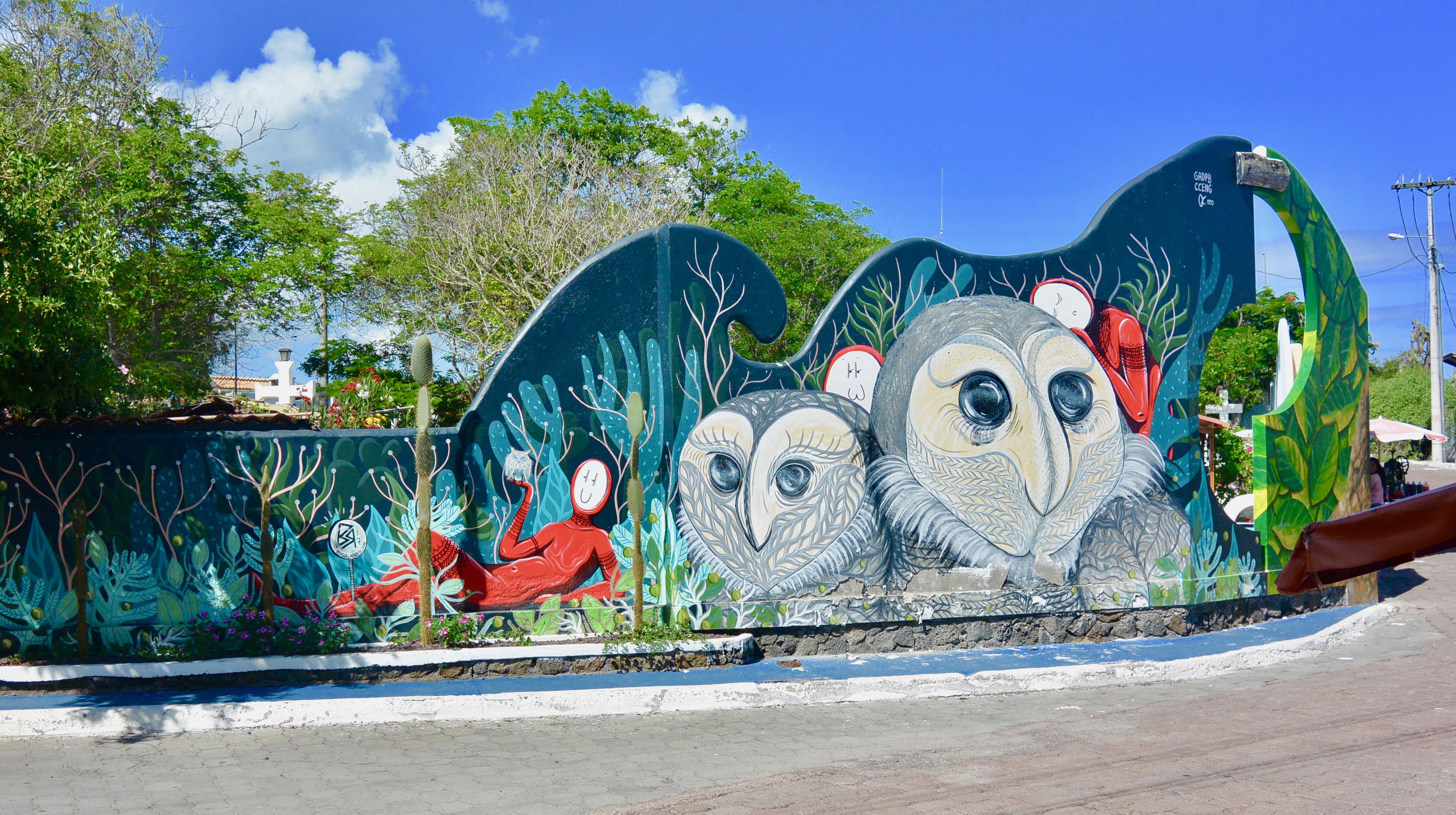
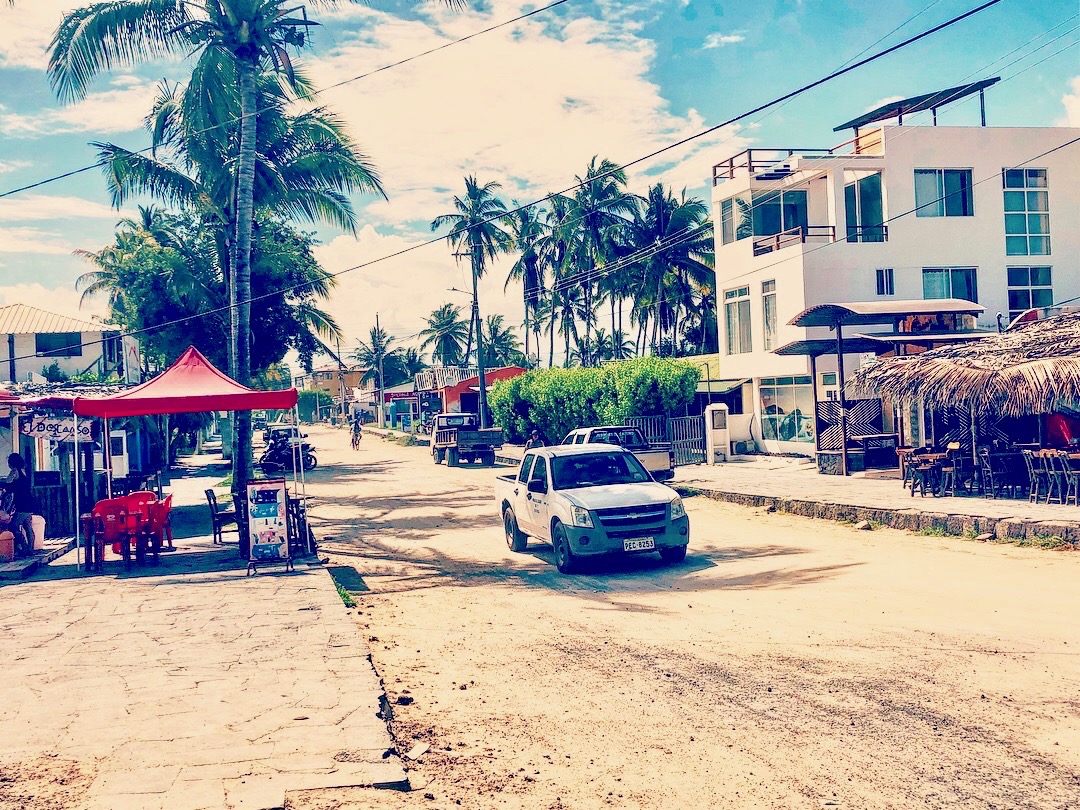
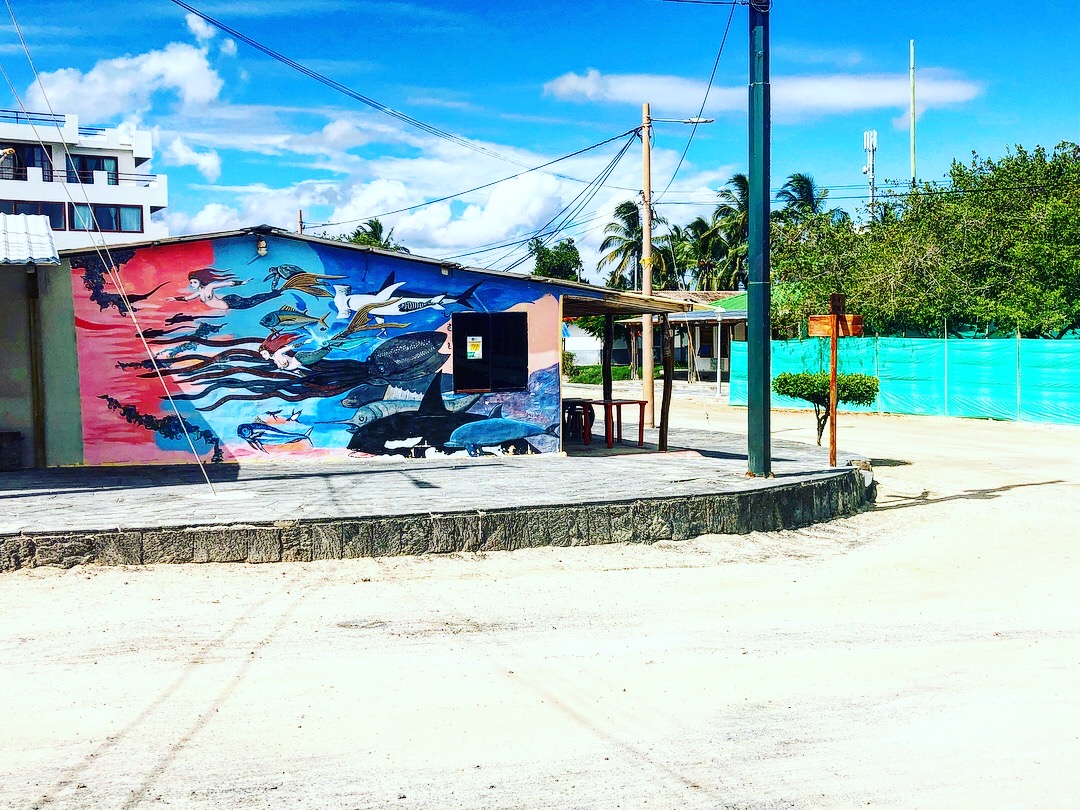
Isabela offers more of a beach town feel with sand streets and an off the grid atmosphere. There are some of the most beautiful natural sights on this island including Los Tuneles, Tintoreras, and the Sierra Negra Volcano. This island was my favorite as I am a total beach bum, and our hotel room was practically in the ocean.
We booked all of our tours in advance with Pahoehoe Tours, a local tour operator right down the street from the Cormorant Beach House, our hotel. They are reliable and offer great tours and guides. You can book everything for Pahoehoe online months in advance. Bring a USB drive because the guides take pictures that they will put on your drive at their shop. We also stumbled upon an operator called Galapagos Bike and Surf. It looked like a good place to go if you wanted a surf lesson.
The “Ferry” to Isabela
In order to get to Isabela, we had to endure the ferry. I use the term ferry loosely as the ferry that took us there was really a 30-foot speed boat with the guts ripped out so it could fit as many passengers as possible. In order to get tickets for this voyage, you must go to one of the travel agencies in Puerto Ayora and get tickets.
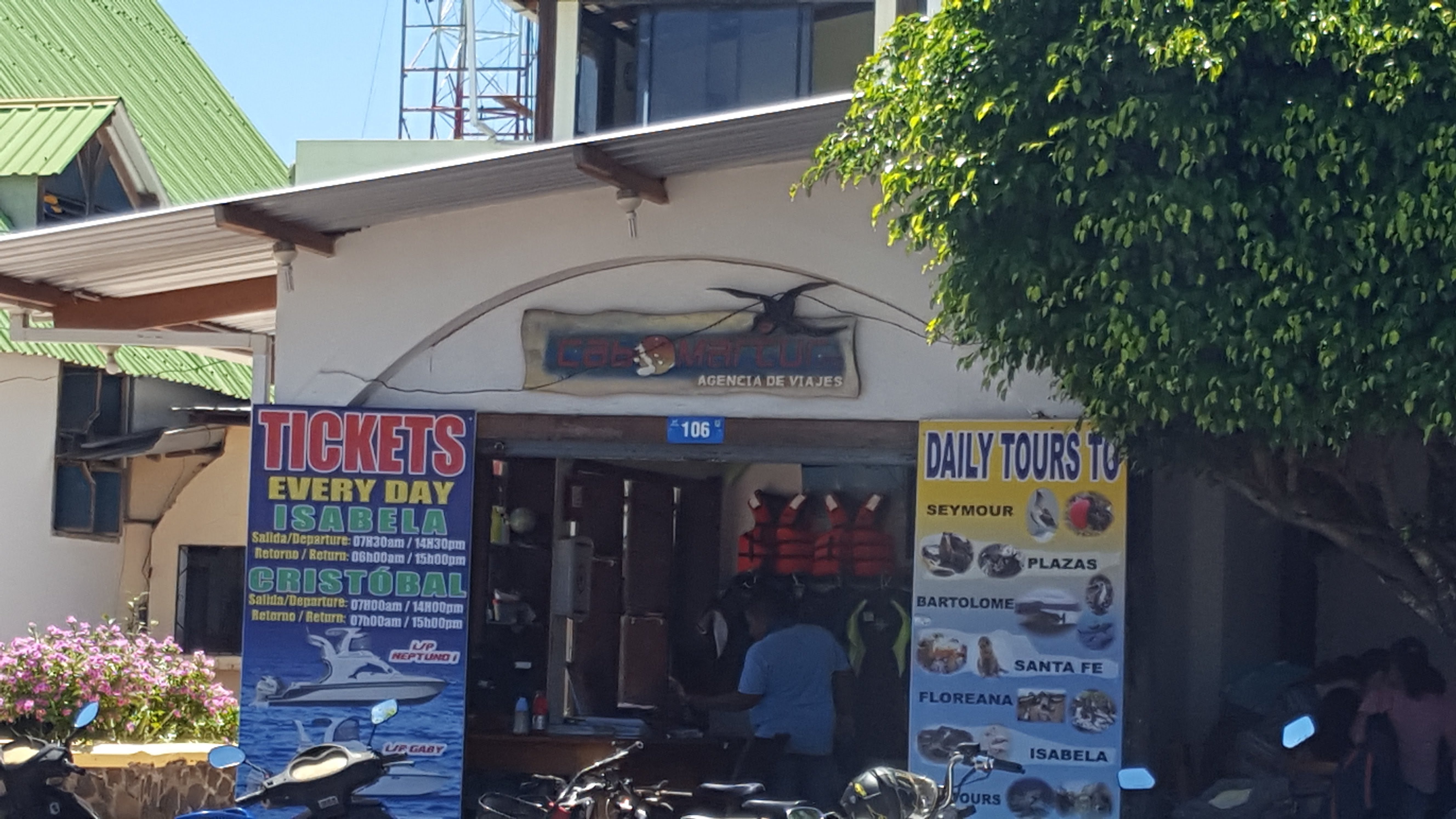
I recommend getting tickets at least a day ahead. We went to a travel agency called Cabo Marcur Agencia de Viajes that was directly across from the pier, which was very convenient as you need to go to the agency before you board the ferry on the day of departure. We got round-trip tickets, $30 per person from Santa Cruz to Isabela, and $25 per person from Isabela to Santa Cruz. Most ferries leave at either 7am or 2pm. I recommend arriving 30-45 minutes before departure as you need to go to the agency, get your ticket, and then go to a crowded pier and have your bags inspected.
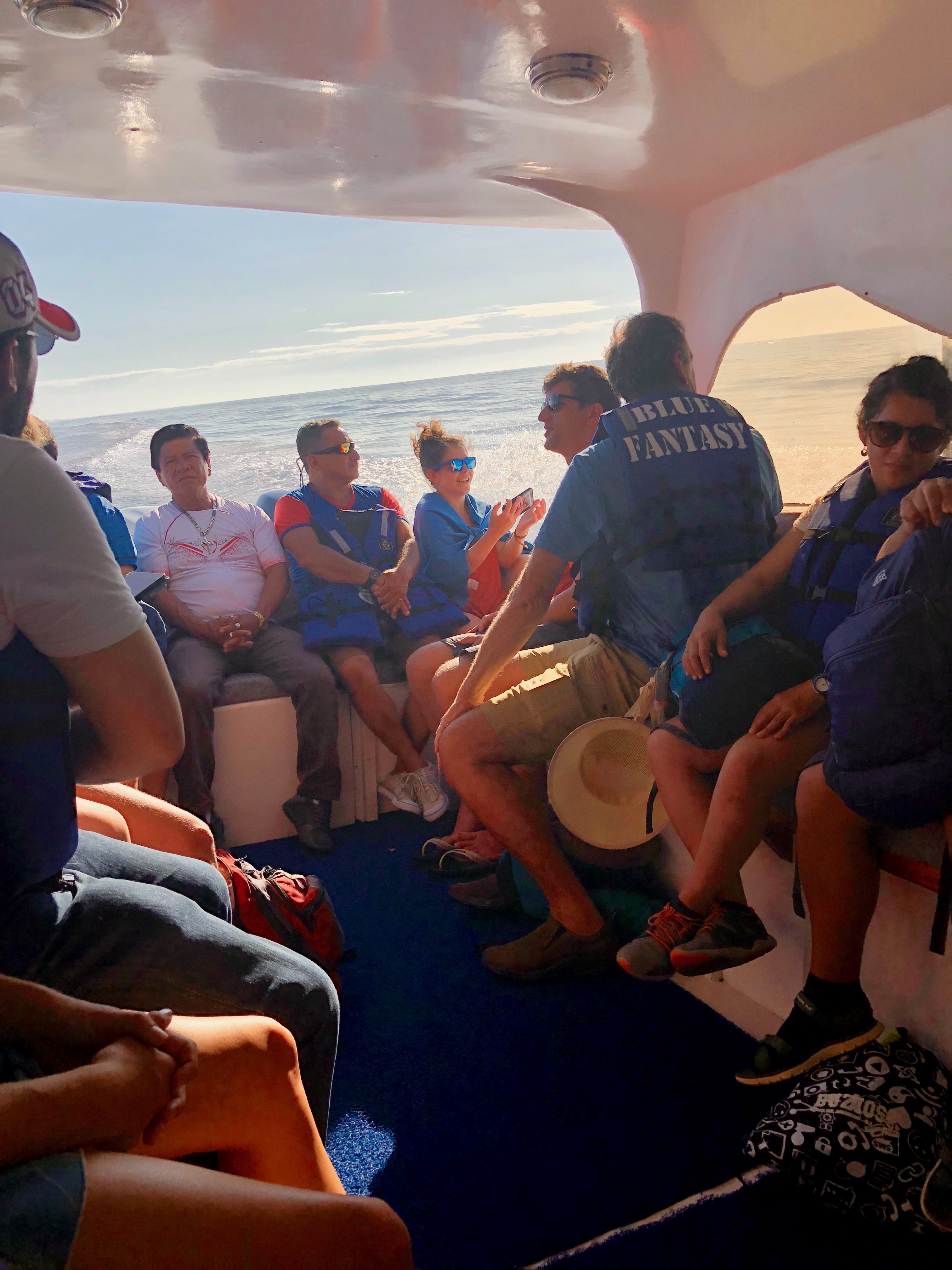
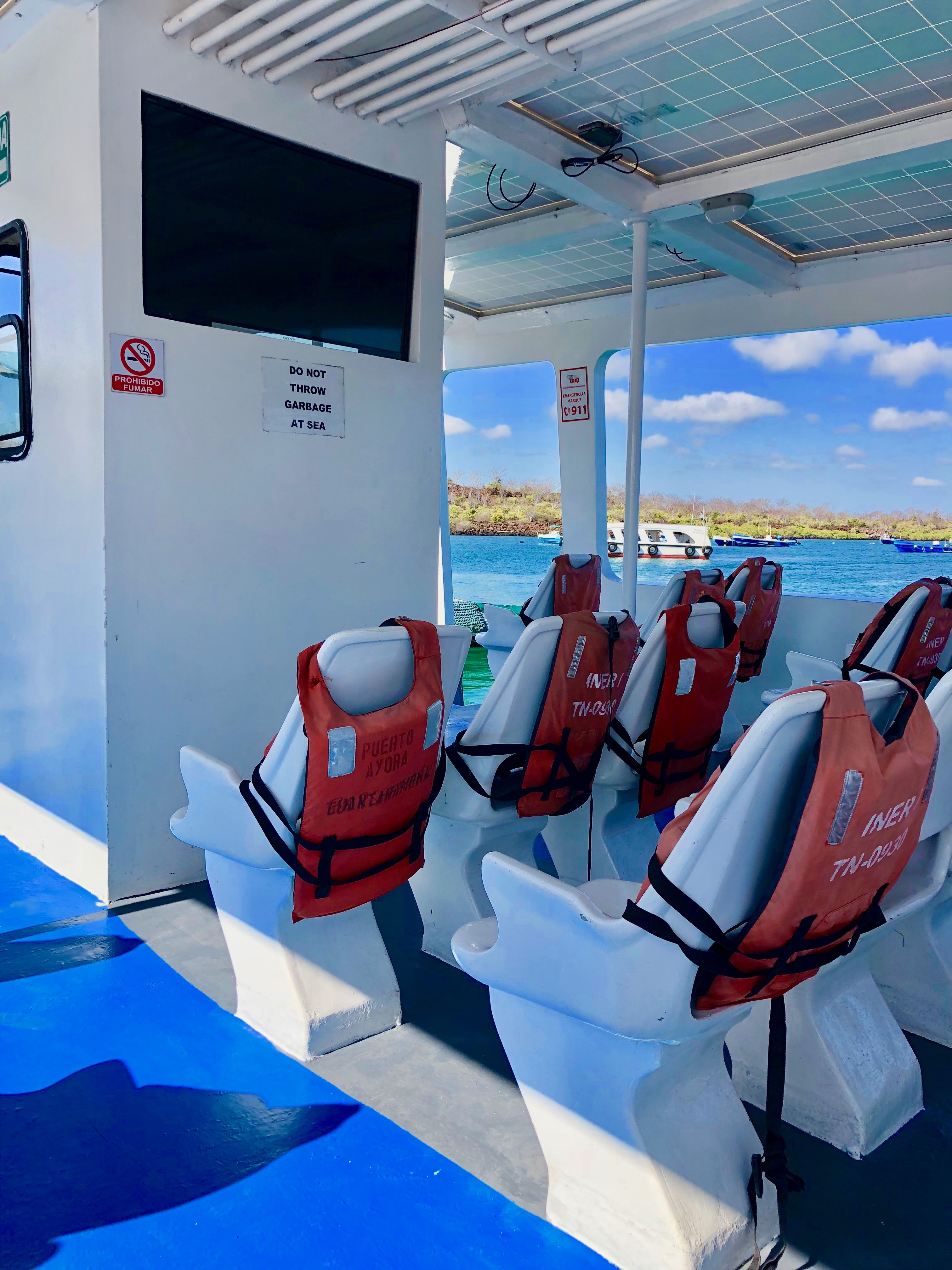
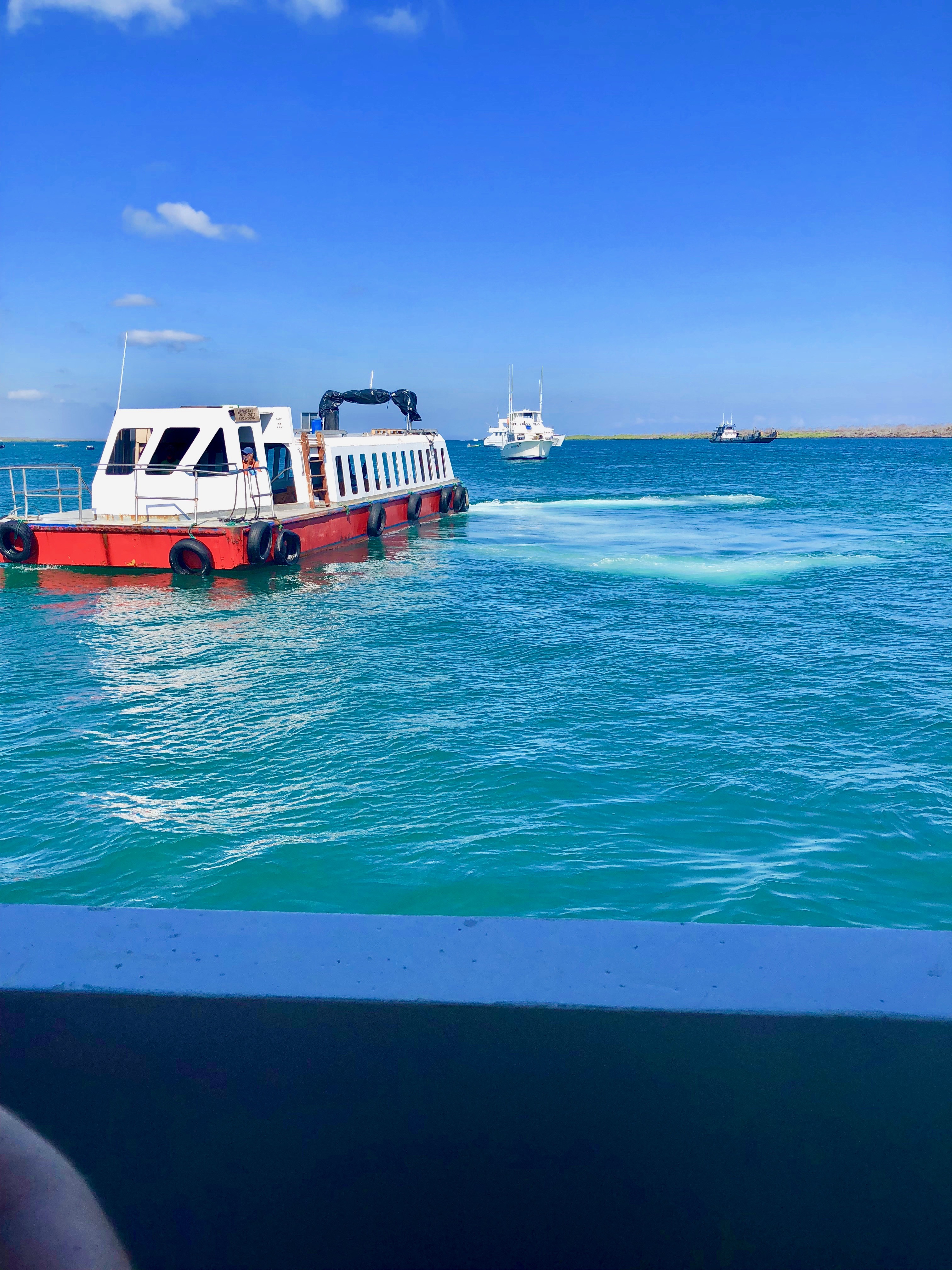
When you go to the travel agency on the day of departure, they will give you a necklace with a tag on it that says the name of the boat you’re going on. These tags come to play once you pass inspection. The travel agent will most likely tell you a pier number to go to. Wait there for someone to call your boat’s name to line up. Stay alert and try to get to the front of the line (believe me you won’t regret it). This line is to get on a water taxi that will then take you to the “ferry”. Once you get on the water taxi take a seat at the back end of the taxi where you enter if you want to get a good pick of seats on the actual ferry. I know this seems petty and rude but you’ll thank me later when you’re not stuck in the blistering sun for a bumpy two hour ride.

If you are prone to sea sickness make sure you take medicine before you get on this boat. It’s a really bumpy ride and there’s one very tight bathroom on the boat if you do get sick, which is not ideal. Also make sure you get a seat in the middle of the rows along the sides of the boat. This will allow you to have shade, but it’s not as bumpy as the seats on the very front of the boat. I know this seems intense, but I promise it’s worth it to see Isabela. There are flights you can take to Isabela from San Cristobal through Emetebe but we were having a hard time making a reservation on their website. The flights are also significantly more expensive (typically $400 round trip) but may be worth it if the bumpy boat situation seems unbearable for you.
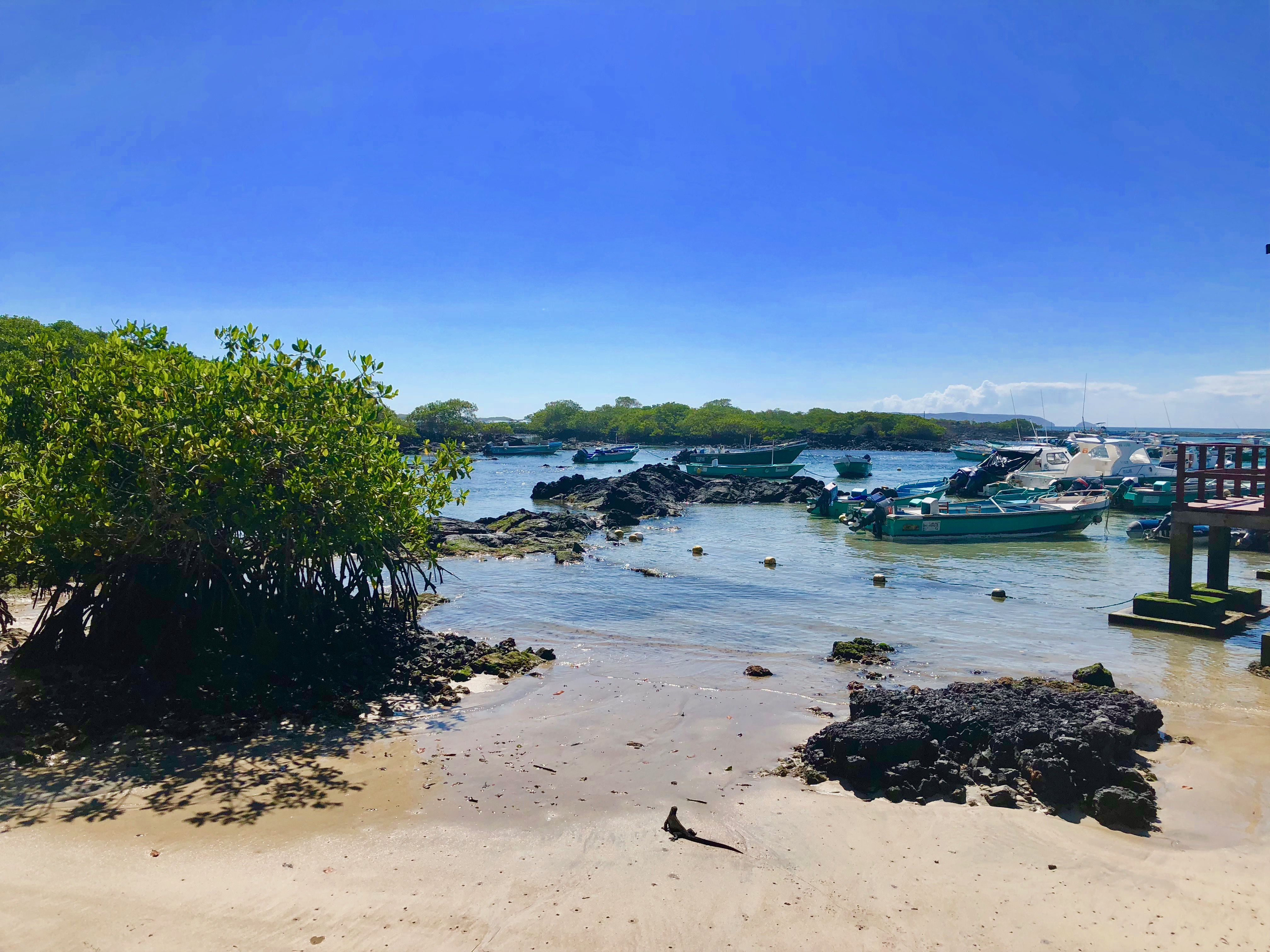
Once you arrive in Isabela a water taxi will come to the “ferry” to bring you to shore. The taxi will take you to the port, which is a really small dock that is not in town. Once you get off the boat you will be separated from your suitcase, but not to worry. The guys there will put everyone’s suitcase on a roller and distribute them shortly after. In the meantime, go to the person sitting at a table a little bit down the dock and pay the $10 per person fee to enter the island. They will give you a little slip after you pay. Then you can grab your bag and a cab, which is still a white pick-up truck, but I promise it’s still not creepy. We got to our hotel in town within 5 minutes.
Stay at the Cormorant Beach House
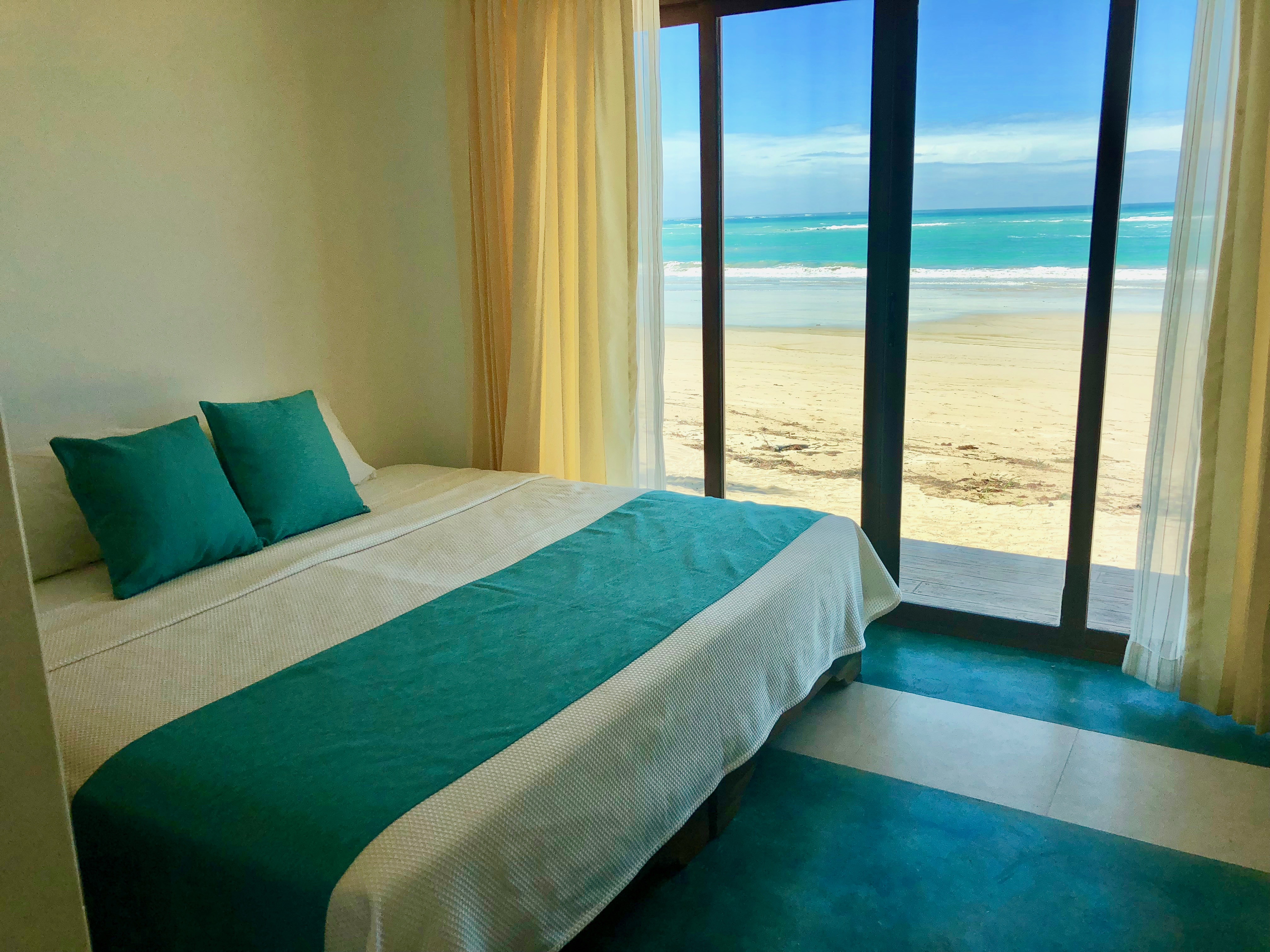
The Cormorant Beach House cannot be closer to the beach. We had a room on the first floor and at high-tide the ocean was about 6 feet from our back door. The back door and the room are elevated so don’t worry about flooding. You can also hear the waves at night that will rock you right to sleep. Every morning there was a sprinkle of sea water on the back door, perfect for beach lovers. The only downside was that someone wasn’t always at the reception desk, but when there was, the receptionist was very helpful.
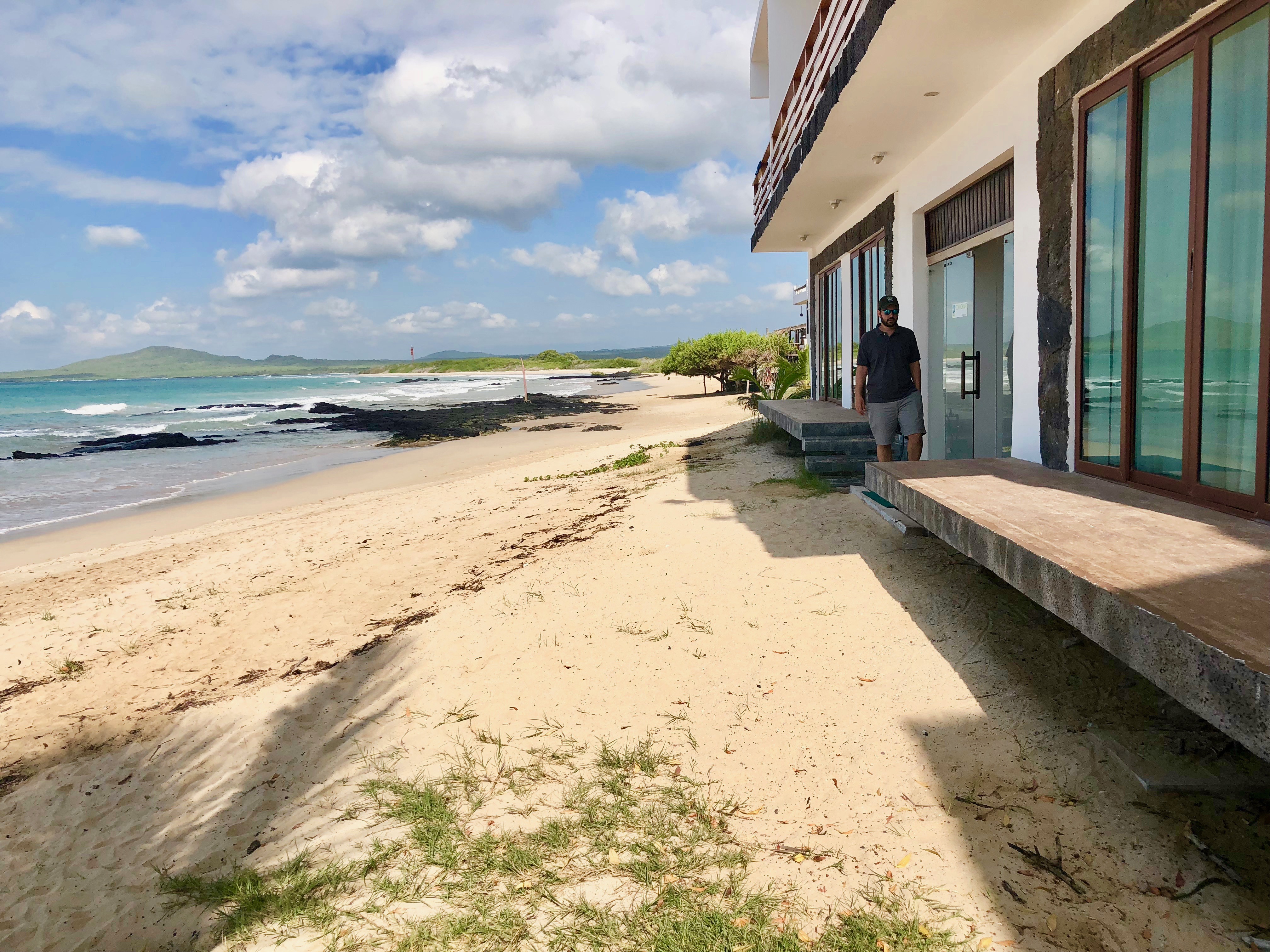
Opt for an Oceanview Room, which will be a downstairs room with a backdoor that leads to the beach. It’s so nice for taking dips in the ocean. Anthony and I just left everything in the room and went back when we wanted towels, money, or our key.
Where to Find the ATM
Across the street from the restaurant Palm Beach down Escalecias Road, there is an office with a Western Union where you will find an ATM to withdraw cash. Throughout our journey through the Galapagos, everyone told us to bring cash with us because there were no ATMs in Isabela, so we were pleasantly surprised to find one there.
Snorkel with Sea Turtles and Marine Iguanas in Tintoreras
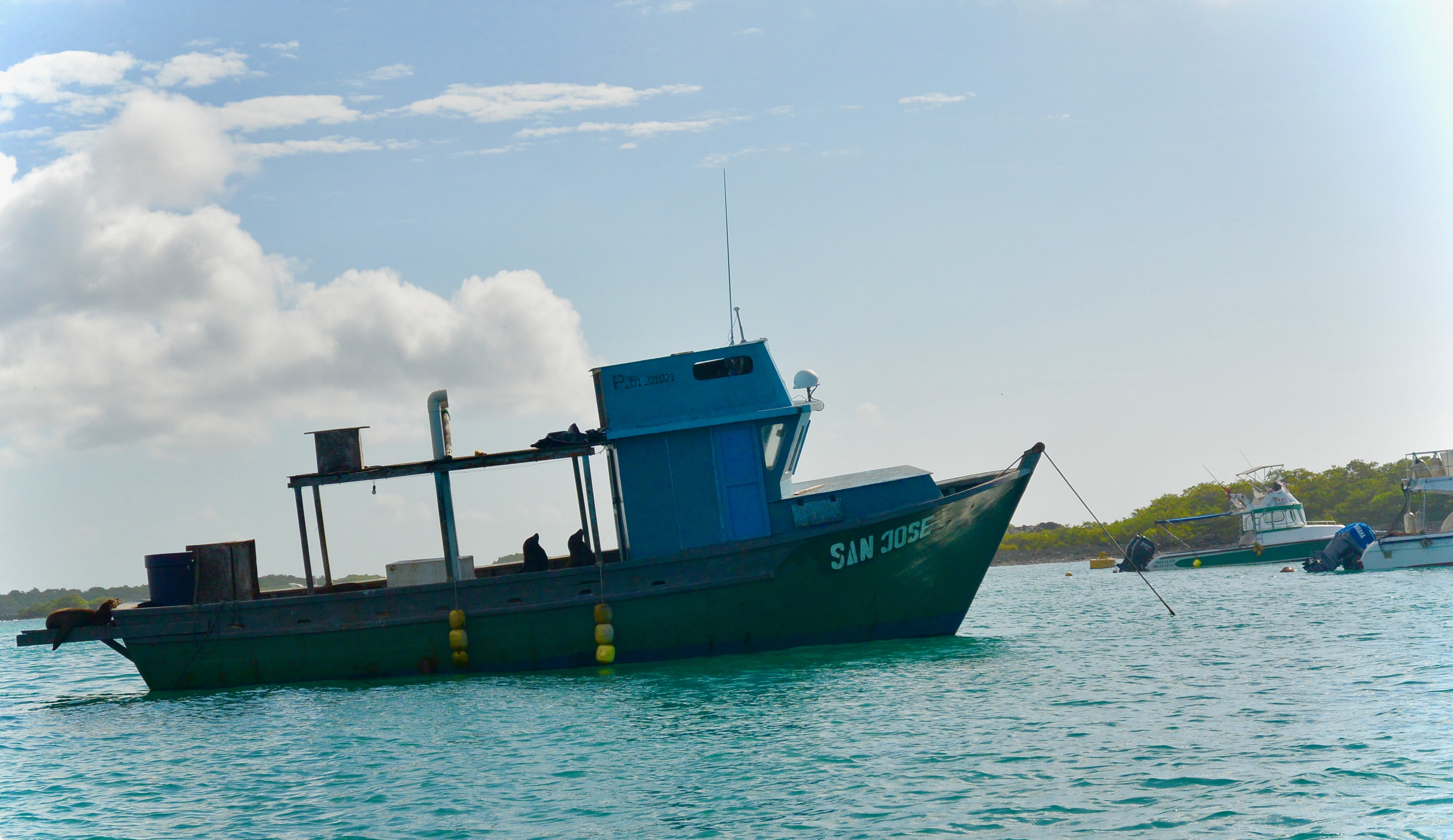
For our first tour, Tintoreras, we went to the Pahoehoe shop to get fitted for wetsuits and flippers, and got picked up by an open-air truck. Our tour guide, Janine, is a naturalist and was very informative along our tour. From the truck we boarded a water taxi that took us around the mangroves to spot birds and other wildlife. We spotted an old boat called San Jose that was dominated by sea lions, which was adorable. These pups can jump pretty high out of the water and seem to perch themselves on all the anchored boats we saw.
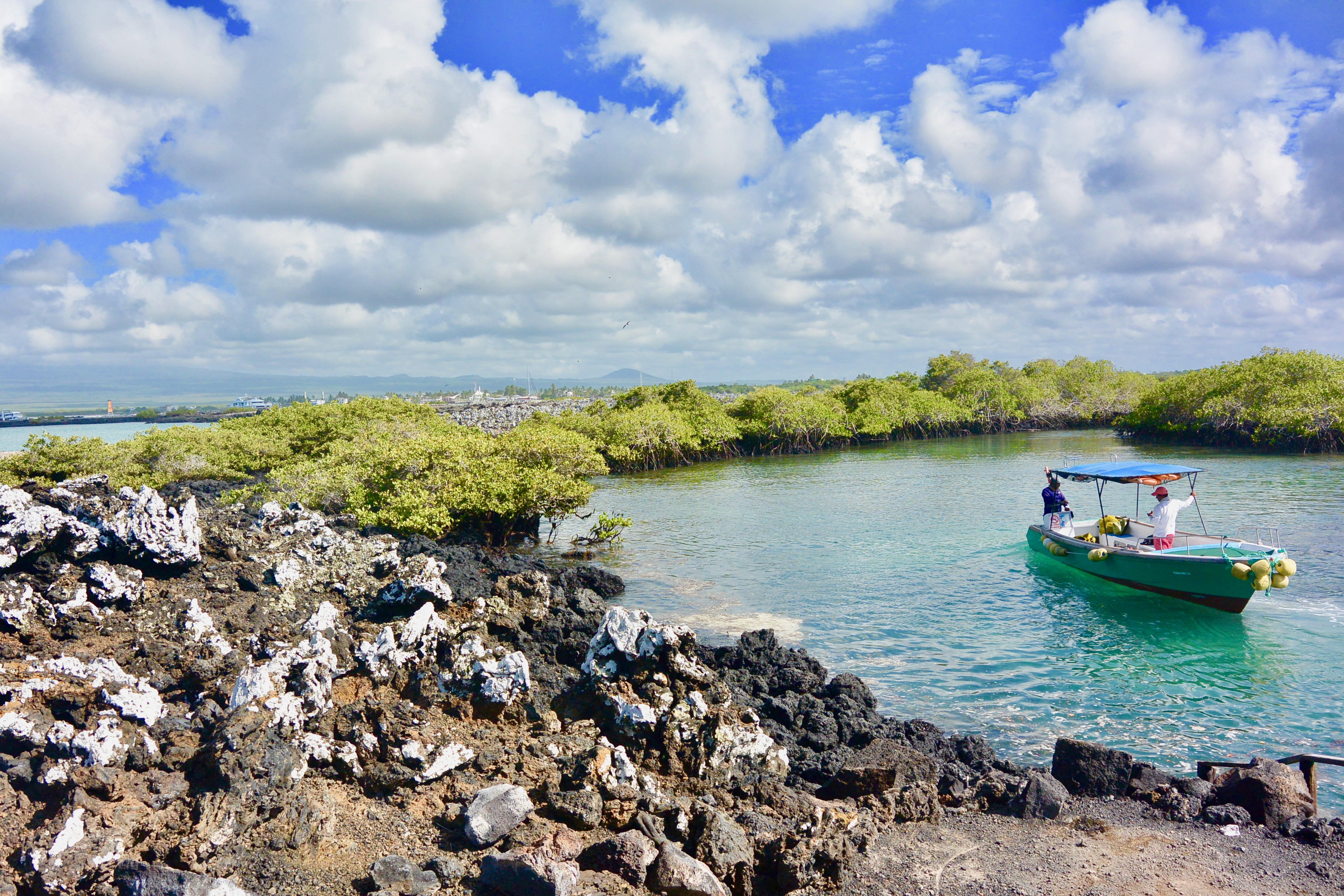
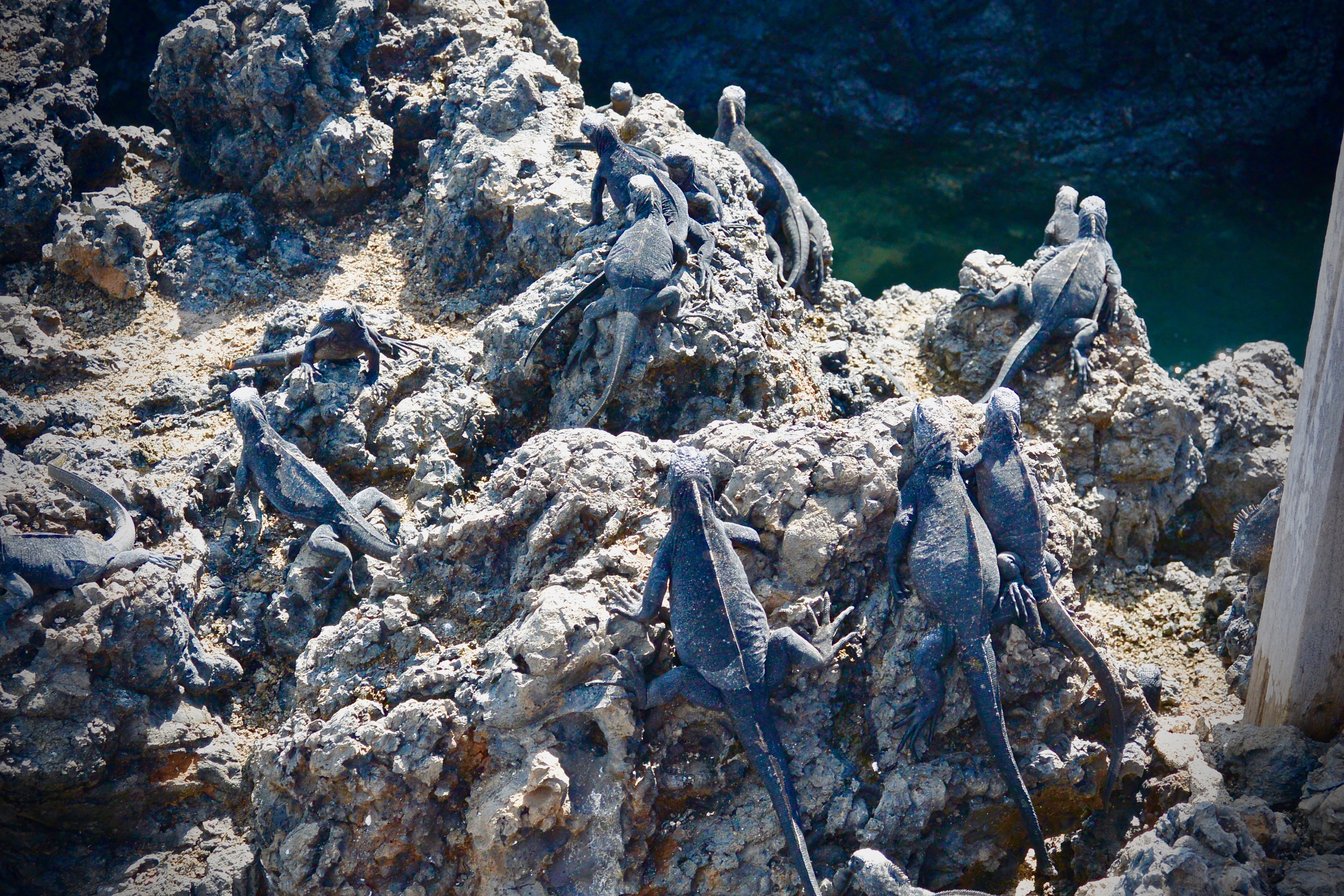
We first stopped at Tintoreras Greitas and did a little hike along volcanic formations. We saw hordes of marine iguanas, which are endemic to the Galapagos Islands meaning this is the only place where you will find them. They have the unique ability to live on land and in the water and swim by waving their tails back and forth. Another evolutionary marvel in the region. It was mating season so the female marine iguanas were digging holes into the ground to lay their eggs. We saw a bunch of babies and witnessed an iguana battle where they were literally butting heads. We even saw some white tip reef sharks napping on the ocean floor nearby.
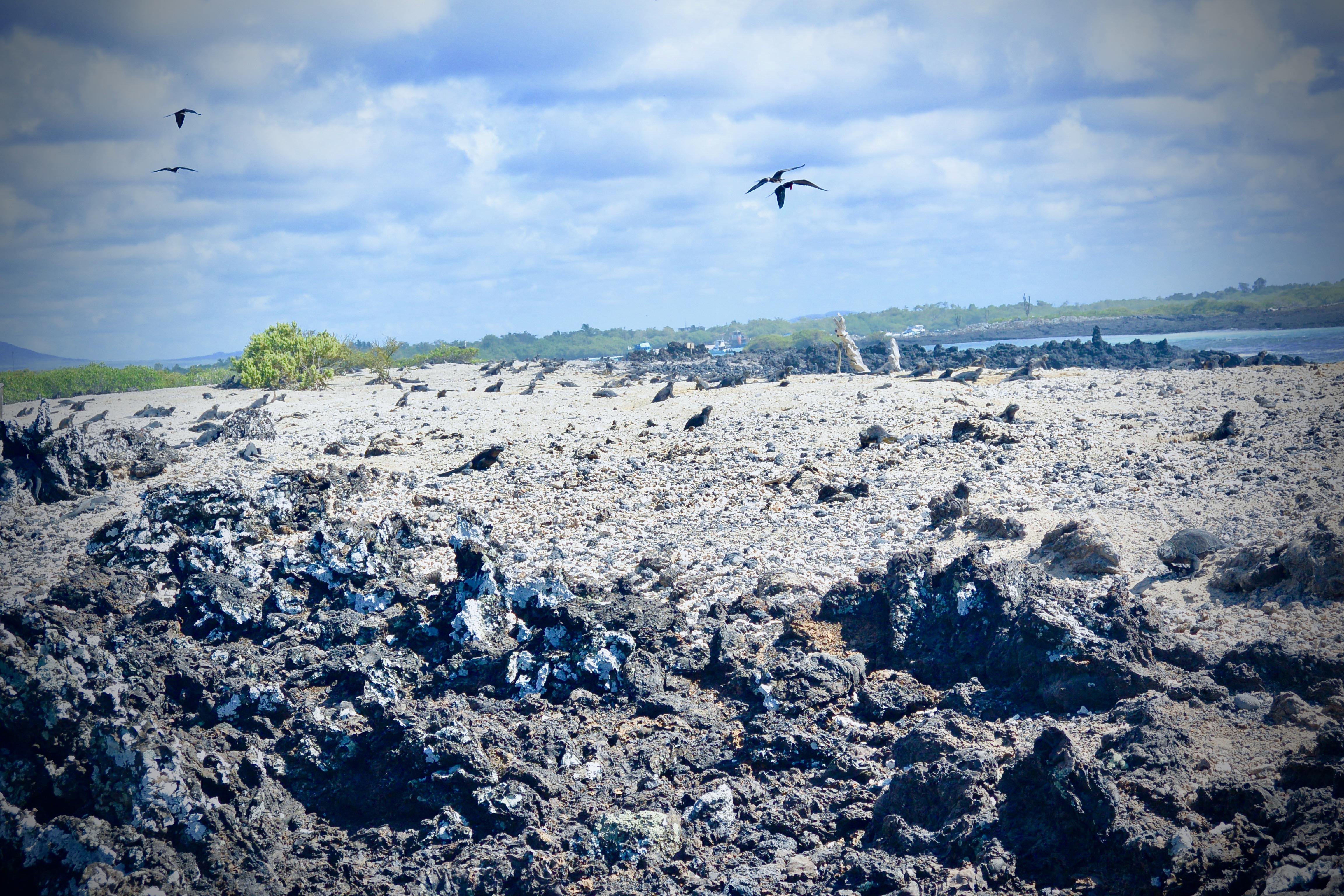
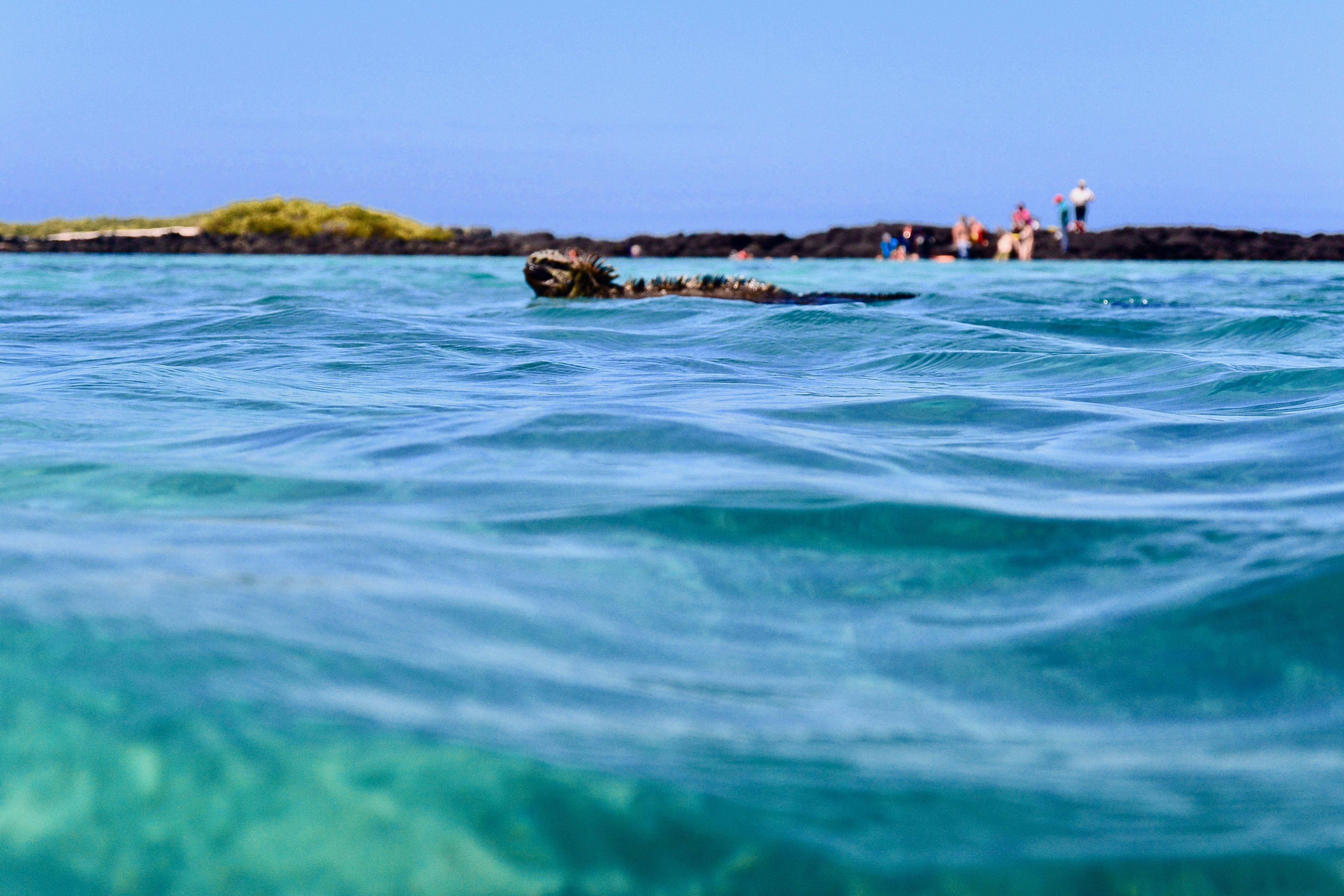
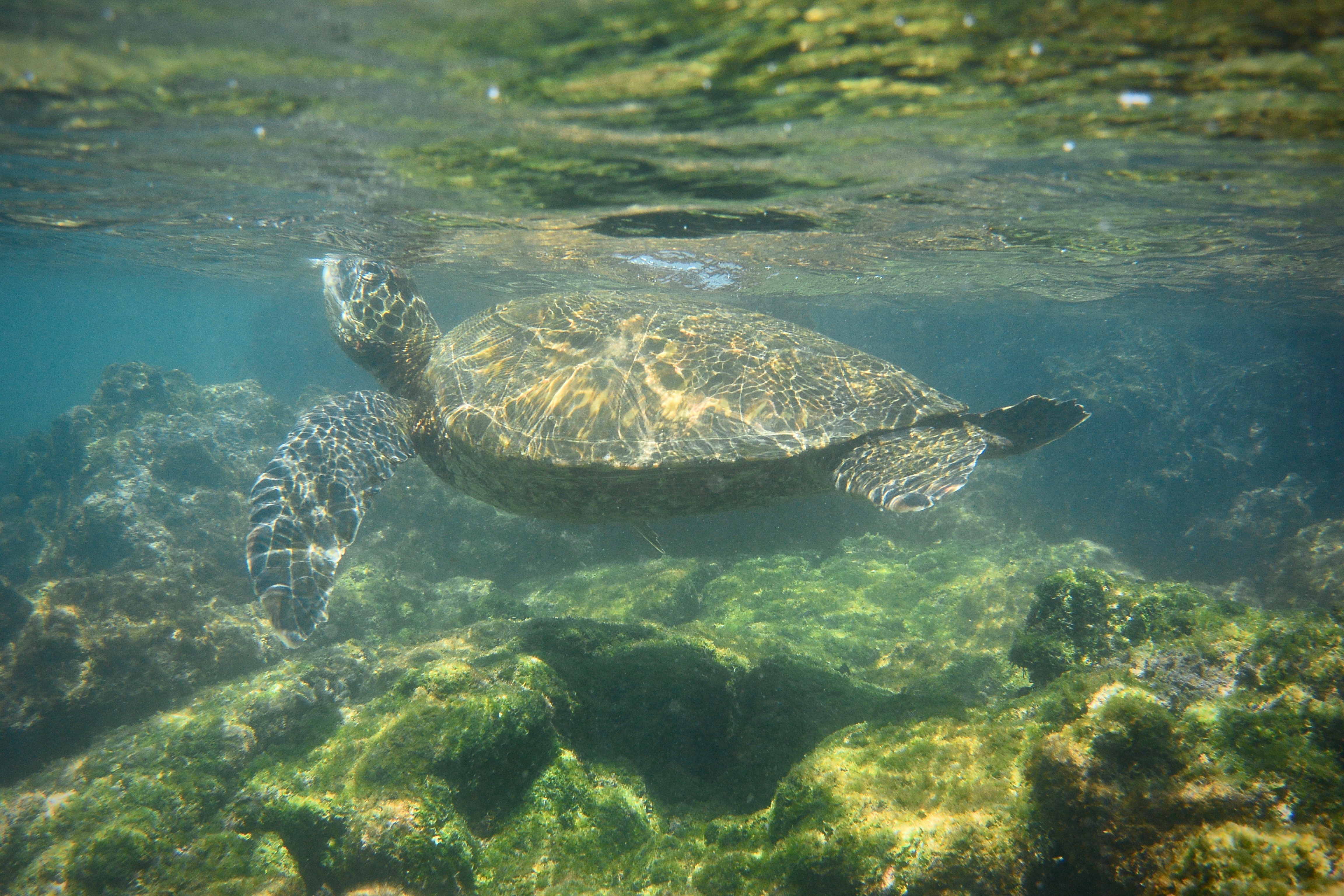
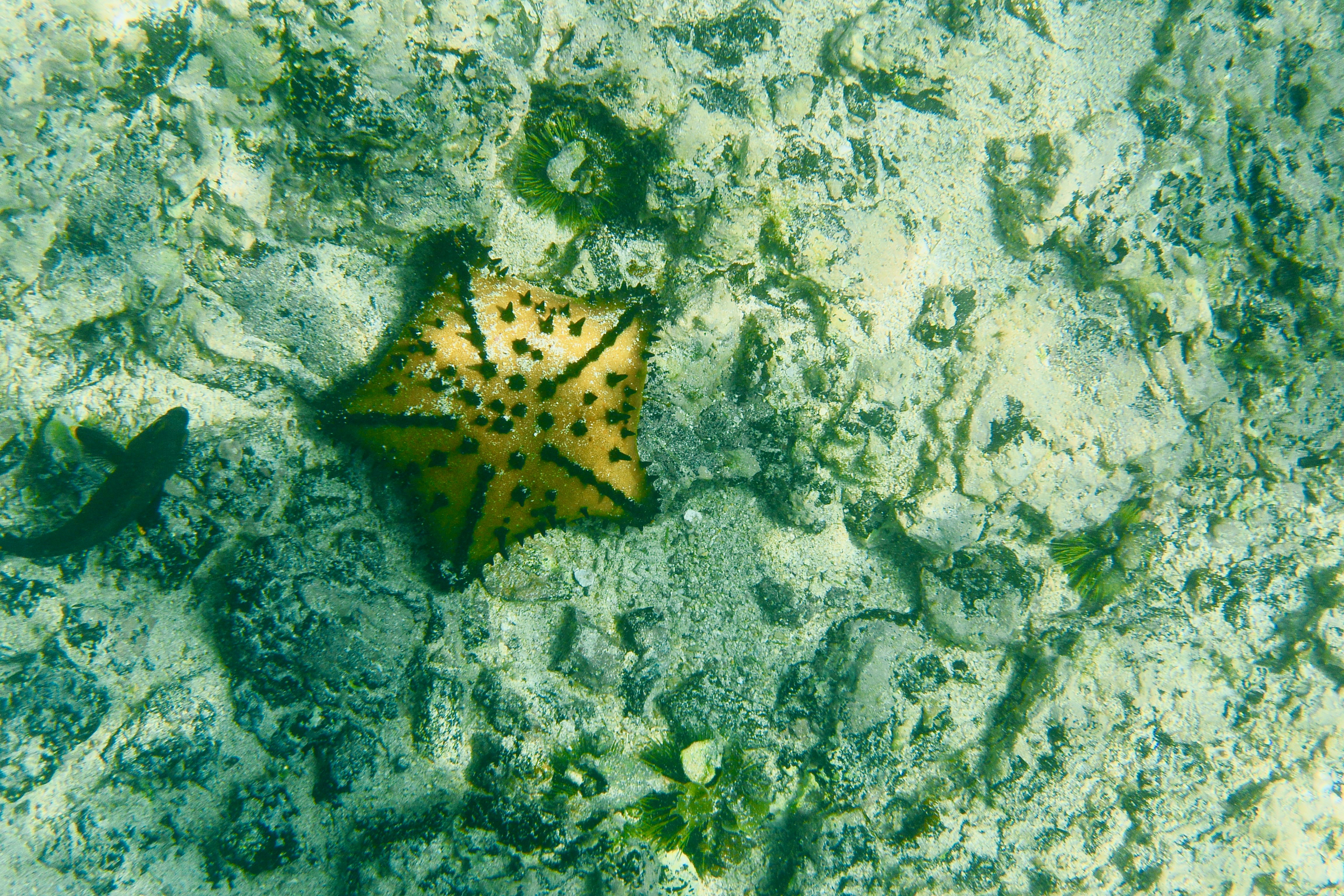
We took a water taxi to Tintoreras Cove where our snorkeling excursion began. We arrived on flat rock where we put on our wetsuits. We left our stuff on the rocks near our groups’ things as a couple of groups were coming and going. We had to navigate the rocks barefoot with our flippers in hand to find a spot on the edge to put them on. The conditions here were great. The water was very clear and there were many fish, chocolate chip sea stars, sea turtles, and marine iguanas swimming around. Apparently when we went it was breeding season for the turtles so there were many of them.
Hike to the Sierra Negro Volcano
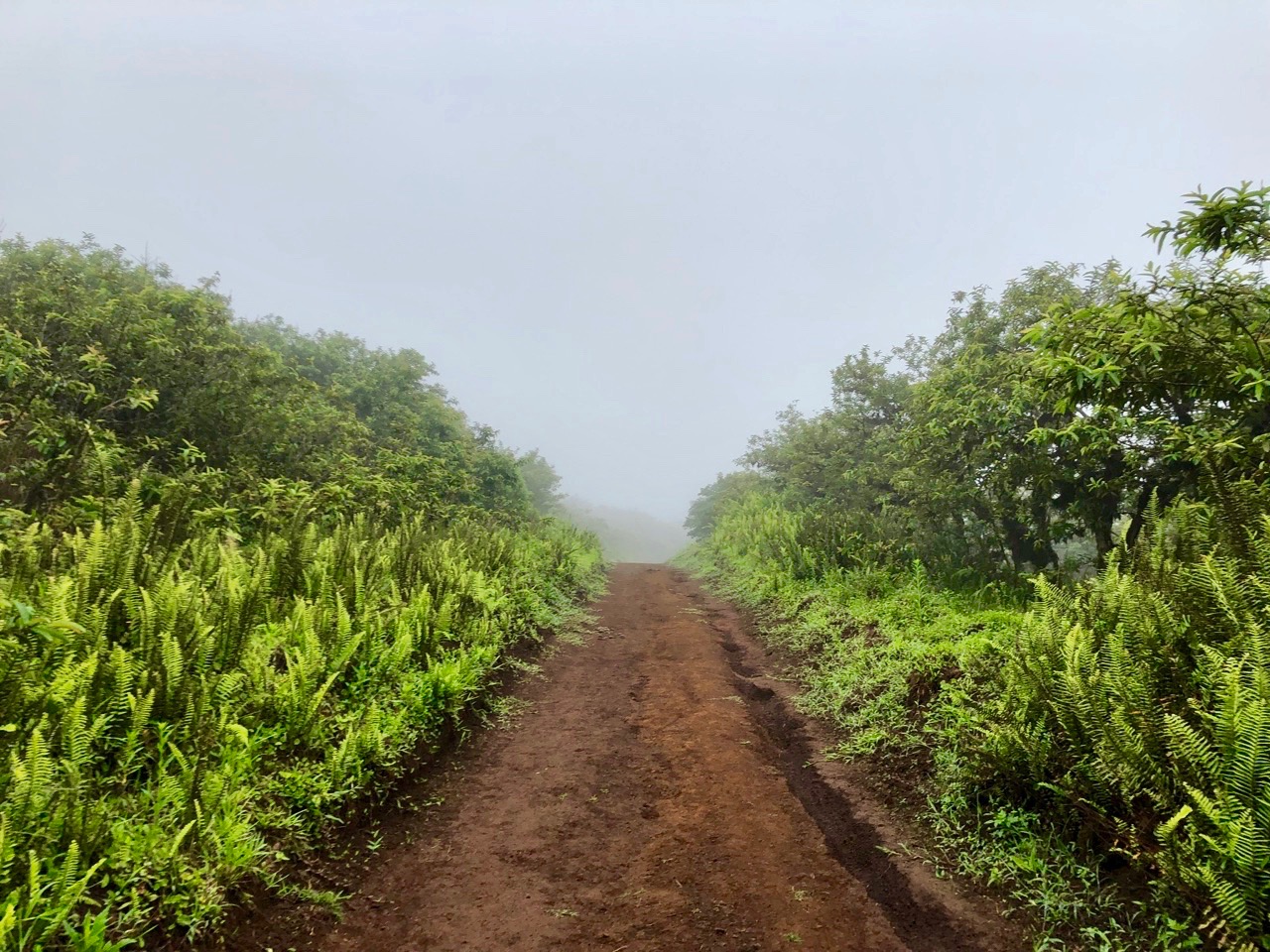
The Sierra Negra Volcano is active but no worries, there is a gigantic caldera that seems to contain most of the lava. We took an 8 km hike up to view the caldera and the surrounding area around the volcano. The hike was pleasant as it was pretty cool and misty upland. We actually couldn’t go to some parts of the volcano because they were anticipating another eruption soon. When we arrived at the caldera it was so foggy you could barely see where it began and ended. We sat at the viewpoint for about 30 minutes and the fog gradually cleared as if it was a curtain revealing the miles and miles of caldera for viewing. The area was about 10 km long and 100 feet deep consisting of hardened lava from past eruptions.
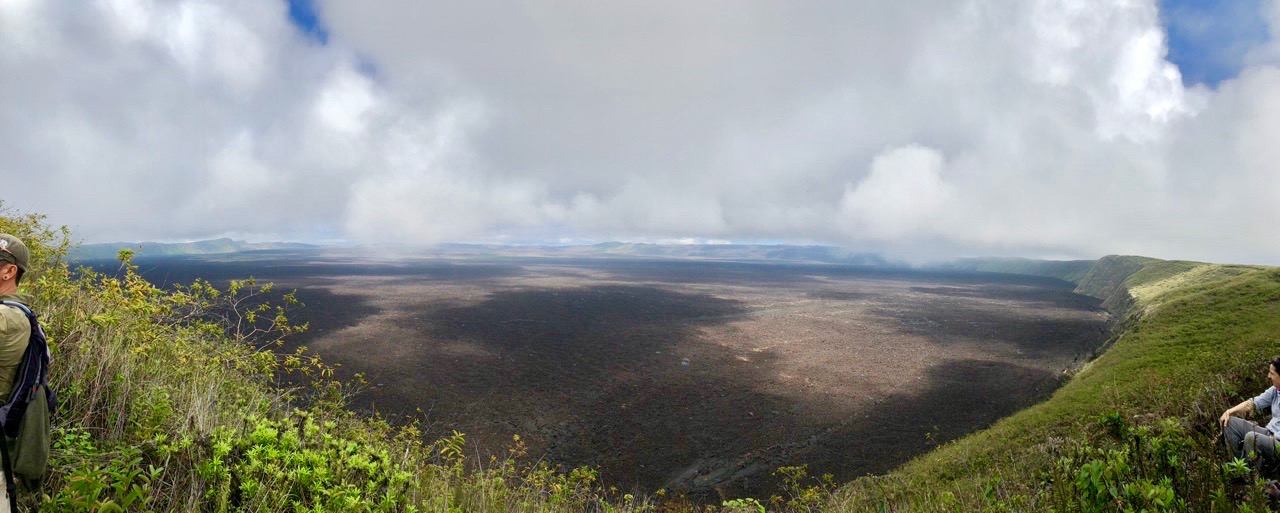
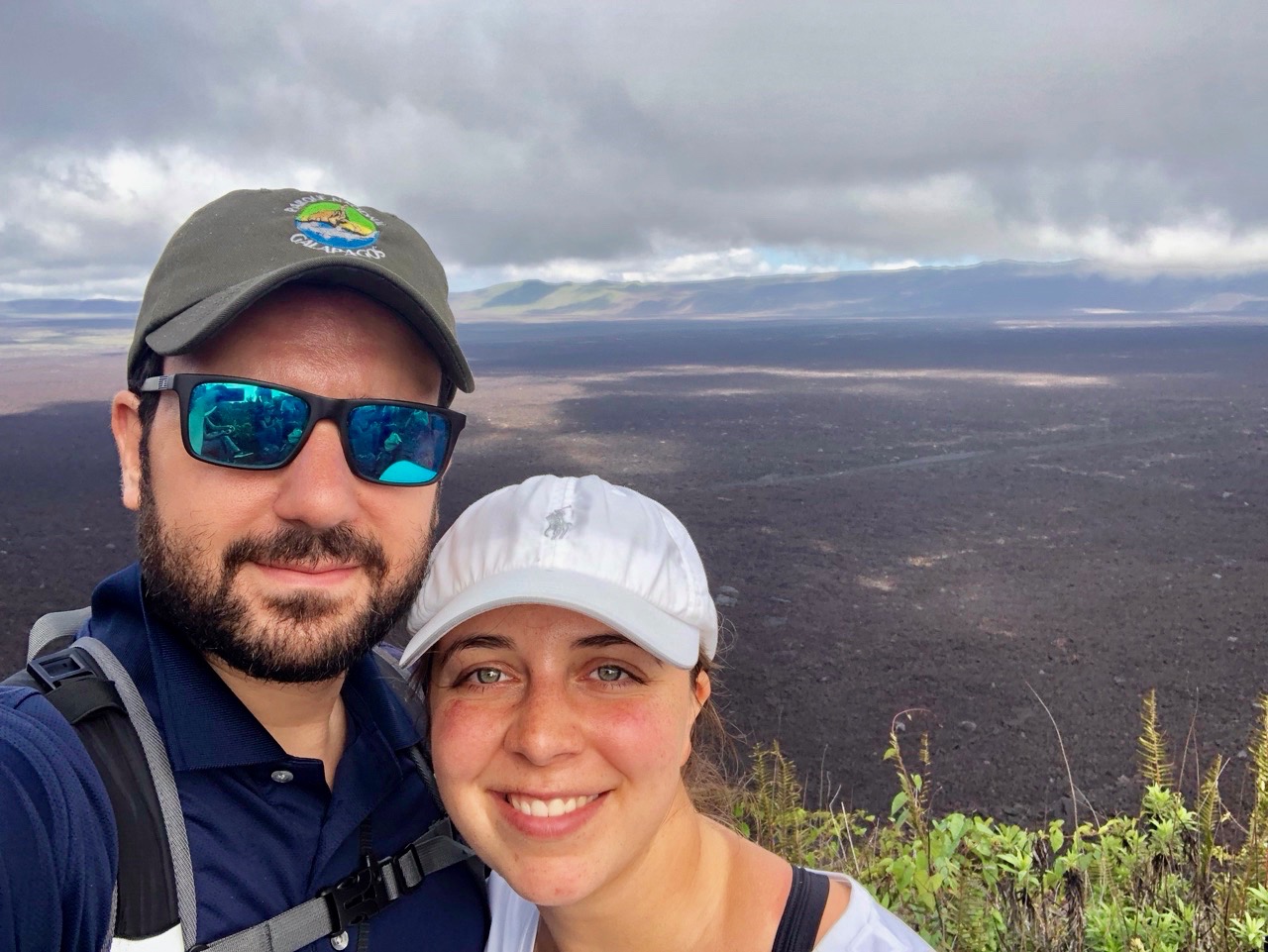
Pahoehoe provides a packed lunch for you with a sandwich, water, banana, and a chocolate bar. I recommend bringing a backpack to put your lunch, camera, flash light, and lots of water in. The volcano is 800 meters above sea level and the high altitude will leave you dehydrated. The hike lasted about 3 hours and the total tour was about 5 hours long.
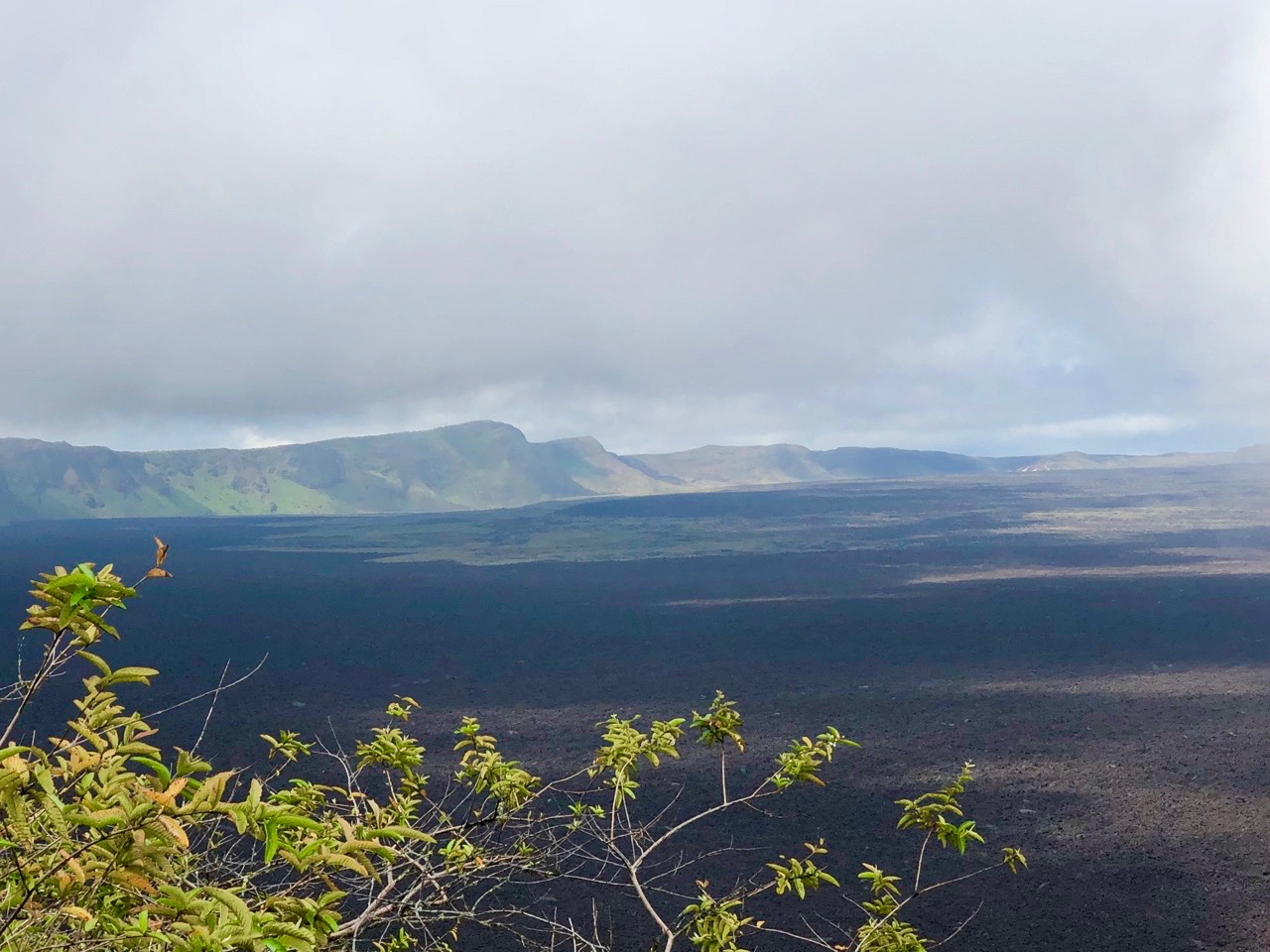
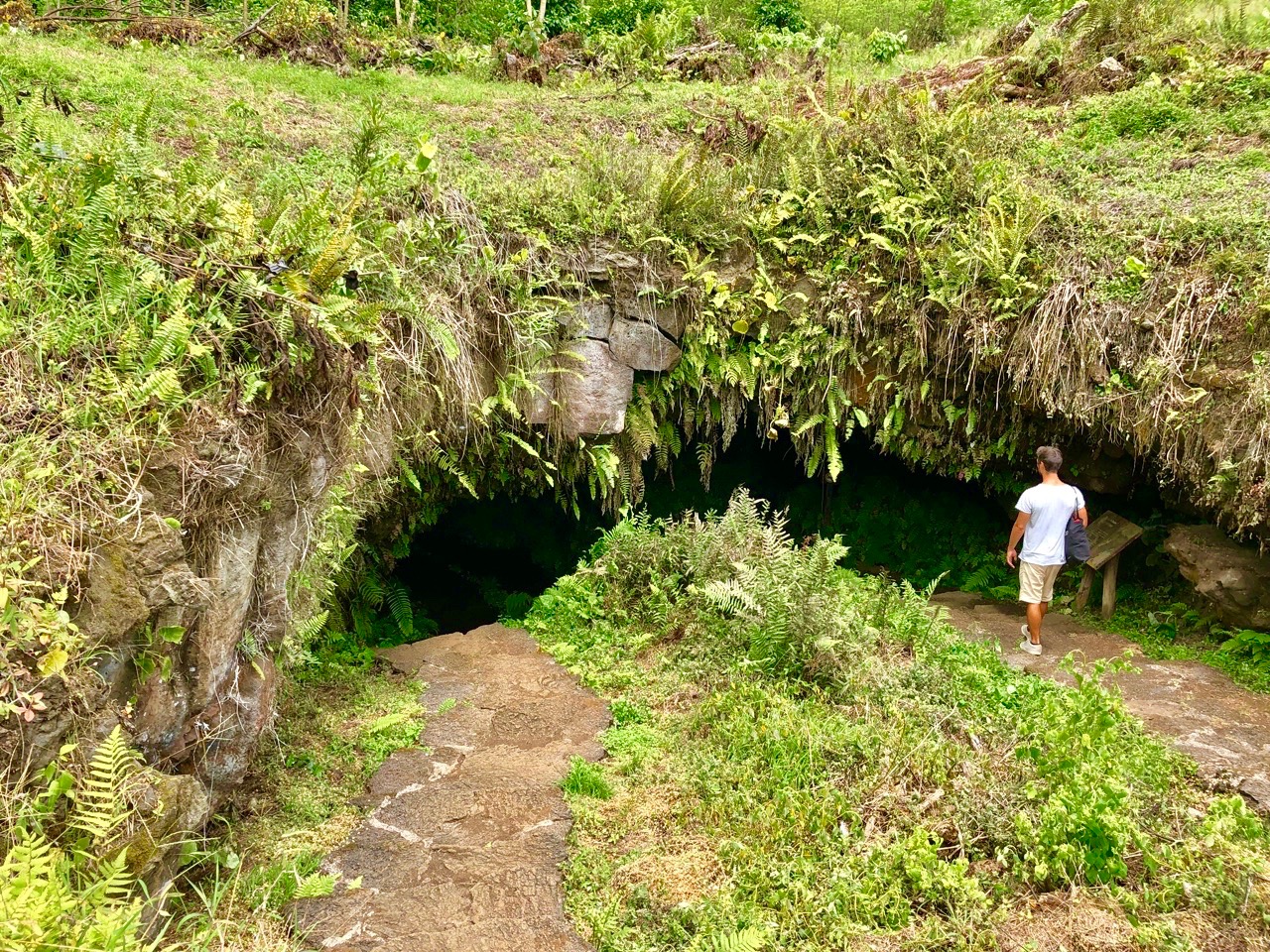
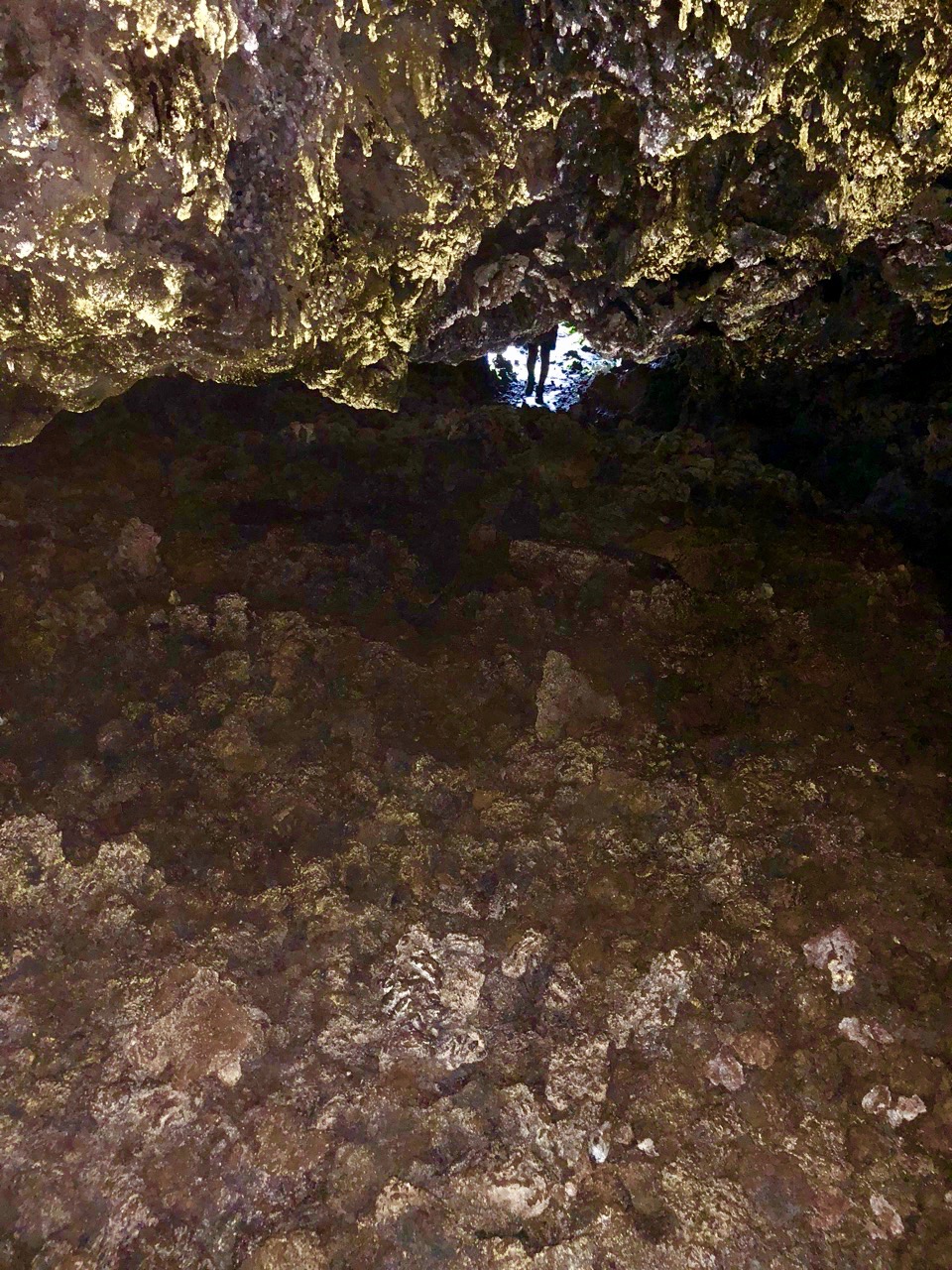
After the hike we went to the lava tunnels. We drove a couple of miles from the volcano to a grassy site with agriculture and trees. We happened upon a subterranean cover that looked enchanted. It was covered with leaves and moisture. This is where you will need your flashlight. It’s very dark down there and using a phone flashlight only gets you so far. It only lit up enough to see where I was walking. The tunnel was filled with a luminescent glow on the walls of the cave, which you can see when you shine your flash light on it. The tunnels are a good height for walking but there are some ducking spots so beware.
Snorkeling and Hiking Los Tuneles
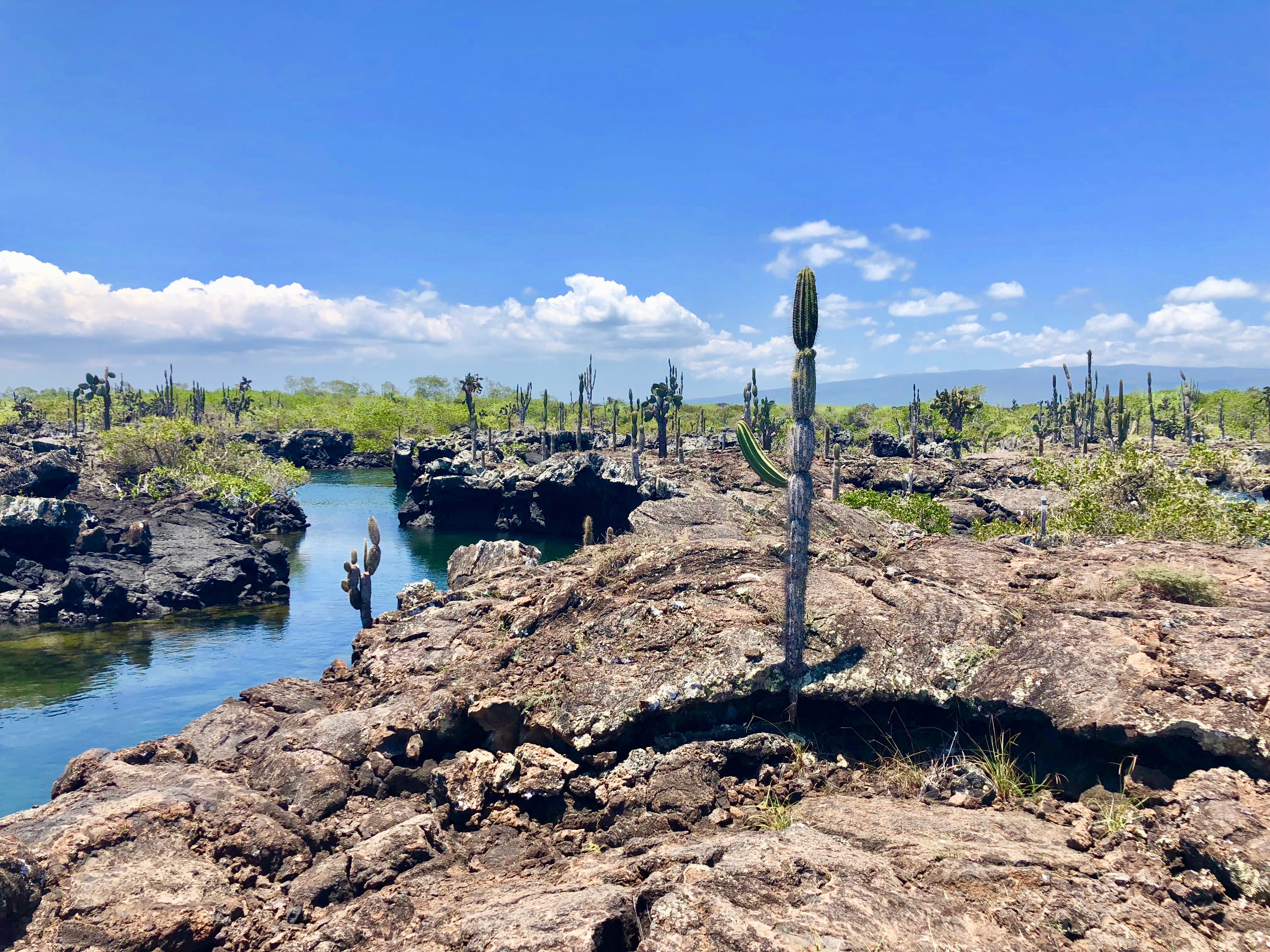
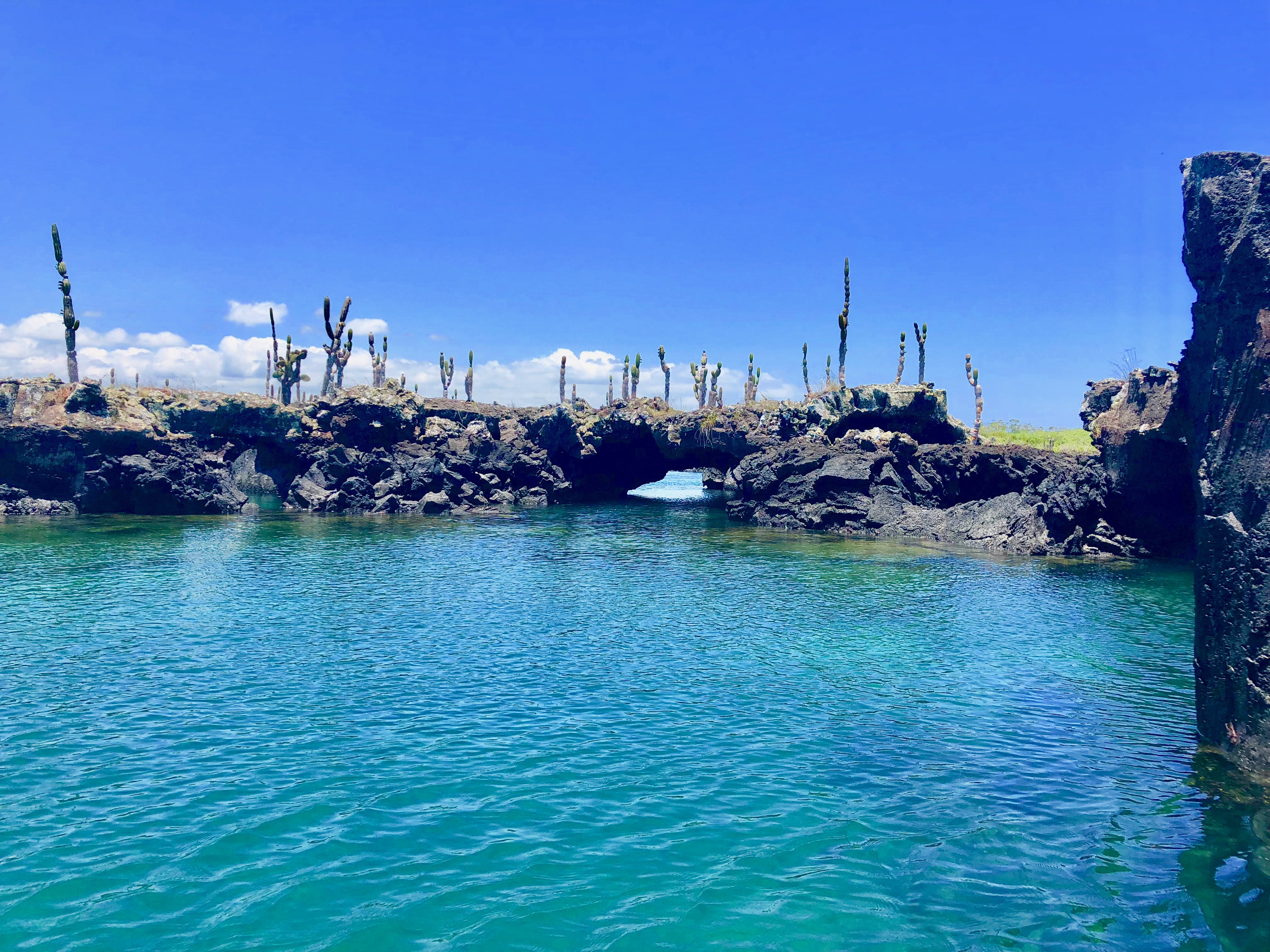
Beware! This trip requires a 45-minute speed boat trip from Puerto Villamil so if you aren’t good on boats, take anti-nausea pills. We started our journey at the Pahoehoe shop in town, got fitted for wetsuits, and we were picked up by a pickup truck to go to the port. There we boarded a 30-foot speedboat that took us to Los Tuneles, an impressive series of lava tunnel formations above and below the ocean. The ride was very bumpy to get there and we got splashed a lot. I was pretty much soaked by the time we got there so be prepared to get wet.
I recommend bringing a dry bag for this trip. We went over some pretty big waves and swells on the way there. Also bring your waterproof camera.
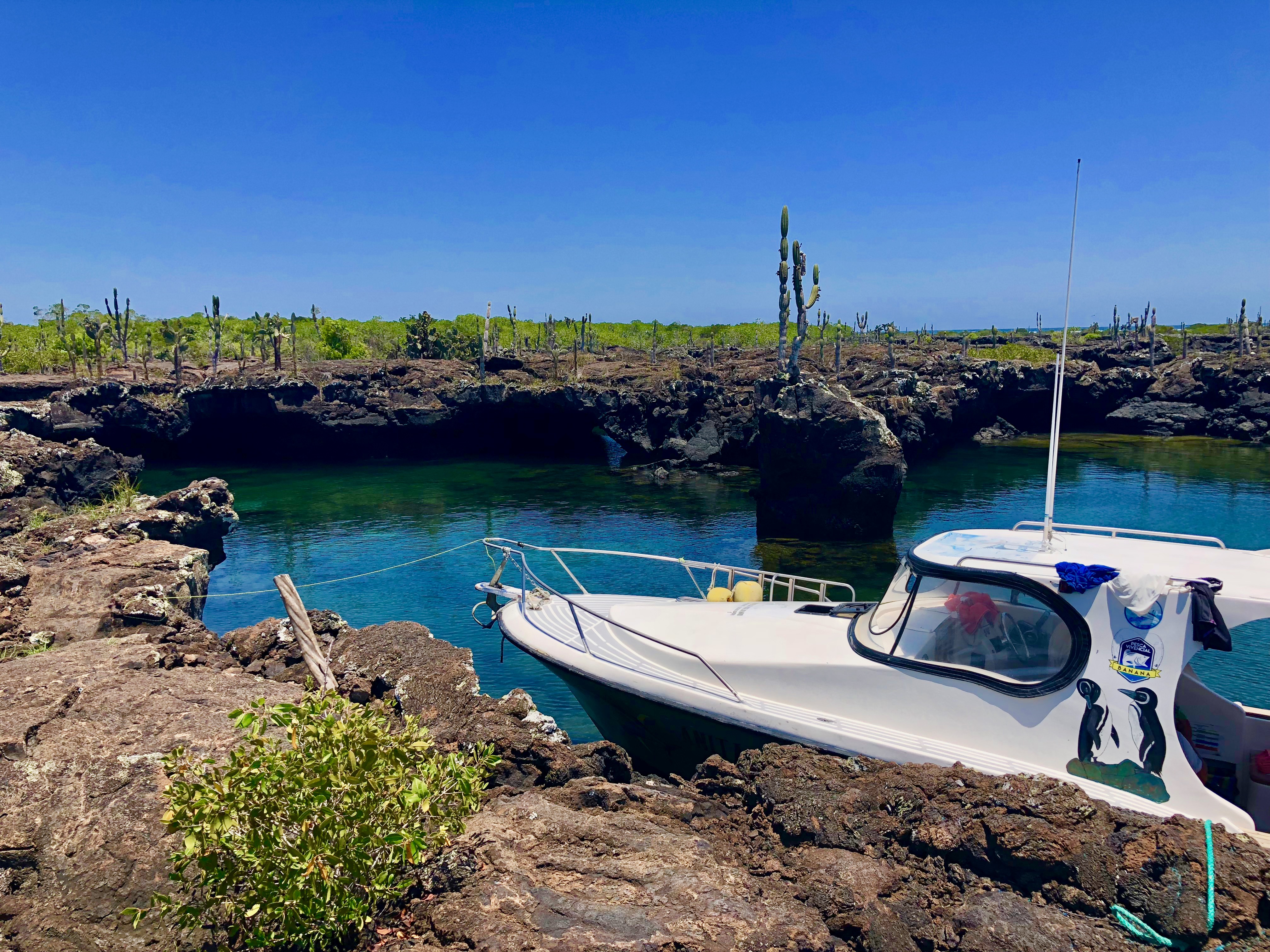
When we arrived at Los Tuneles we were awestruck. Lava tunnels half under and half above water stretched for several miles with cacti and birds settled on top. The captain of our vessel, Joel, navigated his way through the tunnels gracefully, which was no easy feat. This area was tight and shallow and one wrong move would have resulted in boat damage. Our guide, Gabriel, said that Joel has been navigating boats through this area since he was a kid and knows it all too well by now. Joel found a spot to dock the boat and we disembarked to walk along the tunnels.
Bring either sturdy water shoes, sport sandals or sneakers to wear along the tunnels because it’s no place for flip flops.
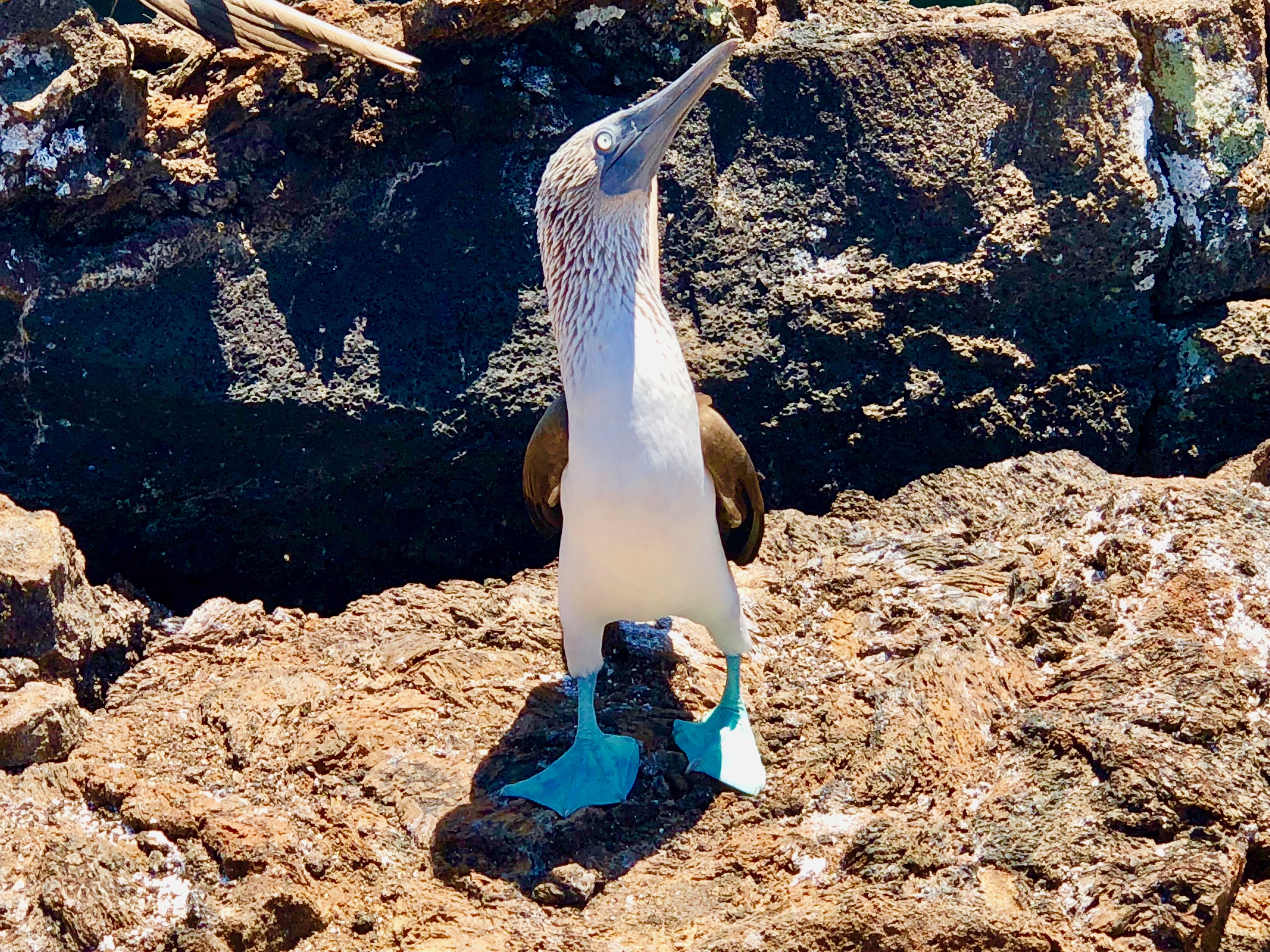
As we walked along the tunnels, the view was stunning. We happened upon a few blue footed boobies and we finally got to see their mating dance in full show. Apparently, they only do this dance about twice per year and they also dance when they are well fed. The males and females dance together and you can tell them apart by the size of their pupils, male’s bigger, female’s smaller, and the sounds they made mid-dance, males whistle and females make more of an “ack” sound. Gender roles among blue footed boobies are interesting to watch. At Los Tuneles, we were lucky enough to observe this through dance and their egg laying methods. Apparently, the female lays her eggs, then the male sits on them and watches them while the female does her thing.
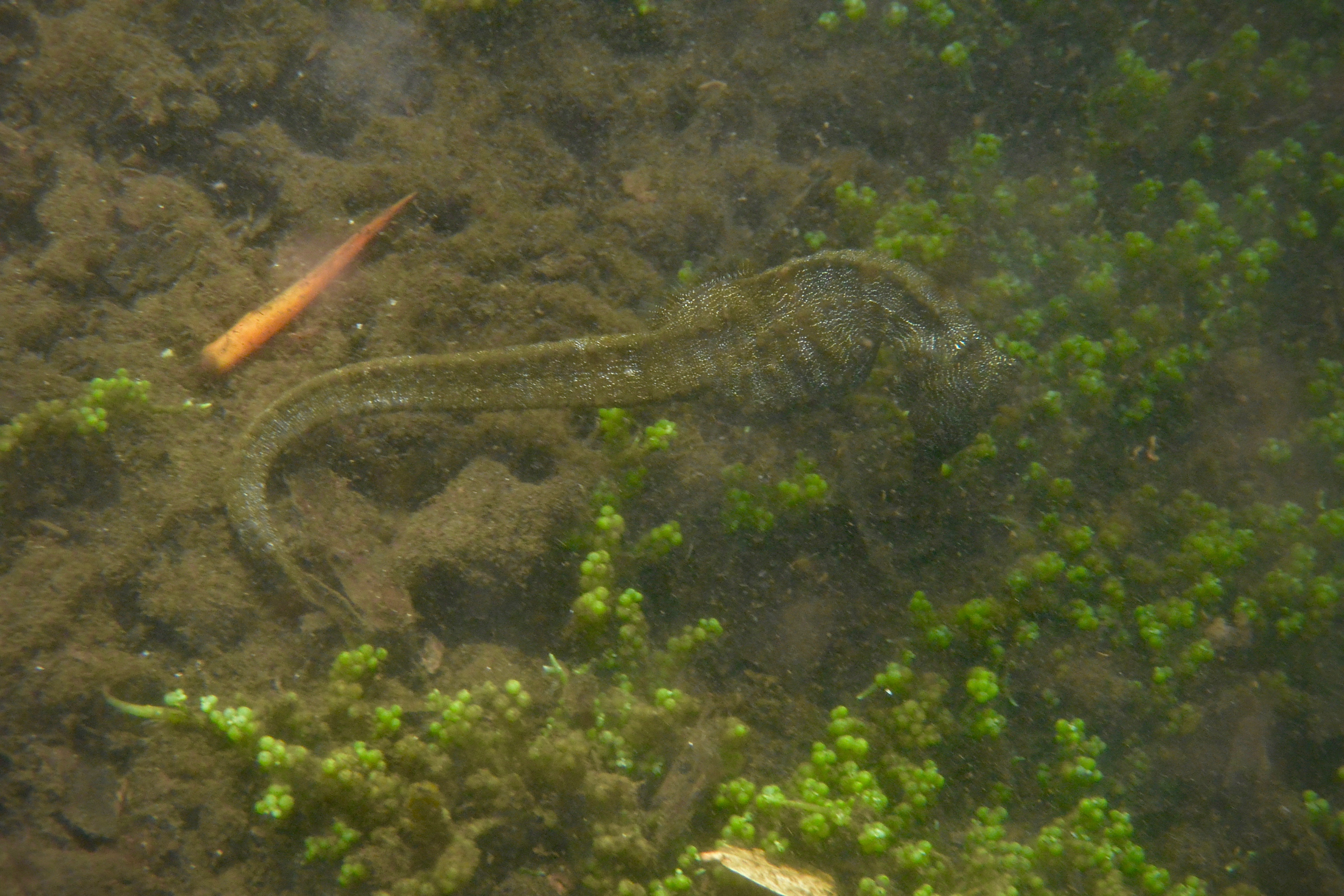
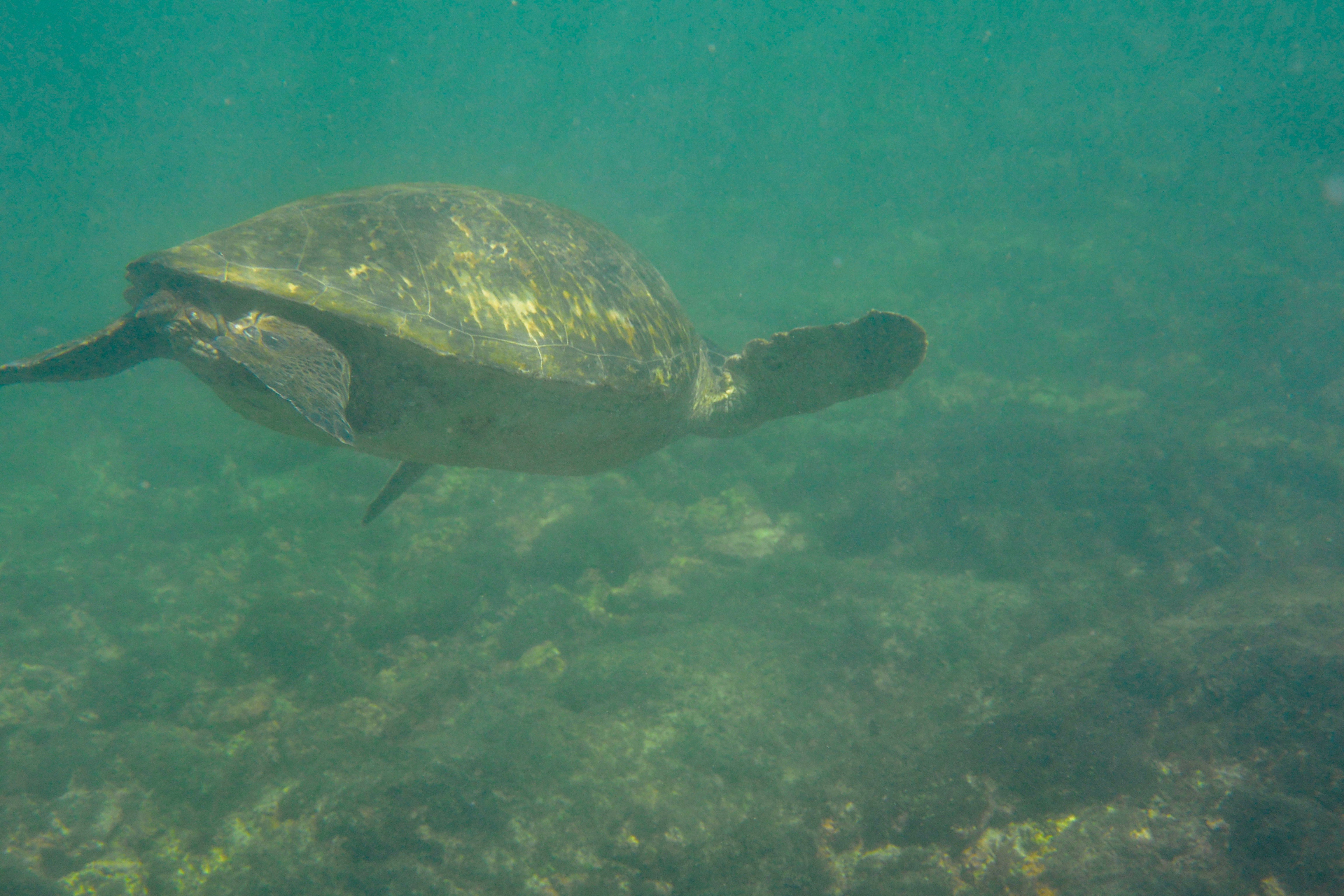
After our short hike, we took another rough boat ride to the snorkeling spot near the underwater tunnels. Gabriel guided us through a route that allowed us to see ample wildlife. Gabriel knew the area like the back of his hand, as he was born and raised in Isabela, but he was still giddy with excitement every time he found sharks, turtles, etc. We saw at least 20 sharks in this area, but not to worry, they were all sleeping in underwater caves. All of us would dip our heads into the cave and observe them sleeping on the ocean floor. After going through the shark dens, we moved on to sea turtles. We saw dozens of them, magnificent in size, gliding gracefully through the water. We saw one turtle that was as big as me with beautiful patterns on his shell. Next, we went into the mangroves to hunt for seahorse sightings, and we were lucky enough to spot one. I found one with its tail wrapped around a branch, just hanging out there. We also saw a sea snake, a school of giant mantas and golden rays, and a lot of other fish there. Los Tuneles has a lot of plankton in the water so sometimes our sight was a bit blurry and some of the pictures were hard to capture, but this very food is why there is such a diverse group of sea animals there.
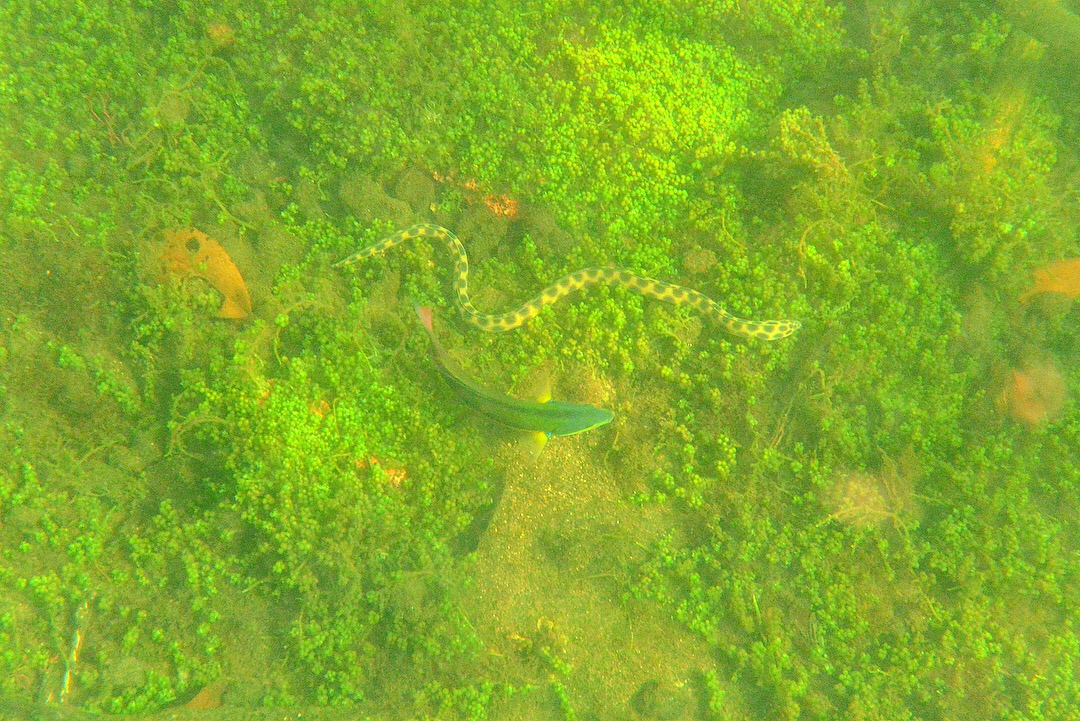
Afterward, we got back on the boat, ate a light lunch of chicken with rice, and got some towels from the crew. Then we began our journey back to Puerto Villamil.
Dinner at Hauser’s, The Best Restaurant in the Galapagos
Hauser’s Restaurant is by far the best restaurant in the Galapagos and we were thrilled to be able to get a reservation there. I had called the phone number on their Facebook page and got in touch with Yvette, the owner of the restaurant. She was so warm and helpful even though she was actually in Guayaquil on the mainland of Ecuador when I called. She was calling her husband, the chef, back and forth to try to get us a reservation. At first, she told me there was no availability for the days we asked for. The next day she called me and said that there was an opening and she was nice enough to squeeze us in that night. Yvette even sent José, a driver on the island to pick us up for dinner. It’s about a 10-minute drive from town.
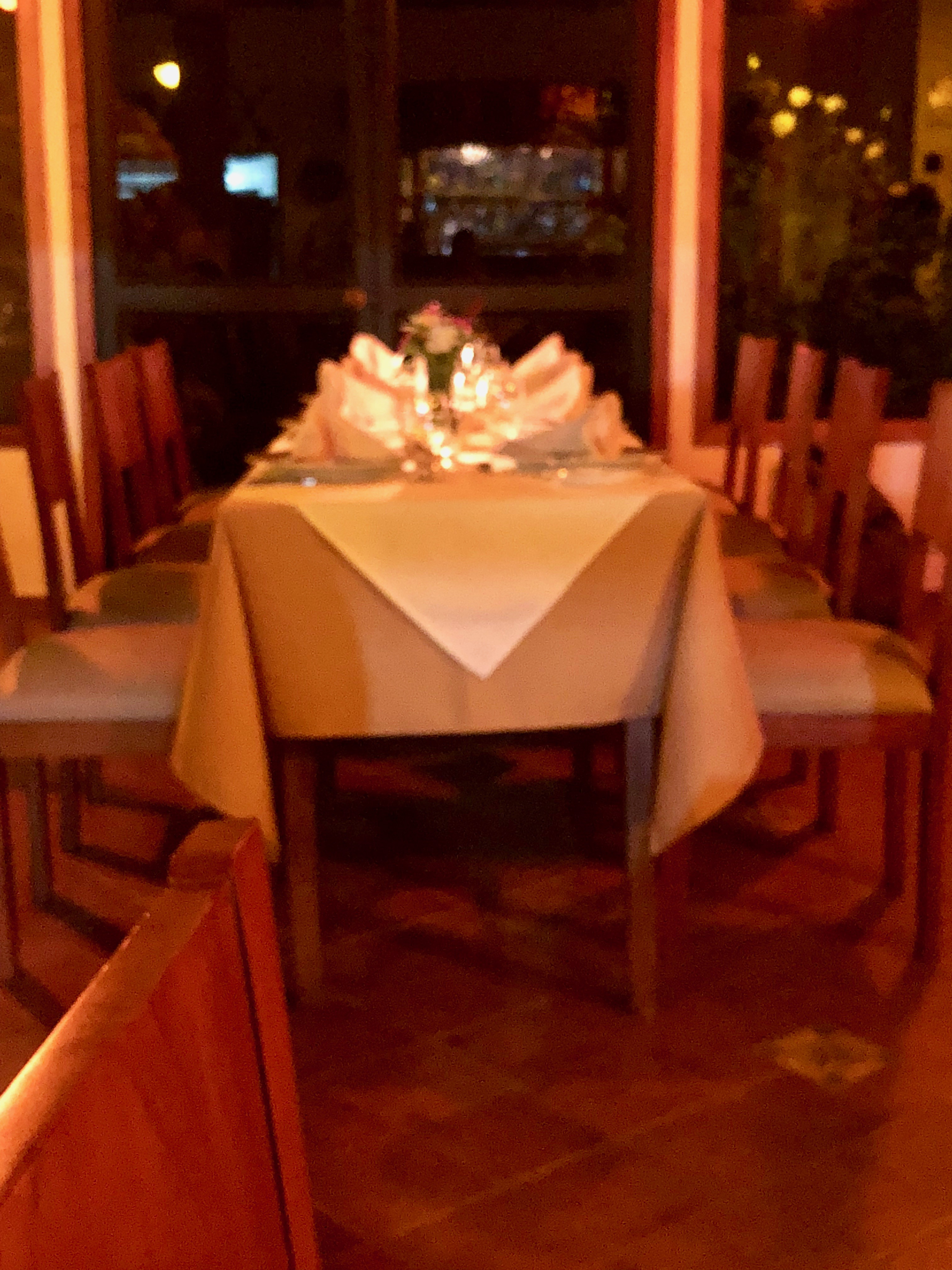
When we arrived, we were greeted by Mr. Hauser, the chef, and our table was close to the kitchen where he hung out during his breaks and talked to us through an opening from the kitchen. After we got our first course, we understood why Hauser’s is said to be the best restaurant in the Galapagos. The food was superb and its one of the only fine dining options in the islands. For around $30 per person we got a four-course meal with excellent food. Mr. Hauser even brought us a shot of sugar cane liquor for an after-dinner digestive. Hauser’s is located in the highlands and has its own farm so all of the ingredients are very fresh and the atmosphere is very picturesque. Once you finish dinner, you can just ask one of the waiters to call you a cab and one will come within 15 minutes.
I recommend calling in advance because it seems they only take a certain number of guests per night. We were there with another big party of 20 people who were having dinner buffet style. I think Yvette squeezed us in because she could tell I really wanted to try their restaurant when we talked on the phone. This was such an accommodating restaurant run by such a lovely couple.
Traveling from Isabela to Guayaquil
This was a bit of a trek. We had to take the 6am early morning ferry over to Santa Cruz in order to catch our flight from Baltra Island (basically the airport on Santa Cruz) to Guayaquil, where we would fly back to New York the next day. We woke up at 4:30am that morning and we walked out of the Comorant Beach House at about 5am and not a soul was out. When a cab driver pulled up, we grabbed it right away. You can ask the front desk the night before to schedule you a cab. It was very important that we made the 6am ferry because we had to catch our 12:30pm flight back to Guayaquil.
I suggest arriving about 45 minutes before the ferry departs just to make sure you don’t have a hectic experience at the port. Believe it or not a lot of people were there to catch the 6am ferries and it can get a little crowded.
When we arrived at the port, we had to get our bags inspected again and they put a zip tie on the zipper of our bags. This took a few minutes. Then, we had to wait for the captain of our boat to arrive so we could sign his masthead, with our name and passport number, and get our boat name tags, similar to the process at Santa Cruz port. A few feet ahead toward the water, a woman at a table gave us tickets for the water taxi for about $1 each, which was collected on the water taxi. Then we waited on the path for our boat to be called. A bunch of boats come in as the 6am ferries so it’s important to keep an ear out for your boat and get in line once you boat is called. Once you get called, you’ll line up for the water taxi, put your bags on the front and follow the same routine as we did at the Santa Cruz port. The 6am ride was a bit cooler because it was before sunrise with the sun shining at the front of the boat so it was nice and shady.
Grab a seat toward the back of the boat to avoid bumps. I don’t recommend going onto the top of the boat because there’s no shade and nothing blocking the wind, and the boat goes very fast.
When you arrive in Santa Cruz you will take a water taxi back to the port and will not need to go through another inspection. We grabbed a cab right at the port to go to Baltra because even though we made it to Santa Cruz, getting to Baltra is another journey. Baltra is another island directly north of Santa Cruz that is used as an airport. There doesn’t seem to be anything else there. Puerto Ayora, where your ferry arrived from Isabela, is at the southernmost point of Santa Cruz so traveling to the northern most point to get to Baltra takes some time, about an hour to be exact. Once your cab takes you up north, he will take you to a port where there are water taxis and a ferry to Baltra. Take the ferry, they are spacious, comfortable, and the ride is only 5-10 minutes across the canal. Just hop on and off with your luggage. When you get off there will be buses to take you to the airport. Put your luggage on the bottom and get right on. They are shuttles to the airport and it takes about 5-10 minutes to get there.
When you arrive at the airport, you will check in for your flight and this is where you will need the form you received upon arrival to the Galapagos that I told you about earlier. When you check in for your flight, they will ask for it and staple it to your boarding pass. Before you go through security, they will take the other half of this form to keep a record of when you left the Galapagos.
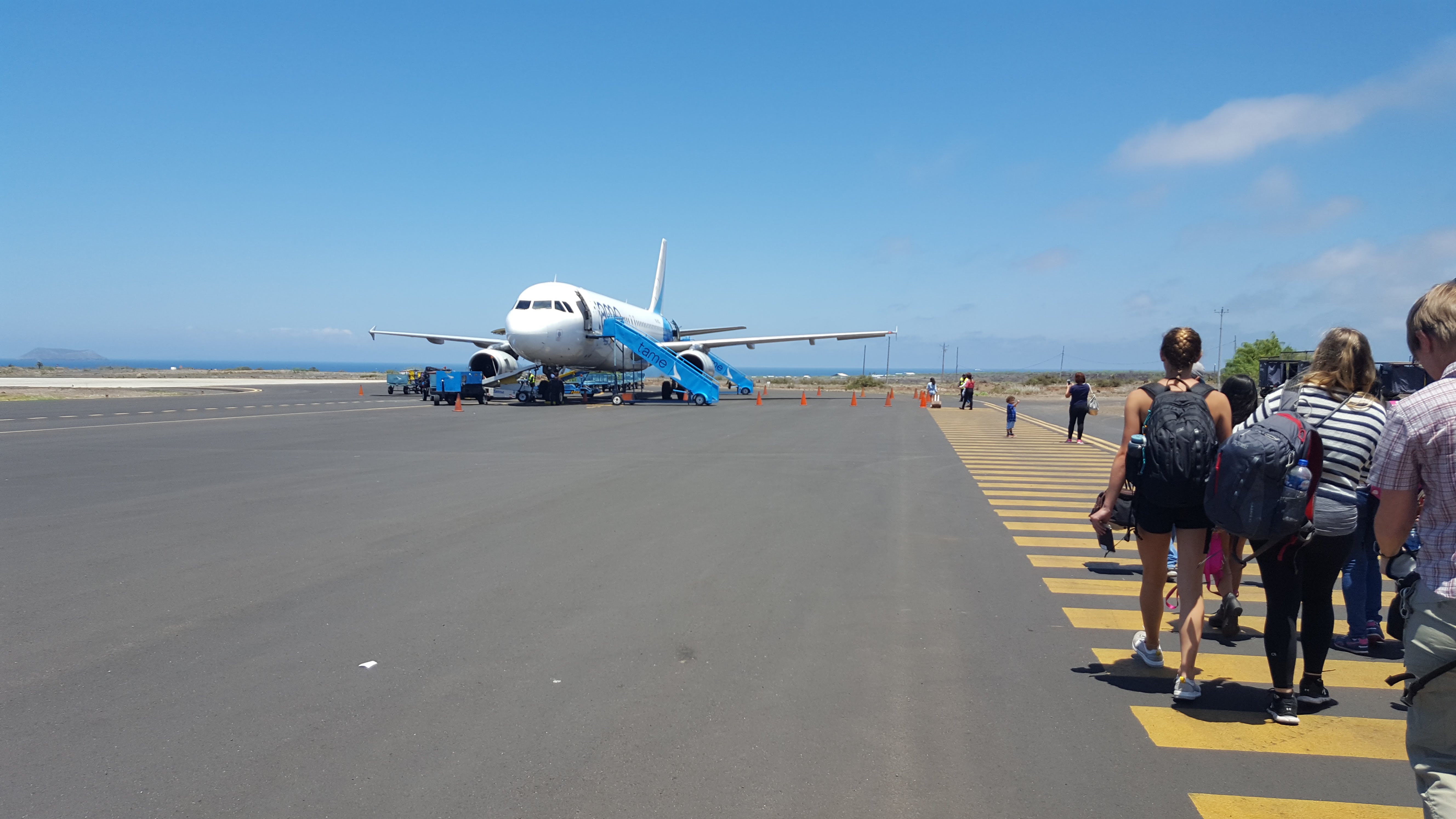
Baltra is a nice airport with big fans and many shops that sell the same things you will find on the islands so it’s good for last minute gifts if you were too busy adventuring to think about buying your mom a T-shirt.
You could avoid this whole process by booking a flight with Emetebe from Isabela to Baltra, but the flight costs about $400 round trip on average, not including your flight to Guyaquil, and the round trip ferry costs under $60 plus about a $10-15 cab ride to Baltra, so the ferry process will save you a lot of money but I understand it may be worth it to avoid this trek.
Stay at the Sheraton in Guayaquil with Easy Access to the Airport
By the time we arrived in Guayaquil, it was about 3pm and we were exhausted from the journey we took through the day. We stayed at the Sheraton, which was about a 5-minute drive to and from the airport so it was a good hotel to stay at if you’re just staying in Guayaquil over night to catch a flight. The locals in the Galapagos told us there was not much to do there and that it’s actually a little dangerous at night to walk around so we just stayed at the hotel because we were exhausted. The hotel has a pool and a spa as well as two restaurants so it’s a great place to camp out for the night.
Apparently, there is more to see in Quito, so if you have the time, I would suggest flying out of there and maybe spend a few days there exploring.
We stayed overnight, and got a shuttle super early in the morning to catch our next flight out to New York. The Sheraton has an airport shuttle 24 hours a day, which is free so opt for that.
Where to Eat
San Cristobal
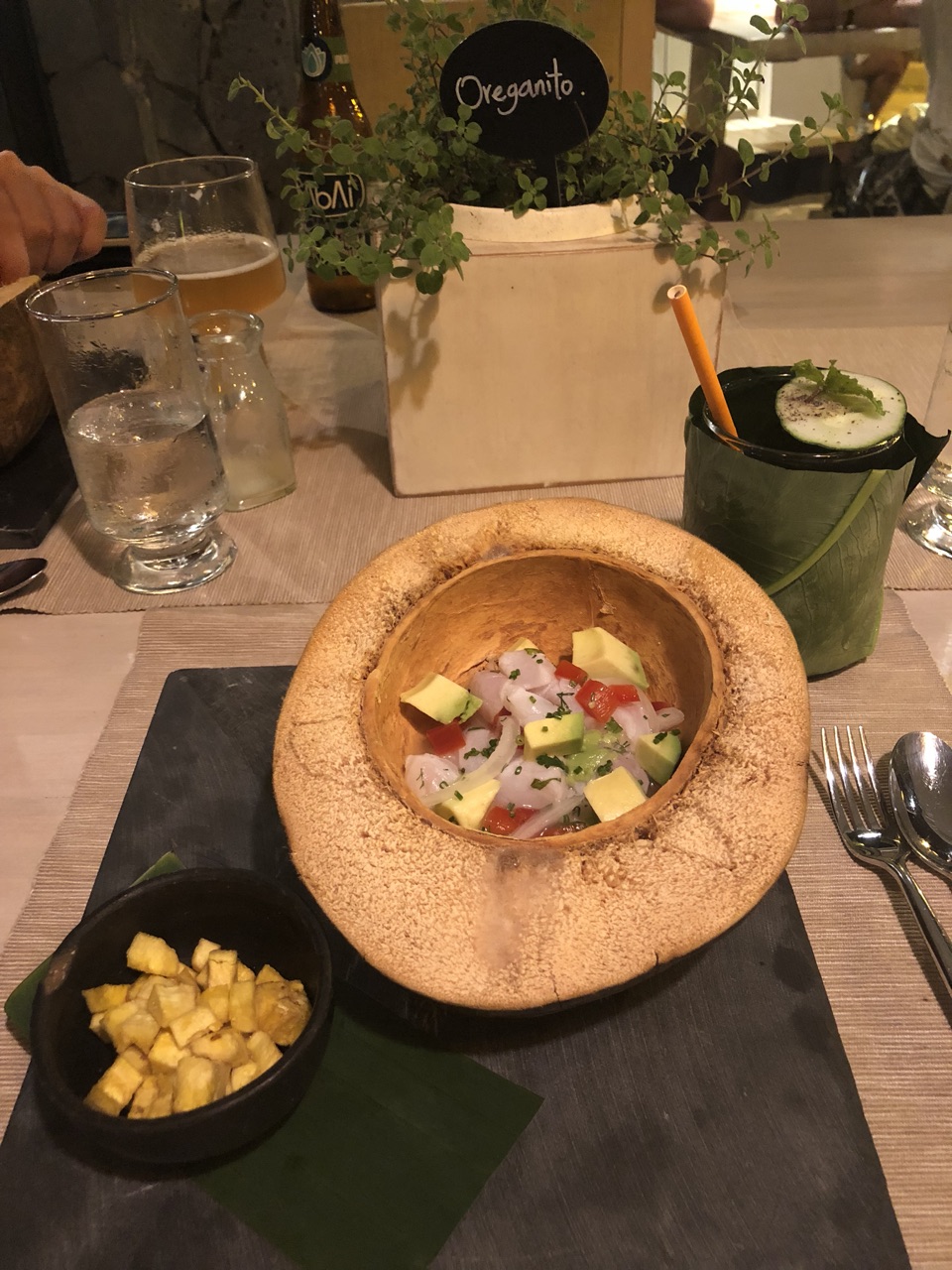
Muyu is a trendy farm, forest, and sea to table restaurant at the Golden Bay Resort just a few minutes away from the main port. Muyu provides a fine dining experience in a casual beachy atmosphere, so no need to dress up. Most of the food including produce, fish, and meat is harvested on the islands, with reduction of their carbon footprint in mind. We ate here twice because the food was delicious. They have an all-encompassing tasting menu, creative cocktails, a nice wine list, and local Ecuadoran craft beers. Try the Savai IPA from Quito!
As explained above, this place is a scenic and enchanting farm to table restaurant that is great for lunch with a tour or a beautiful dinner in the highlands.
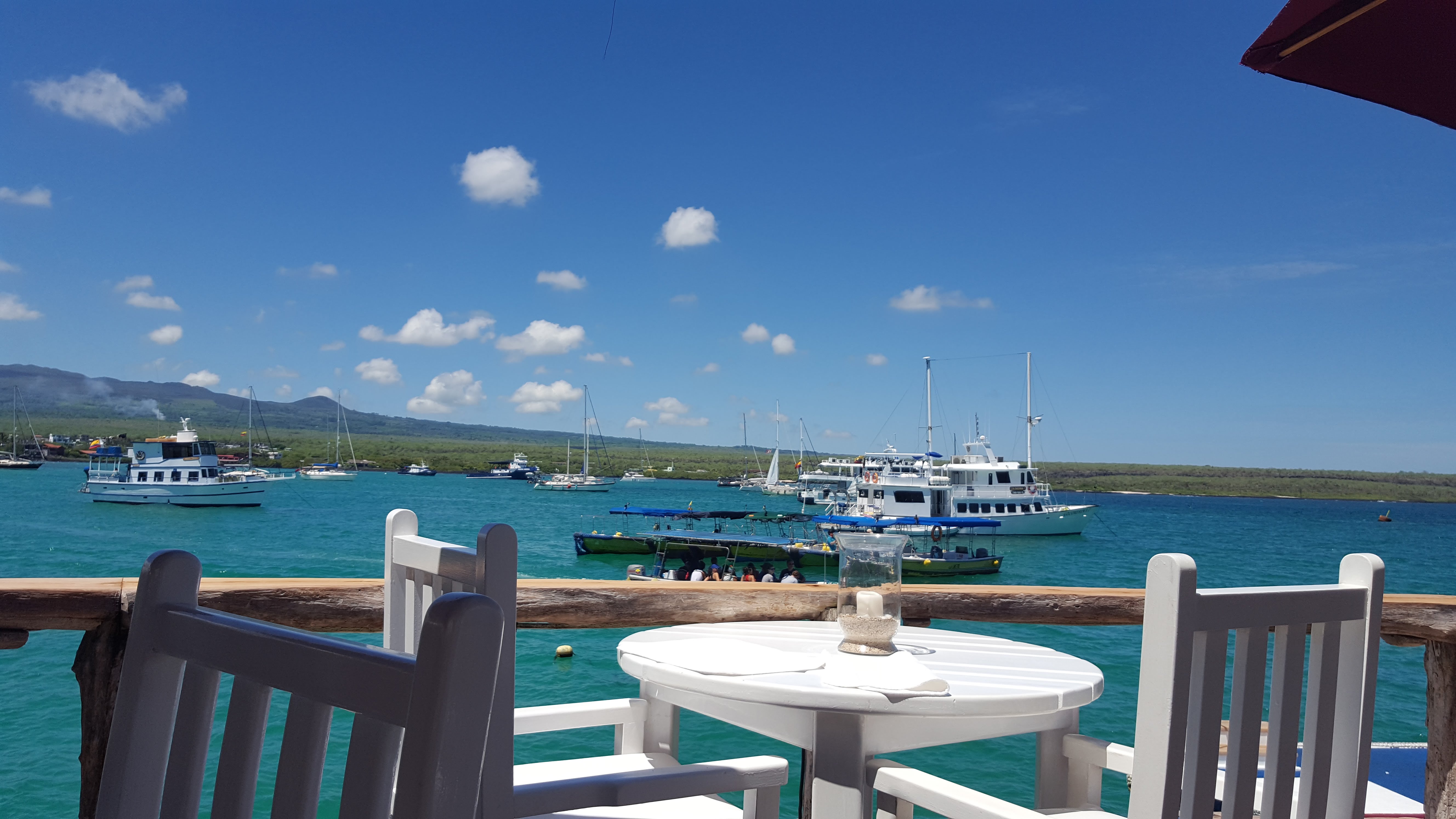
Along the malecón, on the water, lies Calypso, a nice spot for lunch or a casual dinner with consistent options and great coffee. You can sit outside and watch the sea lions play on the side walk.
Miconia is a nice spot along the water with fresh arepas and juices. In fact, the arepas were so fresh that you could taste the fresh grains in the crust. Everything there was organic, as are most of the restaurants on the islands, so you can enjoy, fresh, healthy food while you adventure around the area.
Santa Cruz
Just a short water taxi from town, you will find Angermeyer Waterfront Inn. No need to worry about taxis, they come and go from there all the time because there is a popular beach down the road. This place offers waterfront dining and good food. Great for lunch or dinner.
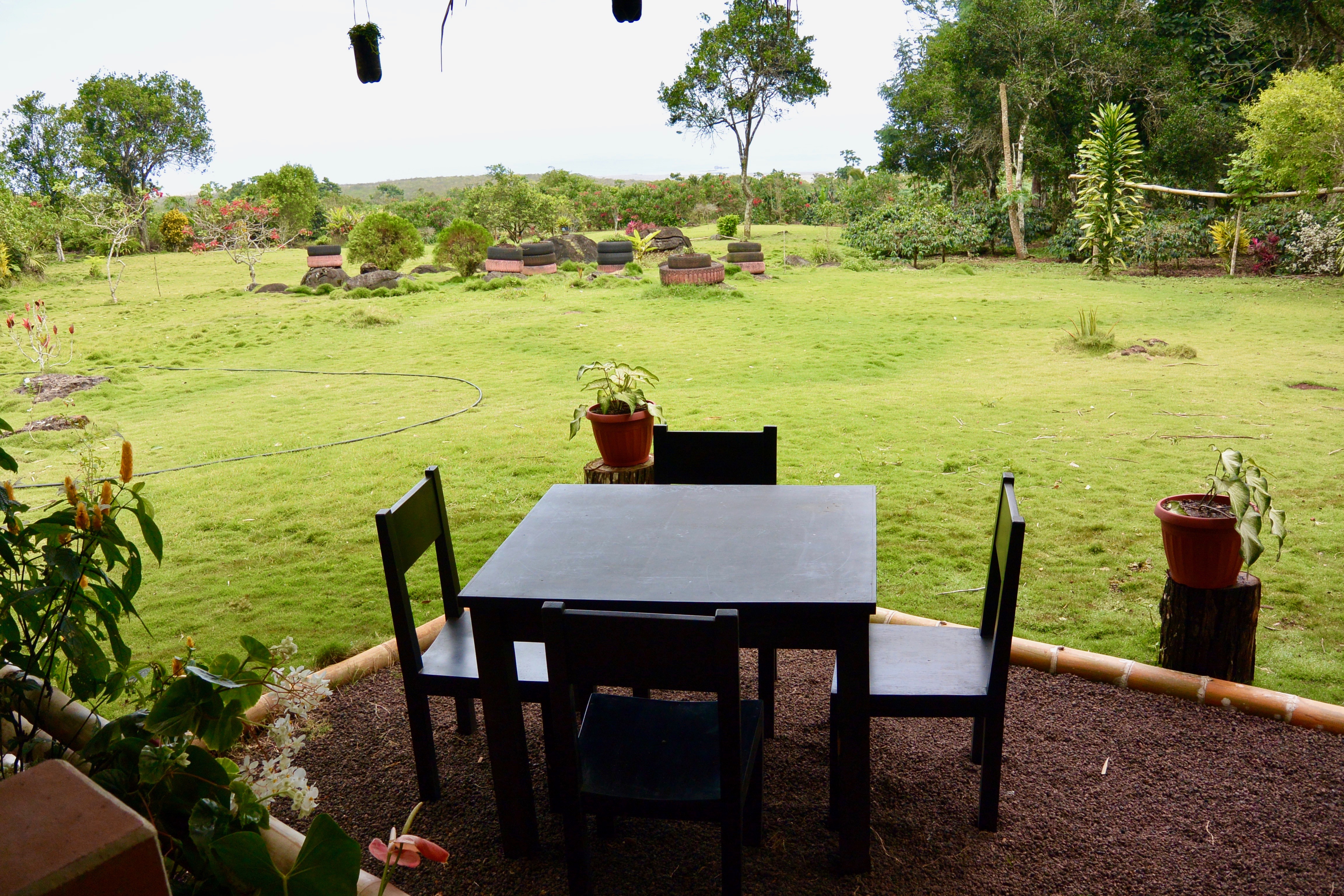
This restaurant is located in the highlands, not far from the Semilla Verde Hotel. It’s in the middle of nature and has tasty food options. We ate here for lunch, which seemed ideal as you would not be able to see the view from the terrace at night.
Great ambiance and great food here. It’s located in town just a short walk from the port. It offers great seafood options and it was easy to get to. This is a great option for dinner.
Isabela
As explained above, Hauser’s is a remarkable fine dining experience in the middle of the Isabela highlands. Make sure you call a few days or even a week ahead to make a reservation.
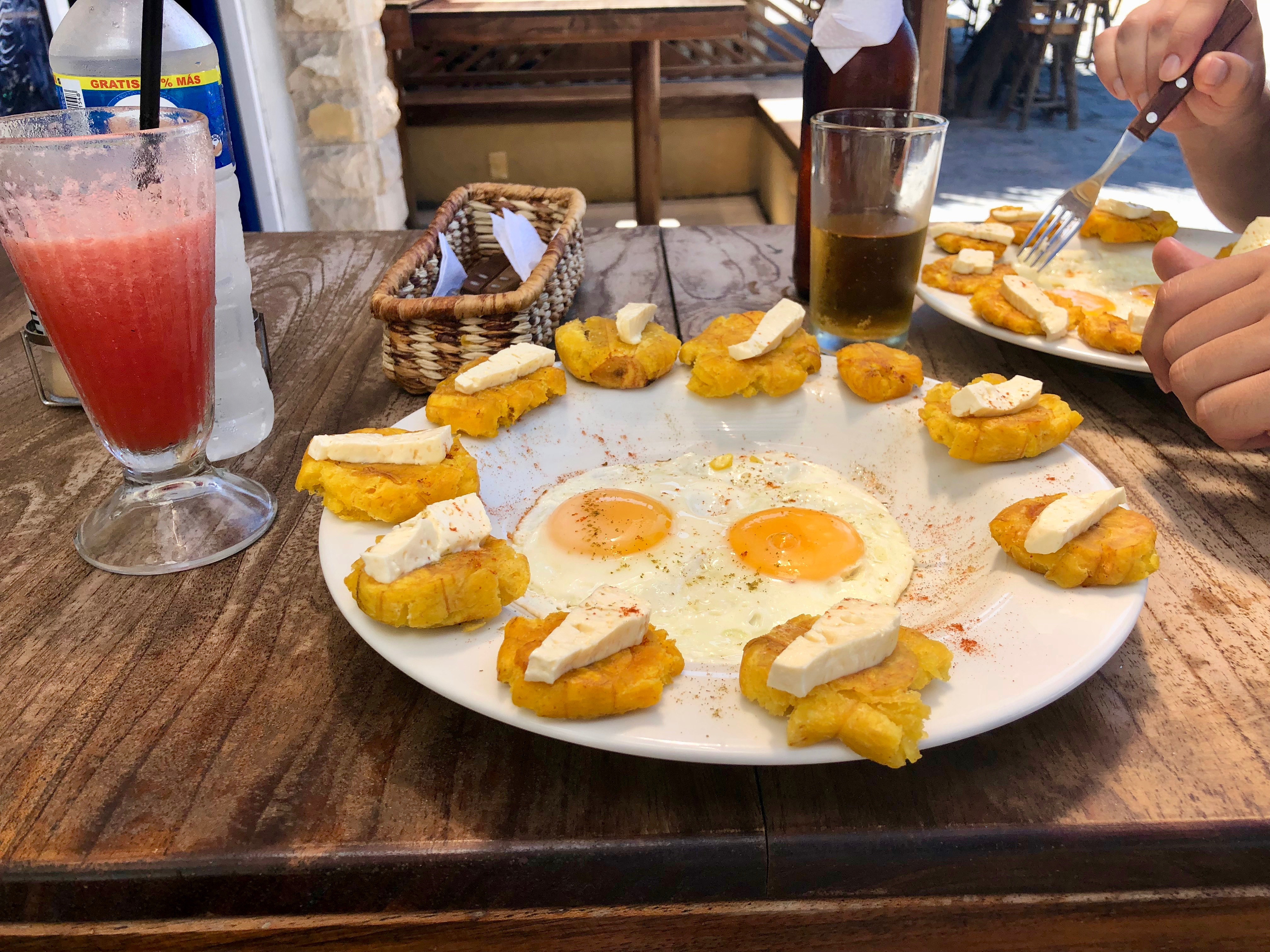
Our hotel had a deal with this restaurant for free breakfast for guests and it was more than satisfying. We got coffee or tea and a breakfast entree for free. They even allowed us to order from the menu instead of serving us the standard eggs, toast, and fruit of the day. The eggs with fried plantains was delicious.
This place offered a beachy vibe and an $8 lunch that was hard to beat. For $8 we got chicken soup and an entrée. I got fried fish and Anthony got grilled octopus and both came with rice, vegetables, and papas fritas.
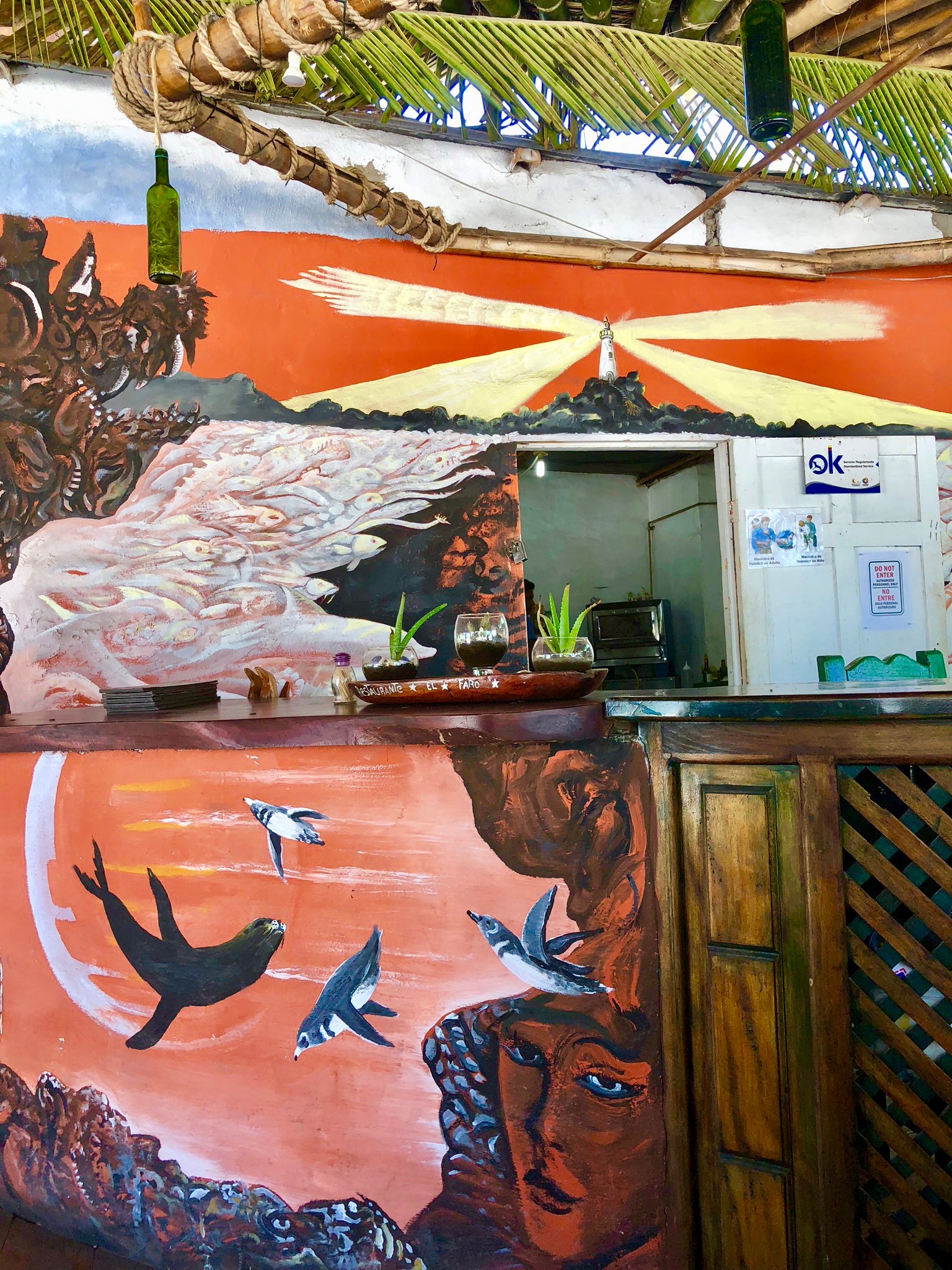
Palm Beach is a very cute outdoor restaurant off the side street next to Pahoehoe. It offers an $8 lunch that includes fresh juice, soup, a main dish, and fruit. The food was great and the atmosphere was very peaceful.
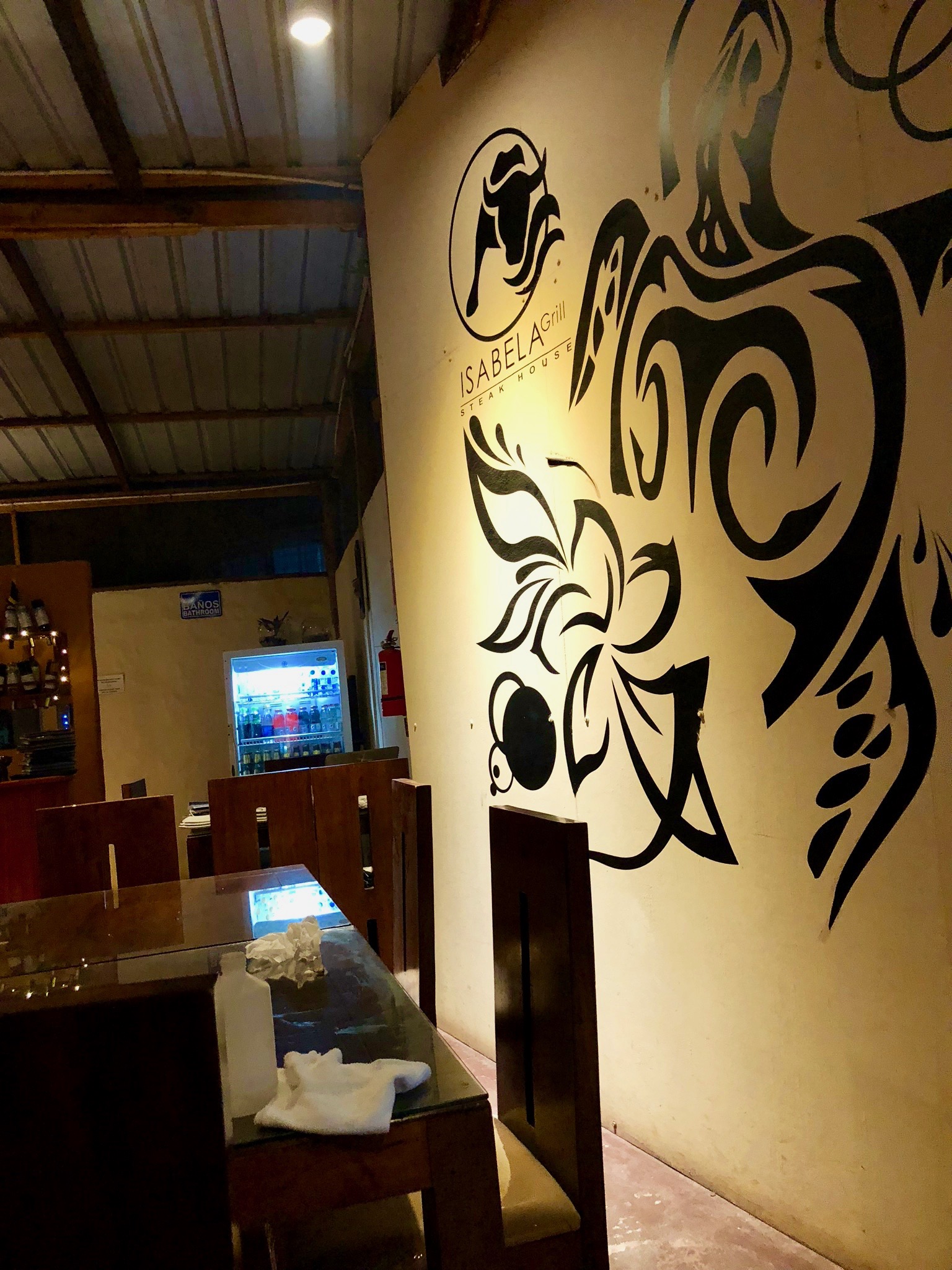
This is a great place for dinner. It’s one of the only places that you can eat inside on Isabela, which you’ll want after a while because there are a lot of flies at the outdoor restaurants. This place has good prices, great grilled steaks and seafood.
This is a nice spot to grab lunch as its on the main drag and not far from the beach. We recommend the octopus and shrimp with coconut sauce with plenty of coconut shavings inside. I would recommend venturing down the side streets for food as the restaurants seem to get better a little further out.
Packing List
This is not your typical trip to a tropical island. If you want to get into the nitty gritty of the Galapagos you’ll need to pack the essentials to make sure you stay intact and comfortable. Here’s a list of a couple of the things that I found most useful on our trip.
I’m a light packer. For every trip, no matter the length, I always bring only a backpack and carryon suitcase. Over the years, I’ve learned that bringing too much baggage can dampen your trip, and simply weigh you down. In the Galapagos especially, it is important to pack light in order to have an easier time getting from place to place. Getting around in the Galapagos isn’t as simple as getting on an off a plane so trust me, you do not want to bring any more baggage to make things even more complicated. I brought the Columbia Omni-Shield Manifest Backpack with me to hold my carry on essentials and it did the trick. As far as carry-on luggage, make sure you bring something durable because it may get beaten up.
The secret to packing light: fill a 3oz bottle with laundry detergent and learn how to hand wash your clothes. It will change the way you travel.
Here’s a List of the Essentials:
- Hike Friendly Sneakers: If you want to see all the Galapagos has to offer, be ready to take a hike. You will experience a variety of terrains from wet, rocky, sandy and everything in between. Full on hiking boots are not exactly necessary for these hikes but good sneakers with good support at the ankle and a sole with good grip is essential. I would recommend getting yourself a pair of trail running sneakers with ankle support. You can use them day to day as you walk around the Galapagos and also go on a wide array of hikes without slipping or twisting your ankle where unsteady rocks are involved.
- LOTS of Sunscreen: The Galapagos is right on the equator, which means you have to be extra careful when it comes to sun protection. I have an olive skin tone and don’t burn easily so I’m not a sunscreen aficionado, but being in a part of the world where the sun is the strongest can change any sun worshipers mind. Make sure you bring plenty of sunscreen to last you the duration of your trip and enough to apply at least twice a day. Anything below 30 SPF is silly.
- A Dependable Hat: While we’re on the subject of sun protection, a good hat is a MUST in the Galapagos. You’re going to be hiking, boating and everything in between in the sun for hours each day. You’re going to need a hat to keep you cool and protect your face. I would recommend getting one with dry-fit/sweat-wicking material because you’re going to be sweating and your hat may get wet during adventures too. If you’re looking for full coverage I would get an athletic wide brim hat that has wider coverage to protect your neck and possibly your shoulders as well. Try this full coverage hat from Sunday Afternoons. I know you might shy away from this hat out of fear of looking like a geek, but in the Galapagos everyone’s wearing this hat so you’ll fit right in!
- Windbreaker: You’ll need a good windbreaker for some of the hikes and in case it rains as well. Anthony and I found our windbreakers super useful on this trip, plus they are also easy to pack. Try a Windbreaker from Columbia, Anthony and I love ours.
- Dry Bag: Bring at least one dry bag for those extra wet trips like Los Tuneles in Isabela. I bought the Arcadia Supply Co. Sea and Sky Pack and I highly recommend it. I’ve used it on multiple trips and its super compact, truly water proof, and also has a front zipper and water bottle holders on the side for easy access when you’re not in the water.
- Fanny Pack: Even though this may also make you look like a geek, it comes in handy on those hiking trips on the Natural Paradise. Get a small one just to hold your camera, some sunscreen, and other essentials. Anthony and I actually used these Blue Sky Basics Pouches and they worked well for us.
- Towel: You will continuously need a towel, so bring a compact one that dries quickly. I recommend the Rainleaf Microfiber Towel.
 Meli On The Move